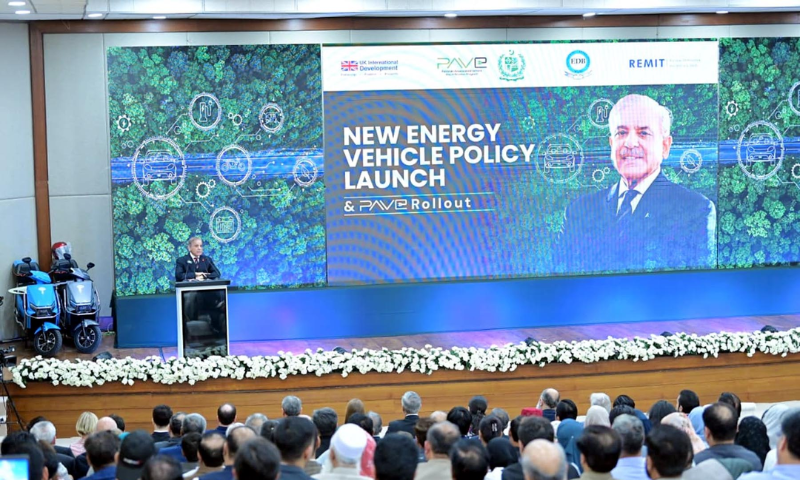
Islamabad, August 26, 2025: Prime Minister Muhammad Shehbaz Sharif on Tuesday unveiled Pakistan’s New Energy Vehicle (NEV) Policy 2025-30, describing it as a landmark step toward clean transport, climate resilience, industrial transformation, and youth empowerment.
Speaking at the launch ceremony, the premier said the policy reflected Pakistan’s commitment to reducing emissions, promoting clean technology, and building sustainable transport systems. He praised the efforts of Minister for Industries and Production Haroon Akhtar Khan, Federal Minister Rana Tanvir Hussain, and other stakeholders for preparing a “comprehensive and forward-looking framework,” with technical assistance from the UK government and High Commission.
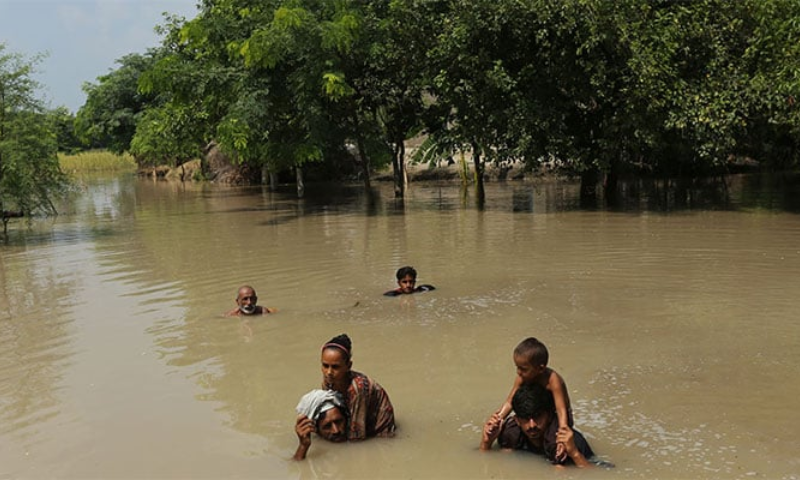
“Pakistan is among the hardest-hit countries by climate change, despite contributing little to global emissions,” PM Shehbaz said, citing the 2022 floods and the 700-plus lives lost to extreme weather this year. He urged the international community to extend financial and technical support to help Pakistan face the crisis.
As part of the launch, the prime minister and federal ministers distributed electric scooters to top-performing intermediate students from across Pakistan — including Punjab, Sindh, KP, Balochistan, AJK and Islamabad. A 10% quota was reserved for Balochistan students.
PM Shehbaz also announced the upcoming distribution of 100,000 laptops to high achievers and proposed increasing the program’s budget from Rs9 billion to Rs90 billion in the next fiscal year.
“This policy is not only about clean energy. It is about empowering our youth, reducing our carbon footprint, and opening doors to innovation and opportunity,” he said.
Industries Minister Haroon Akhtar Khan called the NEV Policy “a blueprint for Pakistan’s clean transport revolution.” He highlighted that:
- Pakistan spends billions on petroleum imports while urban air pollution costs Rs105 billion annually in healthcare and productivity losses.
- The country has 125 terawatt hours of surplus electricity that can be channeled into electric mobility.
- Electric bikes cost one-third per kilometer compared to petrol, with added benefits of financing support, toll exemptions, and free registration.
“We are moving beyond vehicle assembly to battery production, charging infrastructure, and advanced parts manufacturing,” Akhtar said, adding that linking the policy with youth recognition reflected the PM’s merit-based vision.
Rana Tanvir Hussain, Minister for National Food Security and former Industries Minister who initiated the policy framework in an earlier tenure, welcomed its implementation under PM Shehbaz.
“This is a powerful example of governance continuity. Governments may change, but national interests must endure,” he said, applauding the integration of clean energy with education and inclusion.