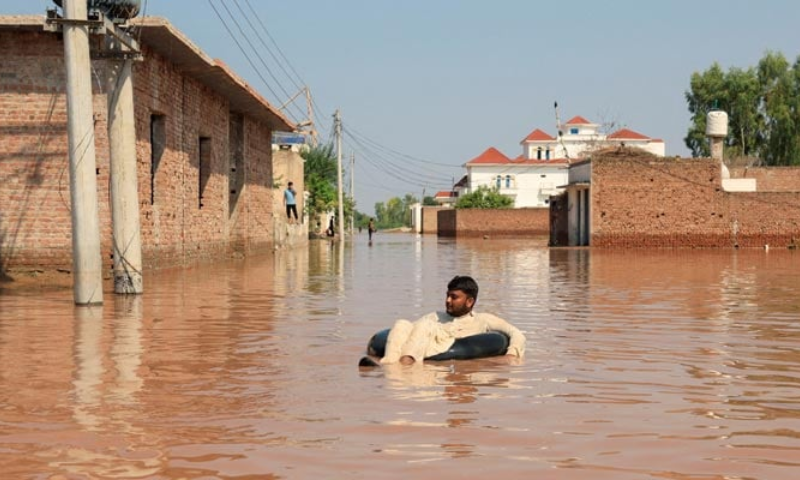
Karachi, August 30, 2025: Sindh’s Senior Minister Sharjeel Inam Memon has warned that as many as 1.6 million people across 1,657 villages could be affected if floodwaters from Punjab reach the province in the coming days.
Speaking to reporters on Saturday, Memon said the provincial government had activated its machinery and was taking advance measures to deal with the situation. Ministers and district administrations were on the ground, he noted, ensuring readiness in case of worsening conditions.
The Sindh government has earmarked 551 relief camp points and deployed 192 rescue boats. According to official estimates, 273,000 families across 167 union councils could be directly impacted if water levels continue to rise. Floodwaters are expected to reach Sindh between September 2 and 3.
Memon said current flows at major barrages stand at: Guddu Barrage: 351,000 cusecs (capacity: 1.2 million cusecs), Sukkur Barrage: 289,000 cusecs (capacity: 900,000 cusecs) and Kotri Barrage: 251,000 cusecs (capacity: 600,000 cusecs).
He stressed that no alarming situation exists at present, and if heavy rains subside, conditions may remain under control.
The warning comes as Punjab reels from devastating floods triggered by torrential rains and river discharges from India. At least 30 people have died, more than 1.5 million residents have been affected, and 481,000 have been evacuated from flood-hit areas across the province.
Memon emphasised that Sindh’s urban centres were not under immediate threat and urged citizens not to engage in speculation. He ruled out the need for army deployment, saying the provincial government was self-sufficient in managing the crisis.
Special attention, he said, was being given to people in katcha (riverine) areas, who were voluntarily moving to pucca (settled) areas or staying with relatives when waters rose. Around 300 separate livestock camps have also been set up, while 15 districts along riverbanks remain under close monitoring.
“Pakistan is among the countries most vulnerable to climate change. Construction should never take place within riverbeds,” Memon remarked, adding that barrage inflow and outflow data would be updated every three hours.