By Ambreen Ali
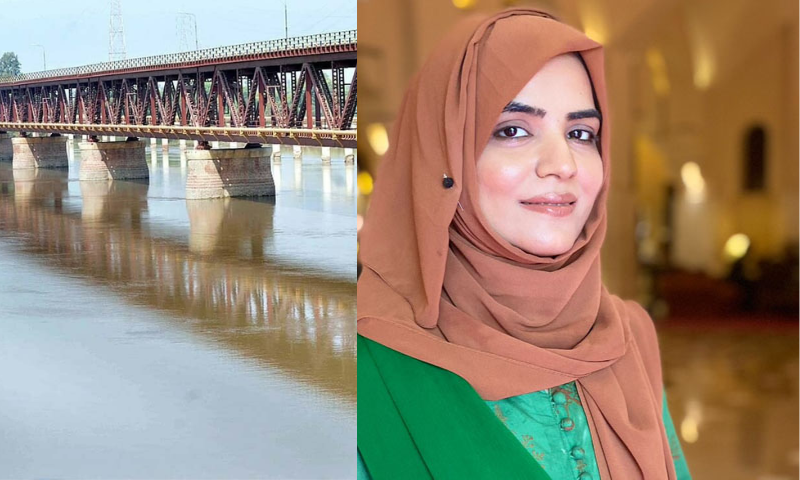
The impacts of climate change have not only intensified rains, floods, and soil erosion across Pakistan, but also affected the land along the River Ravi that was allotted nearly 38 years ago. Through a natural process, this land has now returned to the river’s possession. While climate change has caused destruction throughout the country, Lahore has recently become the center of attention. After continuous rains and India’s release of water, the once-forgotten river has revived.
For years, people had built houses on the dried banks of Ravi, abandoning the hope that water would ever flow here again. Pakistani singer Sajjad Ali even sang about it in his song “Ravi vich paani koi naheen” (There is no water in Ravi), while Noor Jahan sang “Wagdé ne akhiyaan ichon Ravi te Chenab” (Ravi and Chenab flow through the eyes). These songs reflected Ravi’s magic, but both artists, writers, and the common people had long lost hope that the river would return. After not 38 days, but 38 years, hope had truly died out.
Entire housing societies were developed around Ravi, but now their future is uncertain. People have vacated houses along the banks, as the Ravi has reclaimed its path. The old Mughal-era scenes have reappeared, and the view in front of the Badshahi Mosque has once again become breathtaking.
Looking into its history, the River Ravi enters Pakistan from India at Jassar. It is one of Punjab’s five rivers, from which the name Punjab (Panj + Aab, meaning five waters) originates. During the reigns of Mughal emperors Akbar and Jahangir, Ravi flowed near Lahore. Jahangir’s tomb and the gardens of Shahdara once stood along its banks. Over time, the river’s course shifted away from Lahore. Now, with Ravi’s return, it feels as though history itself has returned.
After the partition of 1947, the Indus Waters Treaty handed control of the waters of Ravi, Sutlej, and Beas to India. As a result, Pakistan became reliant mostly on the Indus, Jhelum, and Chenab. By the 1960 treaty, Ravi’s flow in Pakistan declined drastically. India built dams and barrages that further reduced its water flow, and the river turned into little more than an open sewer near Lahore, carrying the city’s sewage and industrial waste. Yet, climate change and erratic rainfall occasionally revived its flow, as we have seen in recent years.
In Hindu mythology, Ravi was once known as Iravati and Parushni. Lahore itself was founded on its banks. This river has witnessed Jainism, Hinduism, Islamic dynasties, and colonial rule. But it gained its greatest glory during the Mughal era, when it flowed behind Lahore’s Shahi Qila (Royal Fort). The river was so dear to the emperors that one even built the iconic Baradari pavilion near its banks to bring his imagination to life.
In the past, the journey to Baradari on Ravi was filled with beauty, but human interference turned it into a foul-smelling drain. Now, after 38 years, nature has taken its revenge and brought the Ravi back. Social media is flooded with reels, photos, and poetry about Ravi, almost as if climate change, despite all its destruction, has given Lahore a gift in the form of Ravi’s revival.
Today, there is a flood risk near Ravi. Despite government warnings to stay away, people flock to its banks to admire the scenery and capture it on their phones—afraid that the Ravi might disappear again. It is true: climate change has returned Ravi its lost land.