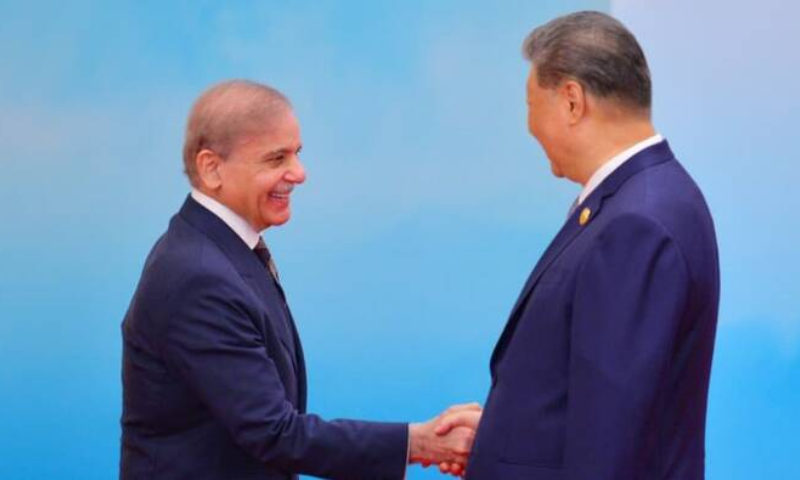
Tianjin, September 1, 2025: Pakistan is looking to expand its partnership with China by advancing cooperation in finance, port development, and the next phase of the China-Pakistan Economic Corridor (CPEC), officials said Monday, signaling a renewed focus on economic integration with its closest strategic ally.
Prime Minister Shehbaz Sharif, currently on a visit to China, and Finance Minister Muhammad Aurangzeb held key meetings with senior Chinese officials to strengthen collaboration in connectivity, trade, and financial services.
Meeting Communist Party Secretary of Tianjin-Binhai New Area, Lian Maojun, Sharif said CPEC had been instrumental in developing Pakistan’s energy sector and infrastructure. He outlined the second phase of CPEC, focused on smart cities, agriculture, and next-generation technologies, and called for expanded cooperation between Pakistan’s Karachi, Port Qasim, and Gwadar ports with China’s Tianjin Port.
“Pakistan wants to benefit from Tianjin-Binhai’s expertise in port handling and operations,” Sharif said, while also inviting Chinese companies to establish Special Economic Zones (SEZs) in Pakistan. He highlighted opportunities for collaboration in pharmaceuticals, biomedicine, and animal vaccines.
CPEC, launched in 2015 under China’s Belt and Road Initiative, has funded power plants, highways, and Gwadar Port on the Arabian Sea. Both countries are now working on “CPEC 2.0,” emphasizing industrialization, agriculture, and technology-driven growth.
Lian briefed Sharif on Tianjin-Binhai’s industries, spanning intelligent technology, petrochemicals, automotive, aerospace, new energy, and life sciences, underscoring areas of potential collaboration.
The push comes as Pakistan gradually recovers from an economic crisis under a $7 billion IMF loan program and seeks to boost trade, tourism, and foreign investment for sustainable growth.
Separately in Beijing, Finance Minister Aurangzeb met with Dr. Pan Gongsheng, governor of the People’s Bank of China (PBOC), and Liao Lin, chairman of the Industrial and Commercial Bank of China (ICBC), to advance financial integration.
Aurangzeb thanked China for its economic support, including June’s rollover of $3.4 billion in loans critical to shoring up Pakistan’s foreign reserves. He briefed Chinese officials on Pakistan’s reform agenda, improved credit ratings, and outlook, stressing the need to deepen cooperation in investment, trade financing, and capital markets.
“Partnerships with Chinese financial institutions are vital not only for meeting immediate financing needs but also for driving diversification, financial innovation, and regional integration,” Aurangzeb said, adding that Pakistan seeks greater access to Chinese onshore markets to open new investment avenues.
According to the finance ministry, both sides agreed that Pakistan–China economic ties have entered a new phase, with financial cooperation serving as the cornerstone of broader engagement.