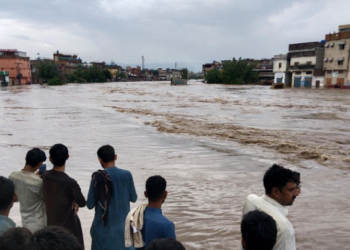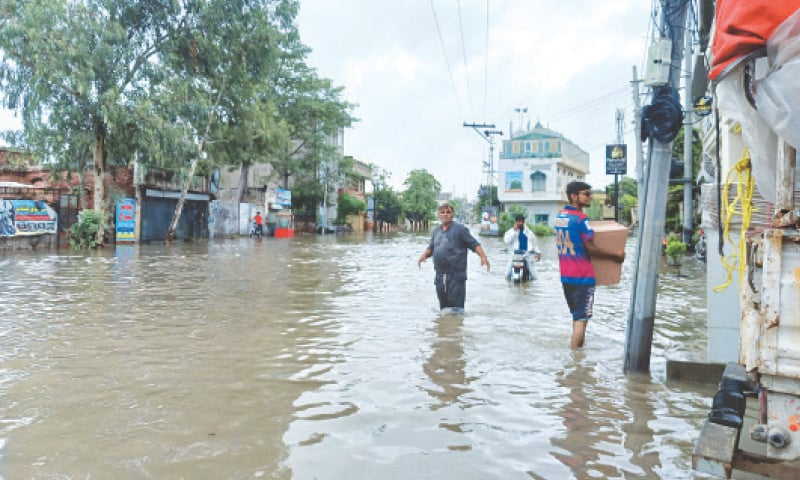
Gujrat, September 4, 2025: Torrential downpours measuring a record 526 millimetres have brought Gujrat to a standstill, flooding roads, markets, homes, and government institutions in one of the worst urban flooding episodes in recent memory.
Six major rainwater drains overflowed on the city’s outskirts, inundating surrounding villages before spilling into the heart of Gujrat. Commercial hubs, including Kachhari Chowk, Court Road, and Muslim Bazaar, were swamped, forcing traders to salvage their goods late at night without official assistance.
“Neither the district administration nor municipal staff were visible while we struggled to save our goods,” complained one shopkeeper, while others condemned what they described as “criminal negligence.”
Floodwaters entered residential neighbourhoods, damaging household belongings and cutting off access to food and cooking facilities. Citizens reported that their stoves had “gone cold” as waterlogged kitchens made meal preparation impossible.
In an unprecedented development, floodwater also breached the district jail and sessions court, prompting the emergency transfer of inmates to Lahore and Gujranwala prisons.
Authorities ordered the closure of all schools and colleges across the district, while heavy machinery was mobilised from Gujranwala to drain waterlogged streets. In Jalalpur Jattan, a vacant two-storey building collapsed after its foundations weakened in floodwaters, though no casualties were reported.
Commissioner Gujranwala confirmed that a protective embankment was being constructed near Madina Syedan to divert water into storm drains, while rescue and clearance operations continue.
Meanwhile, a second major flood wave in the Chenab River is moving towards Head Trimmu, raising fears of further inundation in Punjab’s low-lying districts. Officials have warned that the rising river levels could worsen the crisis beyond Gujrat.
The deluge follows 355mm of rainfall recorded in Sialkot on August 27, which also caused widespread urban flooding. Experts warn that such extreme weather events are becoming more frequent due to climate change, leaving Pakistan increasingly vulnerable to floods, landslides, and other climate-driven disasters.