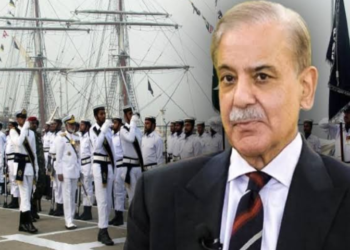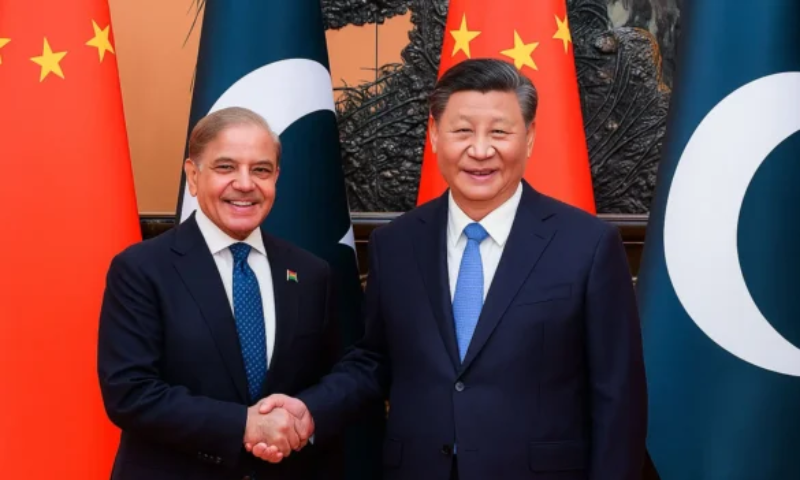
Beijing/Islamabad, September 5, 2025: Prime Minister Shehbaz Sharif concluded his visit to China with the signing of agreements and memorandums of understanding (MoUs) worth $8.5 billion, signaling a fresh chapter in Pakistan-China economic cooperation under the second phase of the China-Pakistan Economic Corridor (CPEC).
According to official statements, Pakistani and Chinese companies inked business agreements valued at $1.5 billion, aimed at boosting bilateral trade, investment, and industrial collaboration across multiple sectors. Additionally, MoUs worth $7 billion were signed, covering a broad spectrum of development and investment projects in infrastructure, energy, agriculture, and technology.
At the farewell ceremony marking the end of his visit, Prime Minister Shehbaz emphasized that a monitoring mechanism had been established to ensure the transparent and accountable implementation of these agreements.
“We will make every effort to achieve the goals,” he said, expressing optimism that the new arrangements would yield tangible benefits for both nations.
On Thursday, Shehbaz Sharif met Chinese Premier Li Qiang in Beijing, where the two leaders reaffirmed their resolve to strengthen the “all-weather strategic cooperative partnership.” Both sides expressed satisfaction with the positive momentum in bilateral relations and vowed to expand cooperation under CPEC Phase II.
The discussions, held at the delegation level, culminated in the signing of multiple agreements and MoUs, including a joint action plan to enhance mutual cooperation.
Pakistan and China agreed to focus on five new economic corridors under CPEC, prioritizing:
- Agriculture
- Mining and minerals
- Textiles and industry
- Information technology
- Science, technology, and media
These priority areas are expected to attract new investments while creating opportunities for business-to-business collaboration.
Prime Minister Shehbaz stressed the need for fast-tracking major connectivity projects, including the realignment of the Karakoram Highway, the upgrade of Main Line-1 (ML-1) railway, and the operationalization of Gwadar Port.
He also announced Pakistan’s intent to issue Panda Bonds in China’s capital markets to diversify financing options and deepen financial linkages.
Highlighting Pakistan’s reform agenda and investment potential, Shehbaz briefed Chinese leaders about the upcoming Pakistan-China Investment Conference in Beijing, expected to draw participation from over 300 Pakistani and 500 Chinese companies.
The prime minister expressed gratitude to the Chinese leadership and people for their “unwavering support for Pakistan’s sovereignty, regional integrity, and socio-economic development.” He credited China’s consistent backing as instrumental in sustaining Pakistan’s economic reforms and recovery efforts.
Following the talks, Premier Li Qiang hosted a luncheon in honour of Prime Minister Shehbaz and his delegation, symbolizing the commitment of both sides to carry forward their shared vision of economic progress and strategic cooperation.