Lahore, September 19, 2025: Authorities in Pakistan’s Punjab province on Friday officially declared the end of the 2025 monsoon season, as floodwaters that had surged through major rivers in late August continued to recede following one of the country’s deadliest and most destructive monsoons in history.
According to the Provincial Disaster Management Authority (PDMA), at least 1,006 people have died nationwide since the rains began on June 26. Punjab accounted for nearly 300 fatalities, including 123 deaths in the devastating spell after August 26, when heavy floods inundated vast areas of the province.
The PDMA reported that more than 44.7 million people in Punjab alone have been directly affected, while crops on over 2.48 million acres of farmland have been destroyed. At least 1,779 livestock have died, and nearly 1,000 more remain missing, further compounding fears of food insecurity in Pakistan’s agricultural heartland.
The largest crop losses were reported in rice (44% of affected farmland), followed by corn (16%), sugarcane (13%), and cotton (5%). A digital survey to assess crop, livestock, structural, and human losses will begin on September 24, PDMA officials confirmed.
PDMA Punjab Director General Irfan Ali Kathia told reporters that floodwaters in major rivers, including the Chenab, Ravi, and Sutlej, had now returned to normal or below-normal levels.
“Today, I inform you from PDMA Punjab that our monsoon practically is almost over now and no strong or even weak system is forecast for the coming week,” Kathia said.
He added that around 106,000 displaced people are still living in relief camps across southern Punjab districts such as Multan, Jalalpur Pirwala, and Muzaffargarh. At the peak of the disaster, nearly 500 relief camps were operational, supported by 425 medical units.
Kathia credited rescue agencies for saving 2.4 million people during the peak flood crisis, with 37,000 boat trips conducted by Rescue 1122 and the Pakistan Army. More than 2 million animals were also evacuated to safety.
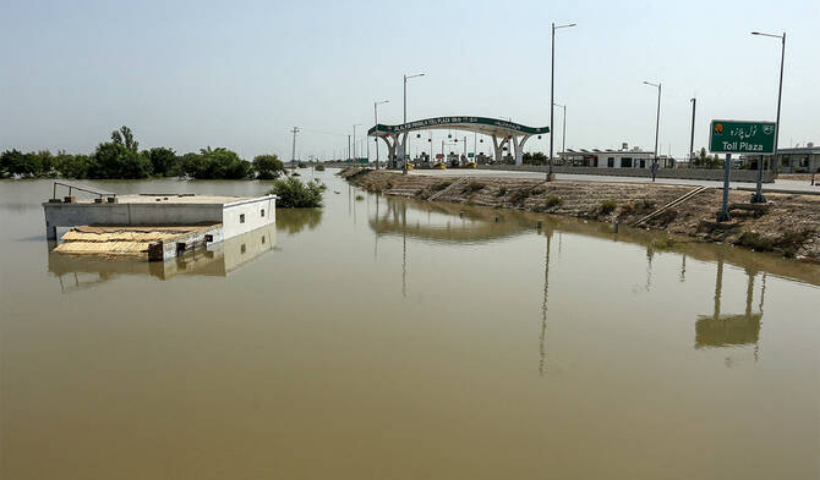
The floods severely damaged infrastructure, including a 22-kilometer stretch of the M5 Motorway between Jalalpur Pirwala and Jhangra. Kathia said 73 culverts had been impacted, of which five were destroyed, but repair work was underway with assistance from the National Highway Authority and federal agencies.
“The water is receding gradually,” he added, assuring that the motorway would be restored in phases.
Pakistan, which contributes only about 1% of global greenhouse gas emissions, is among the countries most vulnerable to climate change. The devastation of 2025 follows the catastrophic 2022 floods, which killed 1,700 people, displaced 33 million, and caused more than $30 billion in economic losses.
Experts have warned that extreme weather events are becoming the “new normal” for South Asia, with Pakistan facing a growing threat of seasonal flooding, heatwaves, and glacial melt.