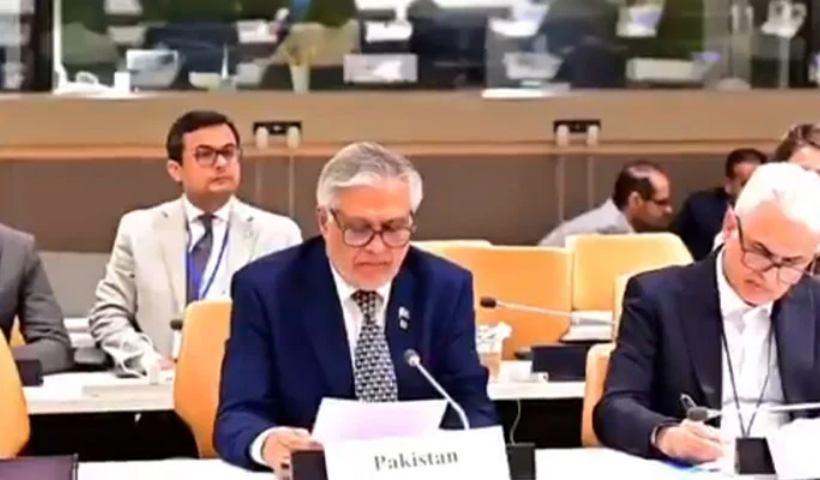
New York, September 24, 2025: Deputy Prime Minister and Foreign Minister Senator Ishaq Dar on Wednesday urged the Afghan interim government to take “concrete and verifiable measures” to ensure their territory is not used for terrorism against neighbouring countries, particularly Pakistan.
Speaking at the Inaugural Meeting of the OIC Contact Group on Afghanistan, Dar voiced Pakistan’s grave concerns over the presence of more than two dozen terrorist groups operating inside Afghanistan. He specifically named the Tehreek-e-Taliban Pakistan (TTP), Baloch Liberation Army (BLA), Majeed Brigade, and East Turkestan Islamic Movement (ETIM), stressing their collaboration with Al-Qaeda and the serious threat they pose to regional and global security.
Since the Taliban’s return to power in 2021, Pakistan has witnessed a surge in cross-border attacks, particularly in Khyber Pakhtunkhwa and Balochistan. The two countries share a porous 2,500-kilometre border, a vital route for trade and people-to-people ties but also a flashpoint for militant infiltration.
Islamabad’s concerns have been echoed by a United Nations Security Council (UNSC) Monitoring Team report, which revealed Kabul’s logistical, operational, and financial support for the TTP. “Our law enforcement officials and civilians continue to make enormous sacrifices due to terrorism emanating from Afghanistan. Earlier this month, 12 Pakistani soldiers were martyred while combating TTP infiltrators,” Dar recalled.
The deputy prime minister also warned of extremist organisations exploiting digital platforms for propaganda and radicalisation. “This cannot be tolerated under any circumstances,” he stressed.
To address Afghanistan’s multifaceted challenges, Dar proposed a working group of OIC experts to draft a practical roadmap with reciprocal steps. He outlined a six-point agenda for the OIC:
- Secure adequate humanitarian funding without political bias.
- Stabilise the Afghan economy and banking sector to promote trade and connectivity.
- Encourage dialogue with the Taliban to ensure compliance with international obligations.
- Support UN-led alternative livelihoods for ex-poppy farmers.
- Urge the Taliban to lift restrictions on women and girls.
- Create conditions for the safe repatriation and reintegration of Afghan refugees.
Reiterating that no country desired stability in Afghanistan more than Pakistan, Dar said peace and prosperity in Afghanistan required “mutual respect, sincerity, and the political will of the Taliban authorities.”
He also cautioned that global attention shifts risked sidelining Afghanistan’s humanitarian, security, and political crises. “As fellow OIC members, regional partners, and neighbors, we must use this platform to help pull Afghanistan out of its isolation,” he concluded.