Islamabad, September 24, 2025: Federal Minister for National Health Services, Regulations and Coordination Syed Mustafa Kamal on Wednesday set an ambitious target of $30 billion in pharmaceutical exports over the next five years, pledging the government’s full support to the industry.
Addressing the 8th Pakistan Pharma Summit and the 4th Pharma Export Summit & Awards (PESA 2025), Kamal termed the pharmaceutical sector a potential “game changer” for Pakistan’s economy.
“Although this is a challenging target, it is achievable with commitment and hard work,” the minister said. “If other countries can generate $300 billion through pharma exports, Pakistan must confidently aim for $30 billion.”
Kamal acknowledged the sector’s recent momentum, with exports rising by 35% in the past year to $475 million, but stressed that the figure was still insufficient. “It’s a step forward, but not something to be satisfied with. We must think bigger,” he remarked.
The minister outlined several government initiatives to streamline the industry, including removing bureaucratic hurdles and accelerating regulatory approvals. “What used to take months or years is now being cleared within weeks. We are adopting digitization, and this is an opportunity we must seize,” he noted.
Kamal also unveiled plans to transform Basic Health Units (BHUs) through telemedicine, starting with pilot projects in Karachi and Islamabad, to bring healthcare and medicines to people’s doorsteps while easing pressure on tertiary hospitals.
On vaccines, he expressed concern that 95% of vaccines are currently imported, urging local production to build self-reliance. “There is a dire and urgent need to develop indigenous capabilities for vaccine production. The pharmaceutical industry must step up to this challenge,” he emphasized.
Earlier, PPMA Chairman Tauqeer ul Haq highlighted the industry’s achievements and challenges. He said pharma exports have touched $500 million annually, with plans to target $500 million in Afghanistan alone. However, he flagged that 90% of raw materials are imported, a major vulnerability.
Tauqeer praised DRAP CEO Dr. Obaidullah for fast-tracking export registrations, which now take less than a week. He also urged the government to approve the establishment of an independent pharma trade body, PharmEx, to resolve industry bottlenecks and boost exports.
Former PPMA Chairman Dr. Sheikh Kaiser Waheed echoed the $30 billion vision but stressed the need for technology transfer, regulatory reforms, and AI-based equipment. He noted that while Pakistan already produces over 90% of its domestic medicines, global competitiveness requires innovation, quality, and trust — “not price alone.”
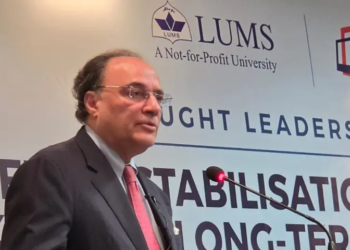
Speaking at the event, DRAP CEO Dr. Obaidullah said the regulator was implementing transformation measures to align Pakistan’s pharma industry with international standards and audits. “Despite challenges, the industry continues to grow, and DRAP stands ready to work with stakeholders to take it forward,” he said.
The summit also featured international experts, including Jim Harris on artificial intelligence in drug discovery, Dr. Zakieh Al-Kurdi (USP, EMEA) on regulatory policy, Prof. Khalid Ahmad Sheikh (UCL, UK) on building a culture of quality, and Dr. Geoff Tsen (USP, Greater China) on resilience and standards.
Discussions emphasized compliance with WHO, PIC/S, and MHRA certifications, seen as essential for Pakistan’s entry into advanced markets.
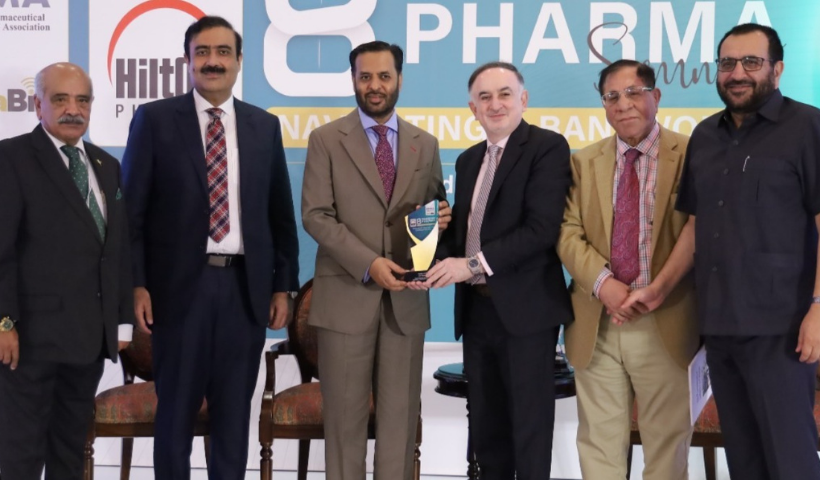
The event concluded with the PESA 2025 Awards, honoring companies and individuals for outstanding contributions to pharma exports.