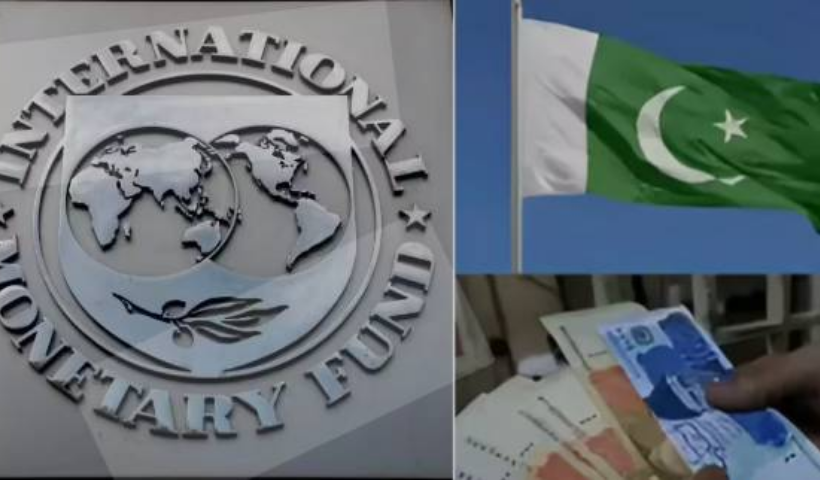
Islamabad, October 10, 2025: Pakistan has received commendation from the International Monetary Fund (IMF) for its progress on economic reforms, but a staff-level agreement (SLA) remains pending due to unresolved external financing details and the delayed release of a key governance report.
Officials familiar with the matter said that two major hurdles persist — finalisation of the balance of payments (BoP) and external financing tables under the Memorandum of Economic and Financial Policies (MEFP), and the release of the Governance and Corruption Diagnostic (GCD) Assessment, which is a structural benchmark under the programme.
These tables are expected to be finalised in the coming week. Meanwhile, the IMF is also awaiting final flood damage estimates before proceeding. Despite these delays, officials expressed confidence that the outstanding matters could be resolved within the next one to two weeks, paving the way for an SLA.
Finance Minister Muhammad Aurangzeb earlier told reporters that discussions with the IMF had been “productive,” adding that the signing of the SLA was “a matter of time.” The Ministry of Finance has so far avoided making an official statement on the issue.
Sources said the IMF mission has sought confirmation from Pakistan’s bilateral and multilateral partners regarding external financing assurances amid concerns that the current account deficit could widen further.
In a statement issued from Washington early Friday, the IMF confirmed that its mission, led by Iva Petrova, held discussions in Karachi and Islamabad from September 24 to October 8 under the Extended Fund Facility (EFF) and the Resilience and Sustainability Facility (RSF).
“The IMF mission and the Pakistani authorities made significant progress toward reaching a staff-level agreement,” the Fund said, adding that “programme implementation remains strong and aligned with the authorities’ commitments.”
The IMF commended Pakistan for maintaining fiscal discipline, supporting post-flood recovery, keeping monetary policy appropriately tight to curb inflation, and pursuing energy sector reforms through regular tariff adjustments and cost-cutting measures. It also appreciated efforts to enhance governance, transparency, and competitiveness in the economy, as well as ongoing work to strengthen climate resilience under the RSF.
However, some fiscal differences still need to be ironed out. Both sides have yet to agree on contingency taxation measures in case of a revenue shortfall in the current quarter. The IMF has opposed additional levies on imported luxury goods, while the Federal Board of Revenue (FBR) resisted higher taxes on fertilisers and pesticides.
The Ministry of Finance and FBR are now preparing revised proposals to bridge these gaps and finalise the long-awaited staff-level agreement in the coming days.