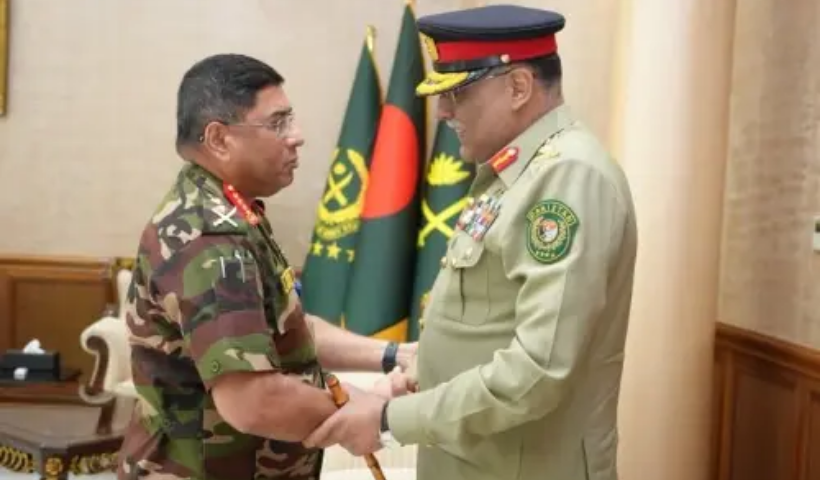
Dhaka, October 28, 2025: Chairman Joint Chiefs of Staff Committee (CJCSC) General Sahir Shamshad Mirza and Bangladesh’s Chief of Army Staff General Waker-Uz-Zaman on Tuesday expressed satisfaction over the “positive trajectory” of growing defence cooperation between Pakistan and Bangladesh, according to a statement issued by the Inter-Services Public Relations (ISPR).
During a meeting at the Bangladesh Army Headquarters in Dhaka, both sides discussed regional and global security dynamics and reaffirmed their commitment to strengthening bilateral military ties.
“The two dignitaries appreciated the positive trajectory of expanding defence cooperation between the two countries and agreed to maintain regular exchange visits at various tiers of military leadership,” the ISPR said.
The discussions also covered areas such as training, joint exercises, and sharing of counter-terrorism experiences. Both leaders highlighted the need to counter the “emerging challenges posed by disruptive and divisive disinformation efforts” and underscored the importance of joint mechanisms to address such threats.
CJCSC Mirza’s visit comes amid a notable thaw in Pakistan–Bangladesh relations following the August 2024 uprising in Bangladesh that led to the ouster of former Prime Minister Sheikh Hasina. Since then, both trade and diplomatic exchanges have seen a marked improvement, with several high-level visits taking place.
On Monday, General Mirza held separate meetings with Chief Adviser Muhammad Yunus, Chief of Naval Staff Admiral Mohammad Nazmul Hassan, Chief of Air Staff Air Chief Marshal Hasan Mahmood Khan, and Principal Staff Officer (PSO) of the Armed Forces Division Lt Gen S.M. Kamrul Hassan.
According to the ISPR, all sides reiterated the desire to enhance defence and security collaboration and to “build an enduring partnership” resilient to external pressures.
Earlier in January, PSO Lt Gen Kamrul Hassan had met Pakistan’s Chief of Army Staff Field Marshal Asim Munir at the General Headquarters in Rawalpindi, where both reaffirmed the need for sustained engagement to further strengthen defence ties.
The latest engagements, officials say, mark a continued effort by both nations to normalise and expand their defence and diplomatic relationship after years of limited interaction.