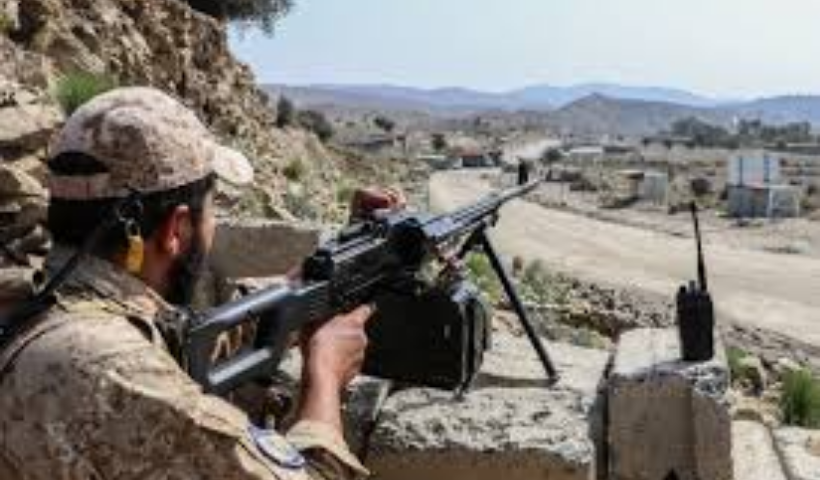
Islamabad, November 1, 2025: Militants in Pakistan suffered their heaviest losses in ten years during October as security forces stepped up counterterrorism operations across multiple regions, according to data released by the Pakistan Institute for Conflict and Security Studies (PICSS).
The Islamabad-based think tank reported that 355 militants were killed during the month, marking the highest monthly militant death toll since 2014. At the same time, 72 security personnel and 31 civilians, including a peace committee member in Bannu, also lost their lives.
Another 92 security personnel, 48 civilians, and 22 militants were injured nationwide, the PICSS Militancy Database showed.
While militant attacks rose by 29 per cent — from 69 in September to 89 in October — overall human losses in these attacks declined by 19 per cent, reflecting the growing impact of Pakistan’s intensified counter-militancy campaign.
The report also noted a troubling spike in abductions, with militants kidnapping 55 people in October — the highest monthly total in a decade. Security forces, meanwhile, arrested 22 suspected militants.
Balochistan recorded 23 militant attacks in October, slightly up from 21 in September, but the province saw a dramatic decline in casualties. Civilian deaths dropped by 92pc, and security personnel fatalities fell by 52pc, even as 67 militants were killed — the province’s highest monthly militant death toll since 2002.
The report termed this “a notable improvement” in Balochistan’s security environment, citing a sharp reduction in both civilian and security force casualties. However, militants kidnapped 31 people, mostly labourers, during the month.
In the former tribal areas (erstwhile FATA), 22 attacks were recorded — the same as in September — but casualties surged. Thirty-one people were killed, including 18 security personnel and 13 civilians, while 45 others were injured. Militants also abducted 18 individuals from the region.
PICSS documented a 200pc rise in security force deaths compared to the previous month. Counterterrorism operations in the region resulted in the killing of 209 militants — the highest single-month toll since November 2014.
Among those killed was Qari Amjad, the former deputy emir and shadow defence minister of the Tehreek-e-Taliban Pakistan (TTP), marking the group’s most high-profile loss since its formation in 2007.
In Khyber Pakhtunkhwa, militant attacks increased from 25 to 37, resulting in 48 deaths — including 21 security personnel, 10 civilians, 16 militants, and one peace committee member. Another 42 people were injured. Four individuals were kidnapped.
Security operations in the province eliminated 55 militants, though this was lower than the 88 killed in September.
In Sindh, three militant incidents left three civilians dead and seven injured, including security personnel. The banned Zainabiyoun Brigade saw heightened activity, with eight suspected members, including key commanders, arrested. The Balochistan Liberation Army (BLA) also claimed responsibility for an IED attack on the Jaffar Express in Shikarpur, which derailed four carriages and injured seven passengers.
Gilgit-Baltistan recorded three attacks — including two attempted target killings allegedly by the Zainabiyoun Brigade — while the TTP abducted two Wapda officials.
In Punjab, one low-intensity incident occurred when TTP militants blew up a gas pipeline in Mianwali. Security forces also arrested an Al-Qaeda operative from Okara.
From January to October 2025, Pakistan recorded 2,853 deaths linked to militancy, including 1,734 militants, 601 security personnel, 497 civilians, and 21 pro-government combatants.
PICSS concluded that while militant violence remains persistent, the sharp rise in militant fatalities reflects the growing effectiveness of Pakistan’s counterterrorism efforts.
Earlier this year, Pakistan ranked second on the Global Terrorism Index 2025, with terror-related deaths rising 45pc to 1,081 over the previous year.