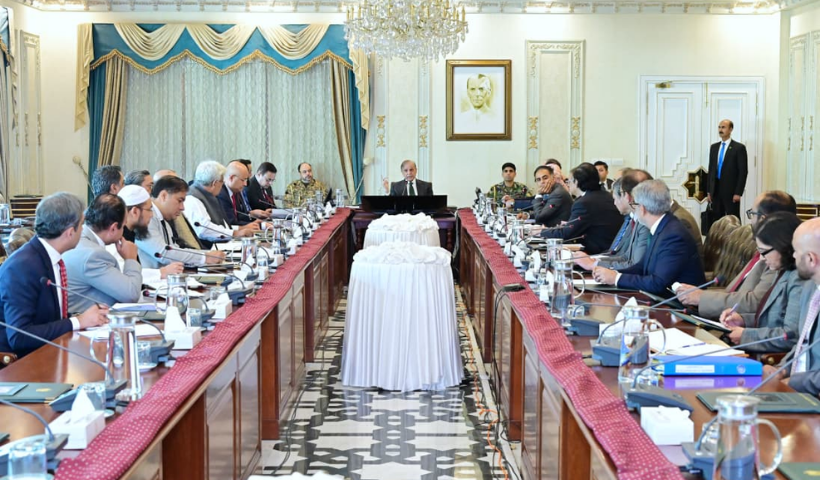
Islamabad, November 10, 2025: Prime Minister Shehbaz Sharif on Monday underscored the importance of transforming Pakistan into a cashless economy, terming it essential for sustainable development, improved governance, and the fight against corruption.
Chairing a high-level meeting to review progress on the government’s digital financial initiatives, the prime minister directed authorities to expand awareness campaigns in rural areas to accelerate the shift from a traditional cash-based system to a fully digital economy.
“The entire world is moving towards digitalization, and Pakistan must move forward alongside it,” the prime minister said. He noted that his government had prioritized digital transformation from the outset, and that these efforts were now yielding tangible results.
Highlighting a key achievement, the premier said that for the first time during the holy month of Ramazan, financial assistance under the Benazir Income Support Programme (BISP) was successfully transferred to deserving families via digital wallets.
He emphasized that adopting a cashless economy would strengthen transparency, enhance financial inclusion, and reduce corruption. The prime minister instructed all relevant departments to meet their assigned targets within the stipulated timeframe.
PM Shehbaz commended the Ministry of Finance, Ministry of IT, Federal Board of Revenue (FBR), State Bank of Pakistan (SBP), and other institutions for their “satisfactory progress” in implementing the cashless economy roadmap.
During the briefing, officials informed the meeting that electricity and gas bill payments were now being facilitated through RAAST QR codes, enabling billions of rupees in digital transactions.
The meeting also reviewed the progress on 10 million digital wallets under BISP, with officials informing the prime minister that all wallets will be activated by the end of the month, and the next tranche of financial assistance will be disbursed digitally.
It was further informed that mobile applications providing government services in Islamabad were being integrated with the RAAST system, while new business licenses had also been linked to digital payment systems. Additionally, the facility of QR-based payments has been made available at retail shops nationwide.
Officials said that licenses were being issued for the establishment of digital banks across the country. So far, over 68% of Pakistan’s population has been brought into the financial inclusion network, with further expansion planned for next year.
The prime minister directed that the scope of financial inclusion be broadened further and that upcoming targets for 2026 be met in line with the national digitalization strategy.
The meeting was attended by Federal Ministers Muhammad Aurangzeb, Ahad Khan Cheema, Attaullah Tarar, Shaza Fatima Khawaja, Minister of State Bilal Azhar Kayani, SBP Governor Jameel Ahmed, NADRA Chairman Lt. Gen. Muhammad Munir, FBR Chairman Rashid Langrial, and other senior officials.