Islamabad, November 16, 2025: Investigations into the recent suicide attack at the Islamabad District Judicial Complex have revealed that the bomber initially attempted to target the Faizabad checkpoint but failed to detonate the explosives, sources said on Sunday.
According to officials, the attacker reached the Faizabad checkpoint but was unable to remove the pin from his suicide vest. He then returned to Rawalpindi and carried out the deadly blast at the judicial complex a few days later.
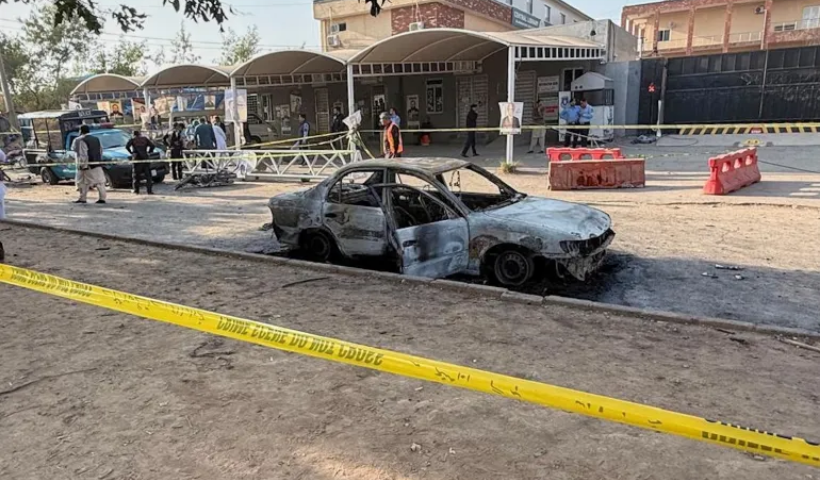
The explosion at the Judicial Complex left 12 people martyred and 36 others wounded, including lawyers and petitioners, and forced the suspension of court proceedings. Interior Minister Mohsin Naqvi stated that the attacker detonated near a police vehicle after failing to enter the courthouse. The blast also set nearby cars ablaze and scattered debris across the area.
A police investigation report revealed that the bomber arrived in Islamabad last Friday and traveled to the court from Pirwadhai on a motorcycle. The attack marked Islamabad’s first suicide bombing in nearly three years, since December 2022, coinciding with major international events including the Inter-Parliamentary Speakers’ Conference and the sixth Margalla Dialogue.
Authorities have since arrested four members of a Tehreek-e-Taliban Pakistan/Fitna al-Khawarij (TTP/FAK) cell linked to the blast. Sajidullah, alias Sheena, identified as the handler of the suicide bomber, confessed that TTP/FAK Commander Saeed-ur-Rehman, alias Daadullah, orchestrated the attack from Afghanistan to maximize casualties among law enforcement agencies.
Daadullah, a resident of Charmang, Bajaur, and currently serving as TTP’s intelligence chief for Nawagai, Bajaur, reportedly coordinated the attack through Telegram, sending photos of the suicide bomber Usman alias Qari, a Shinwari tribe member from Achin, Nangarhar, Afghanistan, to Sheena. On arrival in Pakistan, Sheena arranged Qari’s stay near Islamabad and collected a suicide jacket from Akhun Baba graveyard in Peshawar, which was later fitted onto him before the blast.
The attack comes amid heightened Pakistan-Afghanistan tensions over cross-border terrorism, which have recently resulted in border clashes. A day before the Islamabad blast, militants infiltrated Wana Cadet College, prompting a successful security operation that safely evacuated students and staff while neutralizing the attackers.
Following these incidents, Defence Minister Khawaja Asif warned that Pakistan could conduct strikes inside Afghanistan, criticizing the Afghan Taliban for providing safe havens to militants responsible for attacks in Islamabad and South Waziristan.
The Islamabad blast underscores the ongoing threat posed by transnational militant networks and highlights the challenges faced by security forces in preventing such attacks despite enhanced vigilance.