Islamabad, December 5, 2025: Pakistan on Friday suggested that a lack of cooperation from the Afghan Taliban regime may be contributing to the delay in the visit of a high-level Turkish delegation meant to help ease tensions between Islamabad and Kabul.
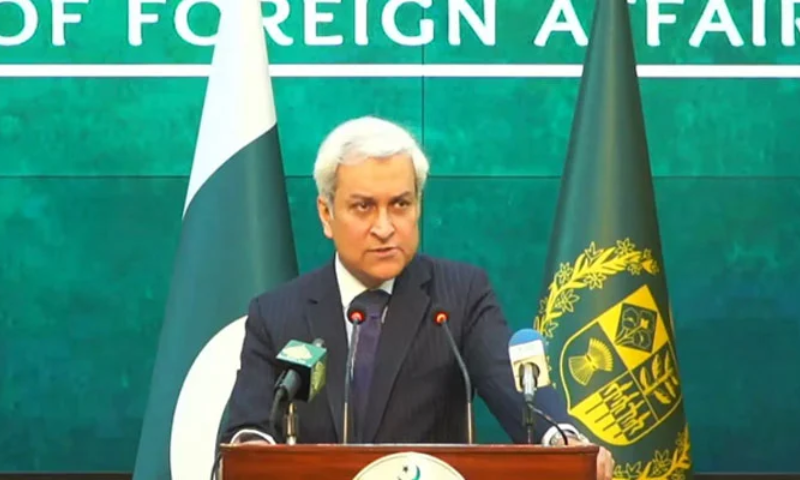
Foreign Office Spokesperson Tahir Hussain Andrabi, during his weekly press briefing, said the delay could also be due to scheduling complications, but noted that the Afghan Taliban’s reluctance to engage meaningfully may be a factor.
The Turkish delegation — reportedly to include senior ministers and the Turkish intelligence chief — was expected in Islamabad last month after Turkish President Recep Tayyip Erdogan disclosed the planned visit during his meeting with Prime Minister Shehbaz Sharif in Baku. Turkish Ambassador to Pakistan Dr Irfan Neziroglu, who played an active role in the Istanbul trilateral process on Afghanistan, had confirmed the visit.
Andrabi said Pakistan’s border with Afghanistan would remain closed until Kabul guarantees that no terrorist or violent elements will cross into Pakistani territory. He stressed that cross-border terrorism was not limited to TTP or TTA militants, adding that Afghan nationals had also been involved in “serious crimes” inside Pakistan.
“The border closure should be understood in this broader security context,” he said.
He clarified that Thursday’s reopening of the Torkham and Chaman border crossings was strictly for the passage of humanitarian aid and did not reflect a policy shift.
Pakistan shut the Torkham and Chaman crossings on October 12 following coordinated attacks by the Afghan Taliban and affiliated militants on multiple Pakistan Army border posts. The clashes, which began overnight between October 11 and 12, resulted in the killing of more than 200 Taliban fighters and militants, while 23 Pakistani soldiers were martyred.
In response, Pakistan carried out “precision strikes” targeting militant hideouts deep inside Afghanistan’s Kandahar province and the outskirts of Kabul. A 48-hour ceasefire was observed on October 15 at Kabul’s request, followed by a formal ceasefire agreement on October 19 in Qatar in talks mediated by Doha and Turkiye.
Under the agreement, Afghanistan committed to ensuring that no terrorist activity would emanate from its soil, while both sides agreed to institutional mechanisms aimed at preventing future escalations.
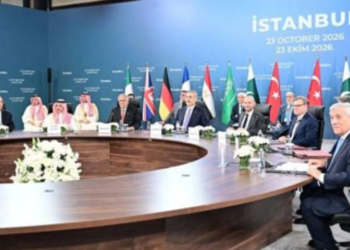
Subsequent discussions hosted by Turkiye stalled after Pakistan rejected what it termed the Taliban delegation’s “illogical” arguments and refusal to address Islamabad’s core concerns about cross-border terrorism.
Despite the setback, mediators convinced both parties to uphold the ceasefire, creating space for further diplomatic engagement. The now-delayed Turkish delegation’s expected visit to Islamabad was aimed at reviving those efforts, though uncertainty persists in the absence of cooperation from Kabul.