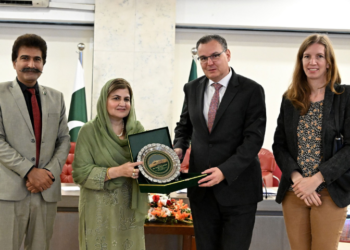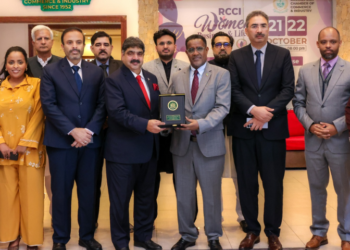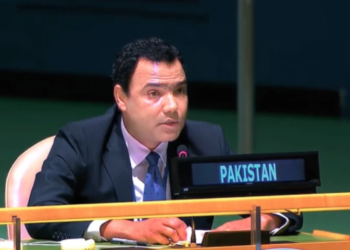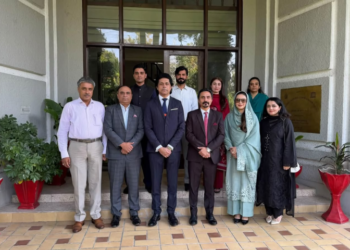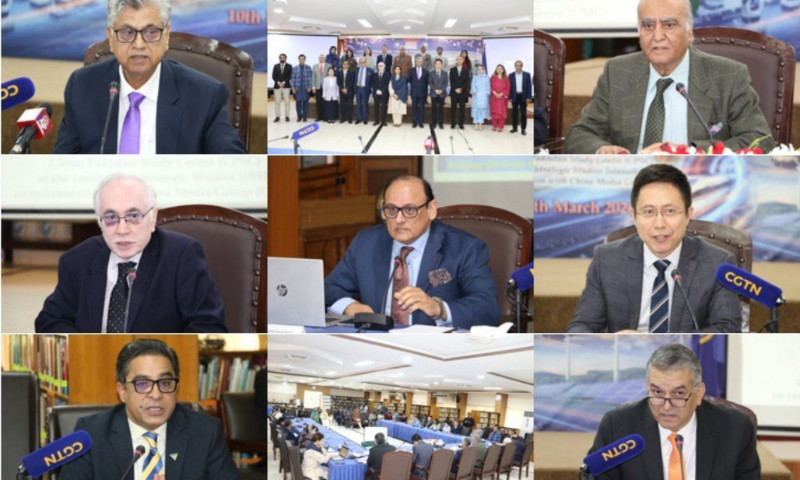
Islamabad, March 10, 2026: The China-Pakistan Study Centre (CPSC) at the Institute of Strategic Studies Islamabad (ISSI), in collaboration with China Media Group (CMG), organized a seminar titled “China in Springtime: The 15th Five-Year Plan – Global Significance and Opportunities of Chinese Modernization.” The event focused on the outcomes of Two Sessions and their implications for global development.
In his welcome remarks, Chairman ISSI Khalid Mahmood highlighted that China’s modernization under the upcoming 15th Five-Year Plan reflects a strong emphasis on innovation, sustainability, and people-centered development. He noted that China’s continued economic momentum carries important global implications and presents opportunities for enhanced cooperation, particularly with partners such as Pakistan.
He stressed that collaboration under the China-Pakistan Economic Corridor (CPEC) in areas such as technology, green development, and connectivity could further strengthen the long-standing strategic partnership between Pakistan and China.
Guest of Honor Murtaza Solangi discussed the broader geopolitical context of China’s development trajectory, noting that deliberations at the National People’s Congress and the Chinese People’s Political Consultative Conference provide insights into China’s long-term economic planning and policy priorities.
He observed that China is focusing on stable economic growth, technological self-reliance, innovation, and green transition, while expanding the digital economy and strengthening domestic consumption. Referring to the evolving global environment, Solangi remarked that the world is gradually moving toward a multipolar international system in which countries of the Global South will play an increasingly significant role.
Delivering the keynote address, former ambassador Masood Khalid underscored the importance of understanding China’s development model through its Five-Year Plans. He noted that the planning process, initiated in 1953, has evolved into a practical framework combining long-term vision with continuous evaluation. According to him, these plans have driven China’s transformation, including lifting more than 800 million people out of poverty and building world-class infrastructure.
Speaking on the occasion, Hassan Daud Butt described China’s development path as the gradual construction of a “Great Wall of Development.” He said that despite demographic, environmental, and geopolitical challenges, China has maintained strong economic growth and technological advancement, particularly in innovation and clean energy. He added that Pakistan could benefit from strengthening Special Economic Zones, expanding technological cooperation, promoting renewable energy, and enhancing people-to-people exchanges with China.
Meanwhile, Tahir Mumtaz Awan highlighted that the 15th Five-Year Plan represents an important step toward achieving socialist modernization by 2035, emphasizing high-quality growth driven by technological innovation, advanced industries, and strong domestic demand. He stressed that Pakistan should effectively utilize the next phase of CPEC to enhance cooperation in technology transfer, renewable energy, agriculture, and industrial development.
Chief Guest Wang Shengjie, Political and Press Counselor at the Chinese Embassy in Islamabad, said the 15th Five-Year Plan reflects a comprehensive and consultative planning process incorporating input from different segments of society. He reaffirmed China’s commitment to multilateralism and global development, noting that initiatives such as the Belt and Road Initiative continue to create opportunities for partner countries.
Earlier, Director CPSC Talat Shabbir highlighted the importance of the Two Sessions in shaping China’s economic and governance policies and their global impact. He also pointed to the opportunities these developments offer Pakistan in strengthening economic cooperation through CPEC.
The seminar was attended by diplomats, scholars, policy practitioners, and media professionals, reflecting wide interest in discussions on China’s development trajectory and its global significance.