Islamabad, April 10, 2026: The Asian Development Bank (ADB) on Friday upgraded Pakistan’s economic growth forecast to 3.5 percent for the current fiscal year, while cautioning that global economic uncertainty—particularly stemming from the Middle East crisis—poses significant downside risks.
In its flagship Asian Development Outlook (ADO) April 2026, the Manila-based lending agency projected that Pakistan’s real gross domestic product (GDP) would grow by 3.5 percent in FY2026 and 4.5 percent in FY2027, up from 3.1 percent in FY2025. The bank had earlier forecast a 3 percent growth rate for the current fiscal year.
“Pakistan is expected to sustain its economic performance in the medium term, as manufacturing recovers and investment increases,” the report stated. However, it warned that despite recent stabilisation, the country’s economic outlook faces significant downside risks due to global uncertainties that could heighten inflationary, fiscal, and external pressures.
ADB Country Director for Pakistan, Emma Fan, said the economy has stabilised and is gaining momentum amid ongoing structural reforms.
“Pakistan’s economy has stabilised and begun to show stronger momentum, supported by progress in implementing key economic reforms amid a challenging global environment,” she noted. “Sustained reform efforts are critical to preserving growth momentum and strengthening fiscal and external buffers against global shocks.”
The report emphasised that adherence to economic adjustment programmes and structural reforms is essential for fostering sustainable and inclusive growth while strengthening resilience against external challenges.
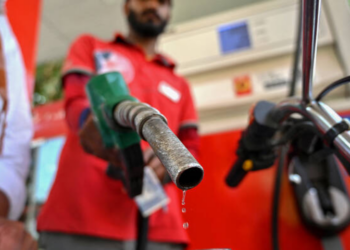
Average inflation is projected at 6.4 percent in FY2026 and 6.5 percent in FY2027, driven largely by surging oil prices and disrupted trade routes linked to the Middle East conflict. Given that oil and gas constitute a substantial share of Pakistan’s imports, global energy price volatility remains a key concern.
The central bank is expected to cautiously ease monetary policy to stabilise inflation within its medium-term target range of 5–7 percent.
Economic activity is expected to gain traction across key sectors. A rebound in private-sector investment, supported by macroeconomic stability and a stable foreign exchange market, will drive growth in FY2026.
Large-scale manufacturing output expanded by 4.8 percent during the first half of FY2026, with automobiles, cement, and textiles leading the recovery. Services also showed resilience, recording provisional growth of 3.7 percent in the first quarter, supported by gains in trade, transport, utilities, and livestock.
Construction activity surged by 21 percent in Q1 FY2026, backed by fiscal incentives introduced in the federal budget and post-flood reconstruction efforts.
The ADB noted that monetary easing, improved investor confidence, and progress on reforms would foster a more stable macroeconomic environment and gradually remove structural barriers to growth. The revival of privatisation, including the successful privatisation of Pakistan International Airlines (PIA), is also expected to boost private investment.
Despite positive growth prospects, the current account is projected to return to a deficit in FY2026 due to rising global energy prices. The deficit reached $1.2 billion during July–January FY2026, reversing a $564 million surplus a year earlier.
Imports rose by 9.8 percent, driven by higher demand for automobiles, machinery, metals, and chemicals. Meanwhile, exports declined by 5.5 percent due to flood-related crop losses that curtailed rice exports by approximately $1 billion. Workers’ remittances remained resilient, increasing by 11.3 percent to $23.2 billion during the same period.
ADB warned that prolonged instability in the Middle East could further increase Pakistan’s import bill, disrupt exports, and weaken remittance inflows, thereby widening the current account deficit.
The bank noted that the Middle East conflict is expected to weigh on economic prospects across developing Asia and the Pacific. Regional growth is projected to moderate to 5.1 percent in both 2026 and 2027, while inflation is expected to rise to 3.6 percent due to higher energy prices.
Despite these challenges, strong domestic demand in South and Southeast Asia is expected to anchor regional growth.
The ADB stressed that Pakistan stands at a critical juncture, with economic stabilisation underway and reforms being implemented in key sectors such as energy, trade, investment, and state-owned enterprises. However, it cautioned against policy complacency and overly loose macroeconomic policies, which could undermine hard-earned gains.
It warned that rising geopolitical tensions, volatile commodity prices, global financial tightening, and trade uncertainties could weigh on Pakistan’s economic outlook.
“Addressing downside challenges will require prudent macroeconomic policies and steadfast implementation of structural reforms,” the report concluded.