Islamabad, April 13, 2026: The international credit rating agency Fitch Ratings has affirmed Pakistan’s long-term foreign-currency Issuer Default Rating (IDR) at ‘B-’ with a stable outlook, noting improvements in macroeconomic stability and highlighting Pakistan’s emerging diplomatic role in regional de-escalation efforts.
In its latest assessment, Fitch stated that Pakistan’s participation in facilitating recent ceasefire-related diplomatic engagement—particularly its role linked to the recent US–Iran dialogue process—may generate tangible geopolitical benefits that could help partially offset external economic pressures.
The agency observed that progress in fiscal consolidation, aligned with Pakistan’s ongoing programme with the International Monetary Fund, continues to support the country’s funding capacity and macroeconomic stability.
Fitch noted that Pakistan’s economic trajectory remains closely tied to reforms under the IMF’s Extended Credit Facility and Resilience and Sustainability Facility. The agency highlighted the March 2026 staff-level agreement, which could unlock approximately $1.2 billion in external financing pending board approval.
The rating agency said the programme continues to serve as a key policy anchor, particularly in shaping fiscal discipline and mobilising multilateral and bilateral financial inflows.
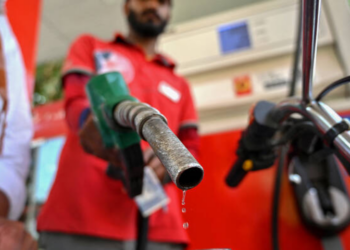
Fitch warned that Pakistan remains highly vulnerable to global energy shocks, citing its heavy reliance on imported oil from the Gulf region and limited storage capacity. It noted that disruptions linked to tensions in the Middle East and restricted maritime flows through the Strait of Hormuz could exert pressure on external balances.
The report added that higher global energy prices are likely to push inflation upward in the coming months, even as targeted subsidy reforms and fiscal adjustments aim to contain overall budgetary impact.
Fitch projected inflation to average 7.9% in FY26, higher than FY25 but significantly below the 23.4% peak recorded in FY24. The State Bank of Pakistan has already reduced its policy rate to 10.5%, reflecting easing inflationary pressures since mid-2024.
Despite external headwinds, the agency expects GDP growth of 3.1% in FY26, slightly higher than the previous year, supported by improved investor sentiment and lower borrowing costs.
Fitch projected Pakistan’s external debt repayments to rise to $12.8 billion in FY26, up from approximately $8 billion in FY25, including significant bilateral repayments. The report noted that financing needs will be met largely through IMF support, multilateral inflows, and select commercial borrowing, including planned bond issuance.
Foreign exchange reserves are expected to decline modestly, reaching around $21.3 billion by the end of FY26, though still providing limited import cover.
Fitch maintained that while Pakistan has made progress in stabilisation, key risks persist, including energy market volatility, fiscal constraints, and regional security developments. It also flagged escalating tensions with Afghanistan as a potential downside risk, though it expects limited immediate economic spillover under its baseline assumptions.
The agency concluded that continued reform implementation under the IMF framework will remain critical for sustaining macroeconomic stability and maintaining external financing buffers in the coming fiscal year.