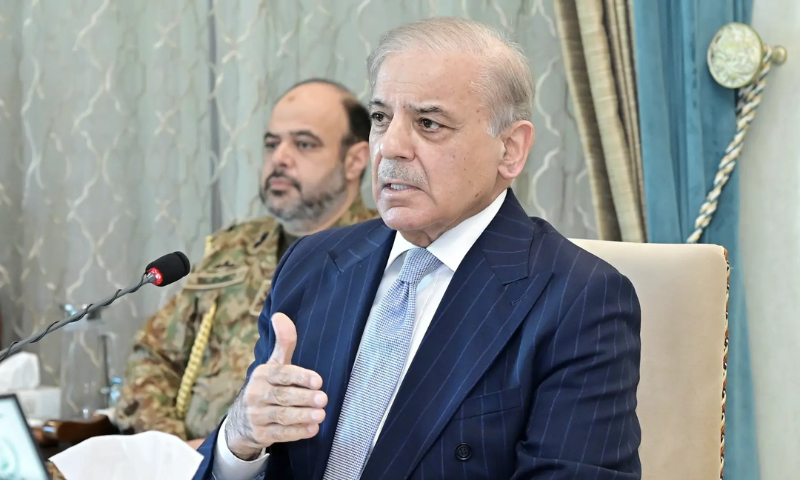
Islamabad, April 13, 2026: Prime Minister Shehbaz Sharif on Monday said that “full efforts” were underway to resolve outstanding issues following the recent United States–Iran negotiations held in Islamabad over the weekend, describing the development as a “historic moment” for regional diplomacy.
Addressing a televised meeting of the federal cabinet, the Prime Minister said the ceasefire agreed during the talks continues to hold, adding that Pakistan remains actively engaged in supporting efforts to sustain peace between the two sides.
“Today, the ceasefire still stands. As I am talking to you, matters that are not resolved, full efforts are underway to resolve them,” he said.
“Historic opportunity for peace”
Referring to the high-level dialogue, the Prime Minister said the Islamabad Talks 2026 represented a rare diplomatic breakthrough, bringing together delegations from the United States and Iran for face-to-face negotiations after decades of hostility.
He said the Islamabad Talks offered Pakistan an opportunity to “turn looming clouds of war into lasting peace,” adding that such peace processes in history—including the Oslo Agreement, Geneva Accord, and Good Friday Agreement—had required sustained engagement over time.
According to the Prime Minister, the delegations engaged in continuous discussions for nearly 21 hours, marking the first direct, face-to-face engagement between the two sides in over four decades.
Pakistan’s diplomatic role highlighted
Prime Minister Shehbaz said Pakistan’s leadership had worked “day and night” to bring both sides to the negotiating table, crediting diplomatic and security institutions for their role in facilitating the process.
He said he had received messages of appreciation from international leaders, including a call from the Prime Minister of Japan, who acknowledged Pakistan’s role in de-escalation efforts. European leaders, he added, also commended Islamabad’s diplomatic engagement.
The Prime Minister particularly lauded Deputy Prime Minister and Foreign Minister Ishaq Dar and Chief of Defence Forces Field Marshal Asim Munir, along with their teams, for their contribution to facilitating dialogue and reducing tensions.
He noted that Pakistan’s security and diplomatic leadership had played a critical role during sensitive moments when negotiations were at risk of collapsing.
Cabinet resolution and official recognition
The federal cabinet adopted a resolution expressing gratitude for Pakistan’s role in hosting the talks, stating that the opportunity to facilitate dialogue between the two sides was a matter of national pride.
The resolution credited Pakistan’s leadership for helping bring together parties that had remained diplomatically distant for decades, and expressed hope that ongoing efforts would lead to a durable peace settlement.
Background to the negotiations
The Islamabad Talks followed weeks of heightened tensions in the Gulf region, including military escalation and diplomatic interventions aimed at preventing further conflict. The negotiations were facilitated by Pakistan and held in multiple formats involving expert-level and direct engagement sessions.
Although no final agreement was reached, officials confirmed that the process has not collapsed and may continue in the coming days as diplomatic channels remain open.
Prime Minister Shehbaz said Pakistan would continue to support all efforts aimed at ensuring that the ceasefire is maintained and that dialogue remains the central tool for resolving disputes.