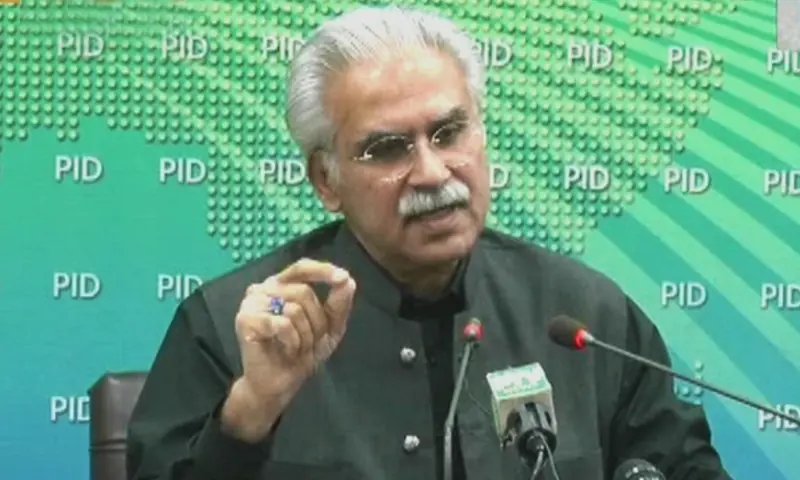
Islamabad, April 18, 2026: Former Special Assistant to the Prime Minister on Health Zafar Mirza on Saturday expressed serious concern over the increasing number of HIV cases in Pakistan, warning that the situation is becoming increasingly alarming and requires urgent national attention.
Addressing a press conference at the National Press Club, Dr Mirza referred to recent HIV cases reported in Taunsa, as highlighted in a BBC investigation, and identified the reuse of contaminated syringes and inadequate blood screening as major factors contributing to the spread of the disease.
He called for the immediate release of a Punjab government commission report on the issue and demanded an audit of international health funding received by Pakistan.
Dr Mirza, joined by Dr Rana Jawad, Dr Qaid Saeed, Asghar Satti, and an HIV-positive patient, stated that Pakistan ranks among countries with a high burden of HIV in Asia, alongside India and China.
He warned that approximately 70 percent of blood transfusions in the country are reportedly conducted without proper screening, stressing that diseases such as Hepatitis B, Hepatitis C, HIV, and malaria require strict monitoring and standardized safety protocols.
He described the Taunsa outbreak as a clear reflection of systemic weaknesses in the country’s healthcare infrastructure, adding that the crisis is the result of long-standing institutional failure rather than the fault of any single administration.
Dr Mirza urged both federal and provincial governments to acknowledge the severity of the public health threat and implement comprehensive reforms to strengthen Pakistan’s healthcare system, including improved screening mechanisms and regulatory oversight.
Separately, Dr Mirza, who also serves as spokesperson for the Awaam Pakistan party, expressed concern over the ongoing demolition of homes in Islamabad’s informal settlements (katchi abadis), calling the operations a violation of judicial orders.
He said that despite a stay order issued by the Federal Constitutional Court, continued actions in areas such as Bari Imam and Allama Iqbal Colony (G-7) amounted to disregard for court directives and infringement of fundamental rights.
Welcoming the court’s interim protection for residents, he said the situation has left hundreds of thousands of citizens facing uncertainty and insecurity.
Dr Mirza stated that over 450,000 residents in Islamabad are either displaced or at risk of eviction, terming the situation a humanitarian and constitutional crisis.
He urged authorities to immediately halt demolitions, ensure compliance with court orders, provide protection and compensation to affected families, and develop a comprehensive resettlement policy in consultation with residents.
He reaffirmed that Awaam Pakistan would continue advocating for the rights of vulnerable communities, particularly their constitutional right to shelter, dignity, and security.