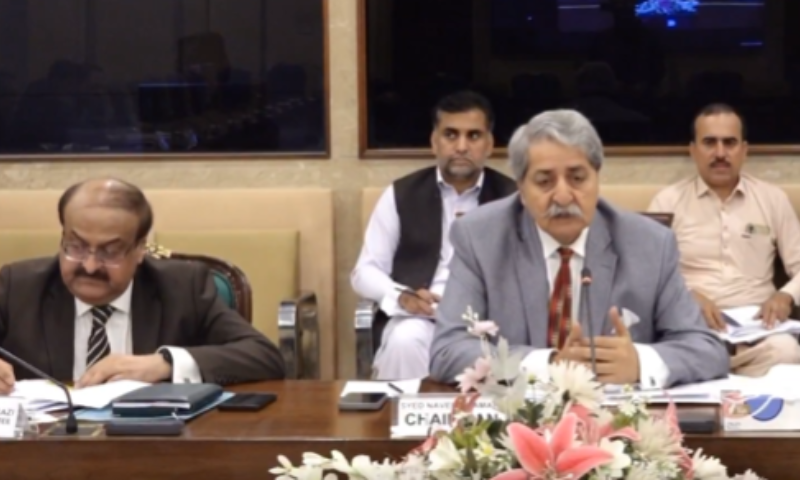
Islamabad, May 7, 2026: Chairman of the National Assembly Standing Committee on Finance and Revenue Syed Naveed Qamar on Thursday stressed that affordable housing finance initiatives must effectively benefit deserving low-income families through transparent, accountable and inclusive mechanisms.
Chairing the 25th meeting of the committee at Parliament House, Islamabad, Naveed Qamar also underscored the urgent need for robust foreclosure and recovery laws to strengthen Pakistan’s underdeveloped mortgage finance sector and enhance the confidence of financial institutions in expanding long-term housing finance.
Senior officials from the Ministries of Finance, Housing and Works, and Law and Justice briefed the committee on the implementation framework of the Prime Minister Apna Ghar Programme and proposed reforms related to housing finance and foreclosure laws.
The Secretary of the Ministry of Housing and Works informed the committee that the subsidised housing finance scheme, approved in August 2025 and revised in March 2026, was designed to help low and middle-income families become homeowners while stimulating economic activity and revitalising the construction sector.
Under the programme, first-time homeowners can obtain financing of up to Rs10 million at a fixed markup rate of five per cent, repayable over 20 years under a 90:10 financing ratio.
The committee was informed that as of April 30, 2026, a total of 25,304 applications had been received, of which 8,990 applications worth Rs37.154 billion had been approved, while Rs5.071 billion had been disbursed to 1,845 beneficiaries.
Officials highlighted that Pakistan’s housing finance sector remained significantly underdeveloped, with mortgage financing contributing only 0.3 per cent to GDP and 0.56 per cent to total private sector credit.
The government has set a target of financing 500,000 housing units over the next four years, requiring an estimated Rs3.2 trillion in financing.
The committee observed that major structural reforms, particularly in foreclosure and recovery laws, were necessary to reduce risks for banks, strengthen investor confidence and support sustainable growth in mortgage financing.
Committee members expressed concern over the limited outreach of housing finance facilities to low-income and marginalised communities, especially in rural and underserved areas.
Members also questioned whether banks and financial institutions possessed the institutional capacity to achieve the ambitious target of financing half a million housing units within four years.
After detailed deliberations, the committee recommended that the government and the State Bank of Pakistan introduce simplified financing procedures, flexible eligibility criteria and enhanced subsidy support for low-income and informal-sector households to improve affordability and accessibility.
The committee further called for comprehensive reforms in foreclosure and recovery laws on a priority basis to reduce non-performing loans and strengthen financial institutions’ confidence in expanding mortgage lending.
The Secretary of the Ministry of Law and Justice briefed the committee on proposed amendments to The Financial Institutions (Recovery of Finance) Amendment Act, 2026, explaining revised recovery mechanisms for housing finance incorporated in the draft legislation.
The committee was informed that the revised draft introduced a new Section 15A specifically dealing with housing finance and included extended notice periods in mortgage default cases, providing borrowers with a cumulative 90-day notice before further proceedings.
The proposed amendments also allow financial institutions to reschedule, restructure or settle outstanding mortgage liabilities prior to the sale of mortgaged property.
However, committee members voiced concerns over provisions that could potentially grant excessive powers to banks in foreclosure proceedings and stressed the need to ensure adequate legal protections and due process for borrowers.
Following deliberations, the committee deferred consideration of the bill to its next meeting and directed the Ministry of Housing and Works to circulate the revised draft among members for further review.
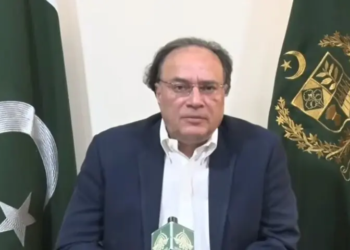
During the meeting, the Finance Minister also briefed the committee on Pakistan’s economic performance, stating that the country remained on track to achieve key fiscal targets through prudent financial management, improved external account performance and investor confidence measures.
The committee appreciated positive economic indicators, including increased remittance inflows through Roshan Digital Account, improved access to international capital markets through Eurobond issuances and progress regarding Panda Bonds.
Members, however, emphasised the need to sustain economic growth by boosting exports, diversifying export destinations and addressing supply-side challenges.
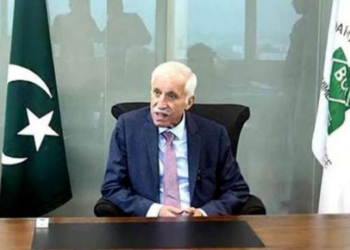
The Governor of the State Bank also briefed the committee on foreign investment policy, repatriation of capital and investor facilitation measures aimed at strengthening confidence among international investors.
The meeting was attended by MNAs Rana Iradat Sharif Khan, Syed Sami Ul Hassan Gilani, Zeb Jaffar, Nafisa Shah, Mirza Ikhtiar Baig, Sharmila Faruqi, Muhammad Jawed Hanif Khan and Shahida Begum, along with senior officials from relevant ministries and the State Bank of Pakistan.