Islamabad, May 7, 2026: The National Assembly Standing Committee on Federal Education and Professional Training on Thursday expressed concern over the performance of the Private Educational Institutions Regulatory Authority (PIERA), criticising the body for failing to present a comprehensive strategy to regulate private schools and strengthen its institutional capacity.
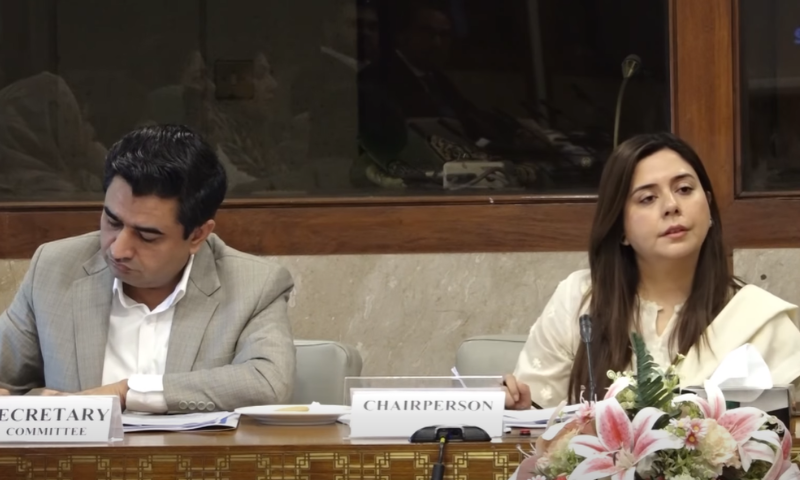
The committee met at Parliament House under the acting chairmanship of Syeda Amnah Batool.
During the briefing, officials informed the committee that an online portal for private schools had been developed and annual fee increases would be capped between five and 10 per cent. The committee was also told that unregistered schools had been identified and enforcement action would be taken against institutions violating PIERA regulations.
However, committee members stressed that PIERA was expected to formulate a broader strategy not only to regulate fee structures but also to improve governance and operational effectiveness.
The committee also raised concerns over the issuance of school leaving certificates by PIERA, questioning the verification process and stressing that such certificates should only be issued after proper confirmation from the relevant educational institutions.
Members further highlighted the importance of ethical and civic education in schools, urging authorities to integrate civic education into curricula in both government and private institutions to promote moral values, social responsibility and character development among students.
The committee was informed that eight international educational boards were currently operating in Pakistan to encourage competition and provide schools with more options. Officials stated that the move was also aimed at addressing recurring issues such as paper leakage.
During another briefing, the committee was informed that several institutions, including the Federal Medical College, Pakistan Bait-ul-Mal, the Social Welfare Training Institute, the Ministry of Human Rights, the Legal Aid and Justice Authority and the Tawana Pakistan Project, were occupying buildings belonging to the Directorate General of Special Education (DGSE).
The committee expressed serious concern over the continued occupation of these buildings, stating that the facilities should be restored for their intended purpose of supporting children with disabilities. Members observed that the occupation undermined the DGSE’s mandate.
Officials informed the committee that notices had been issued to the concerned departments directing them to vacate the premises, while only the Social Welfare Training Institute had so far complied.
The committee also received a detailed briefing from the National Vocational and Technical Training Commission (NAVTTC), which outlined its new demand-driven and employment-oriented strategy aimed at transforming Pakistan’s technical and vocational training landscape.
Officials said NAVTTC had shifted from traditional training models towards industry-led and outcome-based approaches focused on employability. The reforms include international certifications, digitalised systems, industry-led training programmes and targeted skill development initiatives for underprivileged youth.
The committee was further briefed by the Inter Boards Coordination Commission (IBCC), which informed members about its digitalised attestation and equivalence certification services for secondary and higher secondary educational documents.
The IBCC stated that students could access services through appointment-based submissions, courier facilities and express services for urgent cases.
Committee members appreciated the reforms and initiatives undertaken by the Ministry of Federal Education and Professional Training and its attached bodies, particularly IBCC, PIERA and DGSE, while urging continued improvements in governance and service delivery.
The meeting was attended by MNAs Anjum Aqeel Khan, Zeb Jaffar, Farah Naz Akbar, Shazia Sobia Aslam Soomro, Mussarat Rafique Mahesar, Sabheen Ghoury, Raja Khurram Shahzad Nawaz and Mahtab Akbar Rashdi, along with senior officials from the Ministry of Federal Education and the Higher Education Commission.