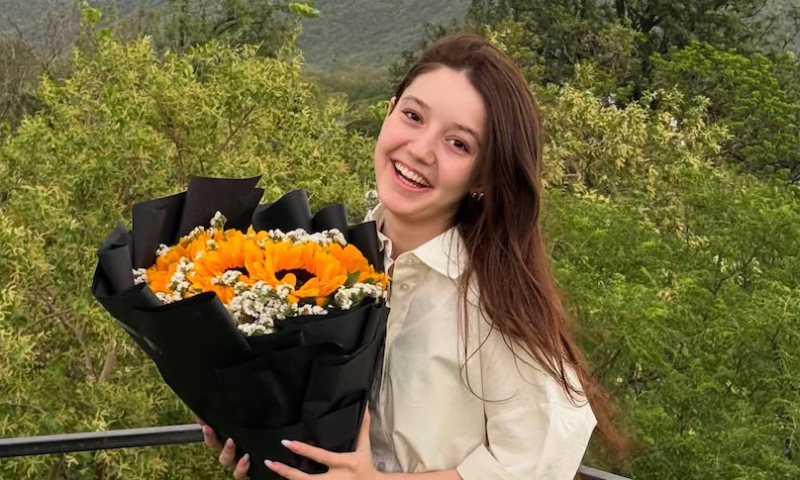
Islamabad, May 19, 2026: An Islamabad sessions court on Tuesday sentenced Umar Hayat, the prime accused in the murder case of TikTok influencer Sana Yousaf, to death after finding him guilty of killing the 17-year-old in a case that had shocked the country and reignited debate over women’s safety online and in public spaces.
The verdict was announced by Additional District and Sessions Judge Muhammad Afzal Majoka, who convicted Hayat under Section 302(b) of the Pakistan Penal Code (PPC) for the intentional murder (qatl-i-amd) of Sana Yousaf.
The court ruled that the death sentence would be subject to confirmation by the Islamabad High Court under Section 374 of the Code of Criminal Procedure.
The court also ordered the convict to pay Rs2.5 million in compensation to the legal heirs of the deceased under Section 544-A of the CrPC. In case of non-payment, he will serve an additional six months of simple imprisonment.
Separately, the court awarded multiple additional sentences on other charges:
- 10 years rigorous imprisonment and Rs200,000 fine under Section 392 (robbery)
- 10 years imprisonment and Rs200,000 fine under Section 499 (defamation)
- 1 year rigorous imprisonment and Rs100,000 fine under Section 411 (dishonestly receiving stolen property)
The court ruled that all sentences would run concurrently and granted the convict benefit of Section 382-B of the CrPC, allowing time already spent in custody to be counted.
Sana Yousaf, a 17-year-old social media influencer with over a million followers, was shot dead at her residence in Islamabad on June 2, 2025. The case drew widespread public outrage and renewed national discussion on digital safety and violence against women.
Umar Hayat, a 23-year-old TikToker and son of a retired government official, was arrested within 20 hours of the incident in Faisalabad.
According to investigators, Hayat had earlier confessed before a magistrate under Section 164 of the CrPC, detailing alleged motives linked to a one-sided obsession formed through online interactions. However, he later retracted the confession during trial proceedings, claiming he was falsely implicated and that his confession had been recorded under pressure.
During the trial, Hayat maintained his innocence in statements recorded under Section 342 of the CrPC. He also challenged several procedural aspects of the investigation and trial, including witness testimony recorded in his absence—petitions that were previously dismissed by the Islamabad High Court.
In September 2025, he was formally indicted by Judge Majoka’s court, where he pleaded not guilty.
Following the verdict, Sana Yousaf’s family welcomed the court’s decision, calling it a moment of justice after months of legal proceedings. Her mother, Farzana, said the ruling had brought closure and thanked the judiciary, lawyers, police, and media for their support.
Her father, Hassan Yousaf, said the verdict was not only justice for his daughter but also a warning to society. “This is justice for all girls,” he said, adding that the decision would serve as a lesson for potential offenders.
The case of Sana Yousaf had sparked nationwide condemnation and intensified debate over online harassment, influencer safety, and legal protections for young women in Pakistan’s digital space.
With Tuesday’s verdict, the court concluded one of the most closely followed criminal trials involving a social media personality in recent years, while the sentence now awaits confirmation by the Islamabad High Court.