Washington/Tehran/Islamabad, May 24, 2026: The United States and Iran are reportedly close to finalizing a preliminary memorandum of understanding (MoU) aimed at reopening the strategically vital Strait of Hormuz, easing regional tensions, and launching a new round of negotiations over Tehran’s nuclear programme.
According to Iranian news agency Tasnim and multiple international media reports, the proposed framework includes a phased de-escalation process, a potential 60-day ceasefire arrangement, and steps toward restoring freedom of navigation through the Strait of Hormuz, which has faced major disruptions since the outbreak of conflict involving Iran, Israel, and the United States earlier this year.
Tasnim reported that under the proposed arrangement, ship traffic through the Strait of Hormuz would gradually return to pre-war levels within 30 days, although Iran would continue to assert what it described as its sovereign rights over the waterway.
The report added that the US would commit to waiving certain sanctions on Iranian oil exports during negotiations, while Tehran seeks at least a partial release of frozen Iranian assets and an end to restrictions on its ports.
Iranian officials reportedly insist that no long-term changes in navigation arrangements would occur unless Washington fulfills broader commitments outlined in the memorandum.
US Secretary of State Marco Rubio said on Sunday that “significant progress” had been made toward an outline agreement that could reopen the Strait of Hormuz “without toll.”
Speaking in New Delhi, Rubio said indirect negotiations between Washington and Tehran — mediated by Pakistan — had advanced considerably over the past 48 hours.
“This is an international waterway. They don’t own it,” Rubio said, referring to Iran’s position on the Strait of Hormuz.
He added that the ultimate objective of the negotiations remained ensuring that Iran could never obtain a nuclear weapon, while emphasizing Washington’s preference for a diplomatic solution.
Iran, however, rejected suggestions that it had agreed to surrender its highly enriched uranium stockpile.
A senior Iranian source told Reuters that Tehran’s nuclear programme was not part of the preliminary understanding and would instead be addressed during future negotiations on a final agreement.
Iran also accused Rubio of attempting to “distort realities,” arguing that US sanctions on Iranian oil exports were the true cause of instability in global energy markets.
The International Atomic Energy Agency was referenced by Tehran as continuing to supervise Iran’s nuclear activities, which Iranian officials insist remain peaceful and within the framework of the Nuclear Non-Proliferation Treaty.
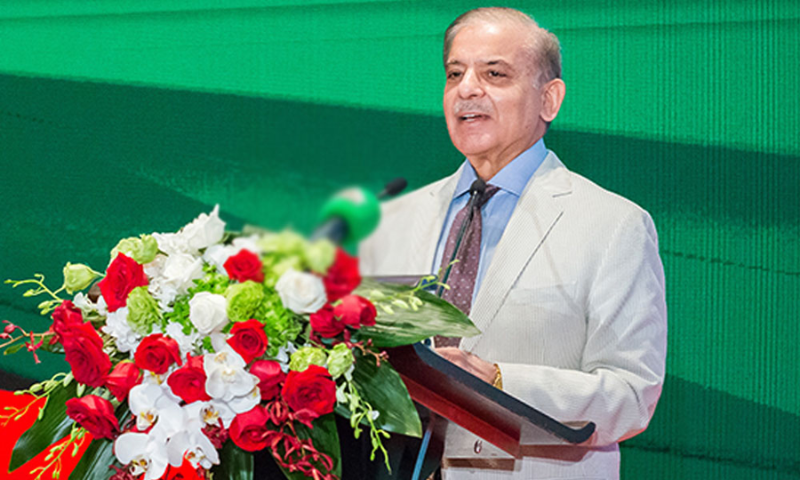
Prime Minister Shehbaz Sharif said Pakistan hoped to host the next round of US-Iran talks “very soon,” reaffirming Islamabad’s commitment to regional peace efforts.
In a statement posted on X, the prime minister praised US President Donald Trump for engaging regional leaders in diplomatic consultations and acknowledged the role of Field Marshal Asim Munir in the mediation process.
Deputy Prime Minister and Foreign Minister Ishaq Dar also described the diplomatic engagement as a significant step toward regional peace and stability.
According to Saudi Arabia’s Foreign Ministry, leaders from Saudi Arabia, Qatar, Türkiye, Egypt, United Arab Emirates, Jordan, and Pakistan participated in a joint call with President Trump to discuss regional developments and peace efforts.
According to Axios, the draft agreement under discussion could include a 60-day ceasefire extension that would reopen the Strait of Hormuz and allow Iran to resume oil sales under limited sanctions waivers.
In return, Iran would reportedly clear naval mines from the strategic waterway and permit unrestricted commercial navigation.
The report stated that broader issues, including sanctions relief, frozen Iranian assets, and Tehran’s enriched uranium stockpile, would be negotiated during the ceasefire period.
US officials reportedly stressed that any economic relief would depend on verified Iranian compliance with the agreement.
European Commission President Ursula von der Leyen and British Prime Minister Keir Starmer both welcomed progress toward a possible agreement.
Von der Leyen said Europe supported efforts to reopen the Strait of Hormuz and reduce regional tensions, while reiterating opposition to Iran obtaining nuclear weapons.
Starmer also emphasized the need for unrestricted freedom of navigation and called for a long-term diplomatic settlement to the crisis.
Meanwhile, Iranian President Masoud Pezeshkian stressed that no decision regarding negotiations with the US would be taken outside the framework approved by Iran’s Supreme Leadership and national security institutions.