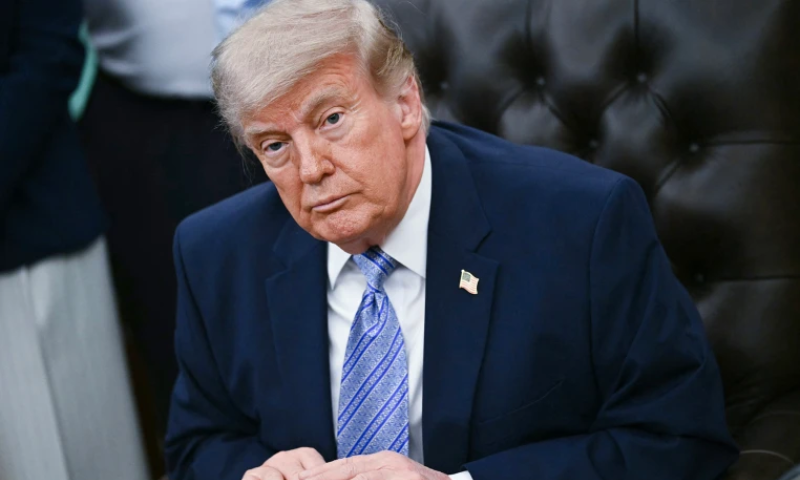
Washington/Tehran, May 25,2026: US President Donald Trump has said negotiations with Iran are “proceeding nicely,” while indicating that the United States is seeking broader regional alignment under the Abraham Accords framework, including potential participation by several Muslim-majority countries.
In a post on Truth Social, Trump said he had asked countries including the United Arab Emirates, Qatar, Pakistan, Egypt and Jordan to consider joining the Abraham Accords as part of efforts to reach a broader diplomatic settlement linked to Iran negotiations.
Trump said discussions were held with several regional leaders, including Saudi Crown Prince Mohammed bin Salman, UAE President Mohammed bin Zayed Al Nahyan, Qatar’s Emir Sheikh Tamim bin Hamad Al Thani, Turkish President Recep Tayyip Erdoğan, Egyptian President Abdel Fattah el-Sisi, Jordan’s King Abdullah II, Bahrain’s King Hamad bin Isa Al Khalifa, and others, as well as Pakistani Chief of Army Staff Field Marshal Syed Asim Munir.
He said he had urged that countries “at a minimum, simultaneously sign onto the Abraham Accords,” arguing that such a step would contribute to what he described as a more comprehensive regional settlement.
According to Trump, the Abraham Accords have already delivered “financial, economic, and social boom” benefits to participating countries, including the UAE, Bahrain, Morocco, Sudan, and Kazakhstan, and he suggested that expansion of the framework could further strengthen regional stability.
He added that Saudi Arabia and Qatar should take the lead in signing the accords, while acknowledging that some countries may choose not to participate.
In his remarks, Trump said Iran could also be included in the framework if a broader agreement is reached, describing such an outcome as “historic” and unprecedented for regional peace and cooperation.
Separately, Trump reiterated that any agreement with Iran would either be “great and meaningful” or there would be no deal at all, adding that he would not support what he called a repeat of past nuclear agreements.
Meanwhile, Iranian President Masoud Pezeshkian said Tehran would not submit to “excessive demands,” stressing that negotiations must respect Iran’s national rights and sovereignty. Iranian officials reiterated that while discussions are ongoing, no final agreement is imminent.
Iranian Foreign Ministry spokesperson Esmaeil Baghaei said a framework on several issues had been reached but emphasized that key disagreements remain unresolved, adding that Tehran remains committed to protecting its national interests.
China welcomed ongoing diplomatic momentum, with Foreign Ministry spokesperson Mao Ning urging all sides to maintain de-escalation efforts and pursue dialogue-based solutions.
Chinese President Xi Jinping also commended Pakistan for its role in facilitating mediation efforts in the region during a meeting with Prime Minister Shehbaz Sharif.
US Secretary of State Marco Rubio said discussions with Iran were still ongoing and suggested a possible breakthrough could emerge, while cautioning that Washington would not accept a weak agreement.
The evolving situation has also impacted global energy markets and maritime routes. Reports indicated continued limited shipping activity through the Strait of Hormuz, a critical global energy corridor, as negotiations and regional tensions remain closely linked.
Officials and analysts have warned that any breakdown in talks could escalate regional instability, while a successful agreement could ease tensions and stabilize energy flows.
While diplomatic engagement between Washington and Tehran continues, major differences persist over nuclear issues, sanctions relief, and regional security arrangements. The proposed expansion of the Abraham Accords and Iran’s potential role in any broader settlement remain key points of international attention.