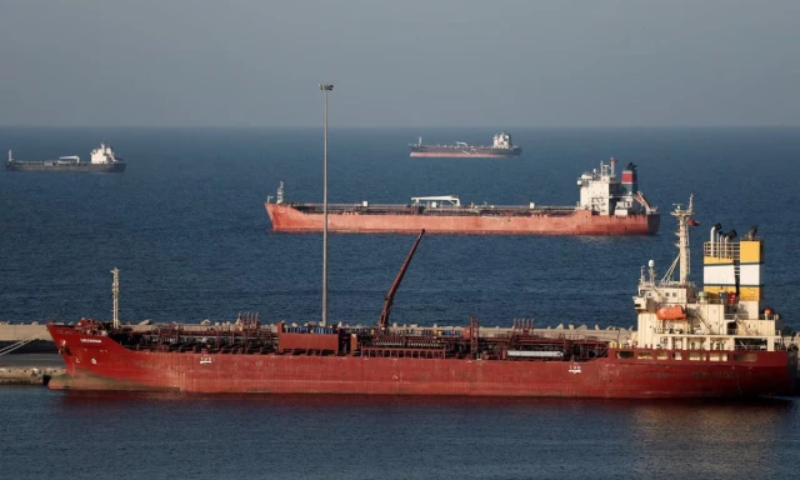
Washington/Tehran, July 13, 2026: US President Donald Trump said on Monday that the United States could assume control of the strategic Strait of Hormuz and should be compensated for safeguarding the vital global shipping route, as renewed military exchanges with Iran further undermined prospects for a negotiated settlement.
Speaking in a phone interview with Fox News’ Fox & Friends, Trump said Washington intended to maintain security in the waterway through which around one-fifth of the world’s oil and liquefied natural gas supplies normally pass.
“We’re going to keep the strait, and we’ll probably run it. We’ll become the guardian of the strait,” Trump said, adding that allied nations should reimburse the United States for securing the route.
“We’re going to guard it. We’re going to get paid for guarding it — a lot of money. The other nations are very wealthy. They’re on our side, and we can’t be expected to do that for nothing,” he added.
Trump also accused Tehran of repeatedly violating agreements, saying an earlier understanding between the two countries had collapsed.
“We had a deal. It was a done deal, and then they broke it. They always break it. We’ve had 10 deals with these people, and so we’re just going to hit them very hard,” he said.
The remarks came after Iran announced it would continue suspending its commitments under the Pakistan-mediated Islamabad memorandum of understanding with the United States, accusing Washington of breaching the agreement.
Iranian Foreign Ministry spokesman Esmaeil Baghaei said Tehran remained committed to the principle of “commitment in exchange for commitment,” insisting Iran would honour its obligations only if the United States fulfilled its own.
“No one can accuse the Islamic Republic of Iran of violating agreements,” Baghaei told reporters in Tehran, accusing Washington of violating several provisions of the memorandum under various pretexts.
“As long as the other party continues to violate its commitments, the Islamic Republic of Iran will, in turn, refrain from fulfilling the obligations it has undertaken,” he said.
Baghaei said Iran was continuing diplomatic contacts with mediators from Pakistan, Qatar and Oman in an effort to prevent further escalation, while adding that Tehran was also working with Oman on a joint mechanism for managing navigation through the Strait of Hormuz. He alleged that US pressure on Muscat had complicated those efforts.
The spokesman also reiterated that pursuing accountability for the assassination of Iran’s Supreme Leader Ayatollah Ali Khamenei remained a priority for Tehran and that Iran would pursue legal avenues internationally.
Military escalation continues
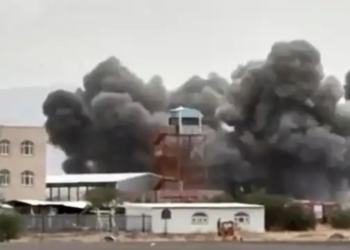
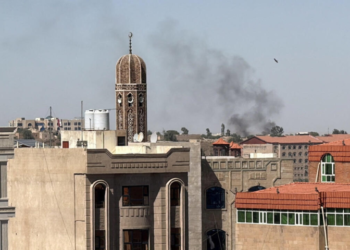
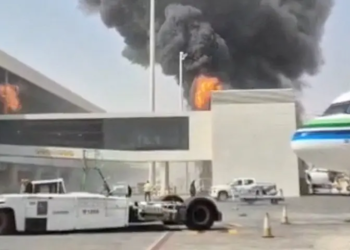
The diplomatic standoff unfolded as both sides exchanged fresh military strikes across the Gulf region.
Iran’s Islamic Revolutionary Guard Corps (IRGC) claimed it had launched missile and drone attacks against US military facilities in Bahrain and radar installations in Oman, saying continued US military operations in the Strait of Hormuz would trigger further escalation.
Iranian state media also reported drone attacks targeting US military installations in Kuwait, while the Iranian army claimed it had shot down a US drone over Bandar Abbas.
The United States, meanwhile, said it had conducted a new wave of strikes against Iranian military targets aimed at degrading Tehran’s ability to threaten commercial shipping through the strategic waterway.
Iranian media reported explosions near Bandar Abbas, Qeshm Island and Abadan, where local reports said at least two people were killed and three others wounded in US strikes. Iranian authorities said there were no reports of damage to civilian infrastructure in Hormozgan province.
The renewed fighting pushed global oil prices sharply higher as concerns mounted over possible disruptions to energy supplies.
Brent crude futures rose more than two percent to $77.68 a barrel, while US West Texas Intermediate crude climbed to $73.00.
Analysts said vessel traffic through the Strait of Hormuz had slowed significantly due to heightened security risks, with ship-tracking data showing tanker movements falling to a five-week low.
Despite Iran’s announcement that it had suspended transit through the strait following what it described as unauthorized vessel movements, Trump insisted the waterway remained open to commercial traffic.
The latest escalation has cast further doubt over the future of the interim US-Iran agreement signed last month, which had sought to reopen the Strait of Hormuz and pave the way for negotiations on a permanent settlement.
China on Monday called for the restoration of free and safe navigation through the Strait of Hormuz, while the European Union urged all parties to maintain freedom of navigation and avoid imposing restrictions on international shipping.
The Strait of Hormuz remains one of the world’s most strategically important maritime chokepoints, carrying roughly 20 percent of global oil and liquefied natural gas exports before the conflict intensified.