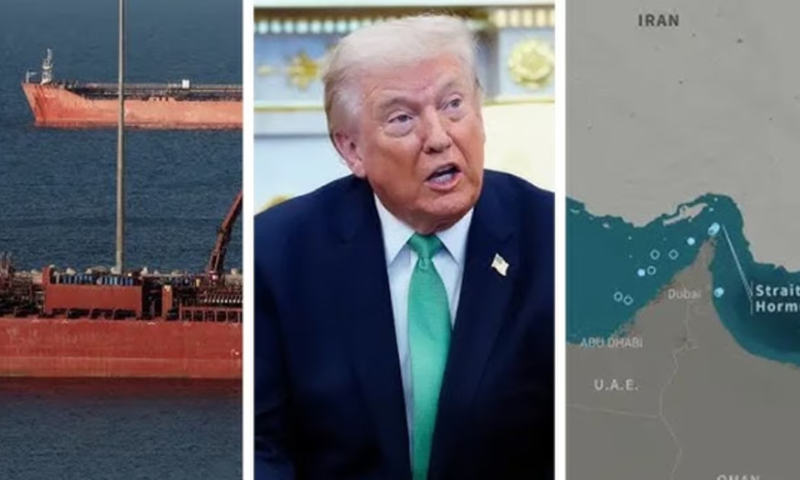
Washington/Tehran, May 29, 2026: US President Donald Trump on Friday announced the end of the US naval blockade on Iran and said he would convene a meeting in the White House Situation Room to finalize a potential agreement with Tehran, according to a post on his social media platform.
Trump said any prospective deal would include Iran’s commitment not to develop nuclear weapons, reopening of the Strait of Hormuz, removal of sea mines, lifting of the US blockade on Iranian shipping, and destruction of Iran’s highly enriched uranium stockpile under US supervision.
“No money will be exchanged, until further notice,” Trump wrote, adding that other elements of the agreement had already been reached but required final approval.
The announcement comes amid mixed signals from Washington and Tehran over the status of negotiations. A senior Iranian source told Reuters that a political understanding had been reached but not finalized, while Iranian media described parts of the US president’s claims as exaggerated or “a mixture of truth and falsehood.”
Iran’s Foreign Minister Abbas Araghchi, speaking to his Omani counterpart, said a final agreement would depend on Washington abandoning what Tehran called “excessive demands” and inconsistent positions.
Iranian officials continued to defend their actions in the Strait of Hormuz. Ambassador to the United Nations Amir Saeid Iravani told the UN Security Council that Iran’s measures in the strategic waterway were “lawful and consistent with international law,” arguing that Tehran would not allow the strait to be used for hostile military purposes.
Separately, Iranian Deputy Foreign Minister Kazem Gharibabadi said the Islamic Revolutionary Guard Corps (IRGC) had demonstrated Iran’s full defensive readiness in response to US actions, stressing that Iran would continue strengthening its military capabilities.
Iran also condemned US threats against Oman, calling sanctions pressure on the Gulf state “blackmail” and a violation of international law.
On the Israeli side, Prime Minister Benjamin Netanyahu suggested that tensions in the region could accelerate the development of alternative global energy corridors bypassing the Gulf, potentially linking Israel to Mediterranean transport routes.
Meanwhile, the US military denied Iranian state media claims that an American aircraft had been shot down near Bushehr, stating that all assets were accounted for.
Oil markets reacted sharply to the diplomatic developments, with Brent crude recording its steepest weekly decline in nearly two months amid expectations of a possible easing of tensions and reopening of shipping routes through the Strait of Hormuz.
According to multiple reports, Washington and Tehran are also discussing a broader ceasefire extension and partial sanctions relief, though the agreement remains pending approval from both leaderships.
US Vice President JD Vance said negotiators were “very close” but cautioned that a final deal was not guaranteed.
The broader conflict has continued to generate regional instability, with sporadic drone and missile incidents reported in the Gulf and surrounding areas. US forces reportedly intercepted Iranian drones and missiles earlier in the week, while Iran claimed retaliatory actions against US positions.
Diplomatic engagements are expected to continue in the coming days, including a planned meeting between Pakistan’s Foreign Minister Ishaq Dar and US Secretary of State Marco Rubio in Washington.
Despite ongoing uncertainty, both sides have signaled cautious openness to continued negotiations, even as major disputes over Iran’s nuclear program, sanctions relief, and regional security arrangements remain unresolved.