Washington/Dubai/Tehran, June 10,2026: The United States launched a series of military strikes against Iranian targets on Wednesday after Iran allegedly shot down a U.S. Apache attack helicopter near the Strait of Hormuz, marking one of the most serious escalations between the two countries since a fragile ceasefire took effect earlier this year.
According to the U.S. military’s Central Command (CENTCOM), the strikes were ordered by President Donald Trump and began late Tuesday evening Washington time. Officials described the operation as a “proportional response” to what they termed “unjustified Iranian aggression.”
Targets near Strait of Hormuz
U.S. officials stated that the strikes focused on Iranian military infrastructure linked to operations around the Strait of Hormuz, including air defence systems, surveillance radar installations and ground control facilities used to monitor maritime activity in the region.
Iranian state media reported explosions in several strategic areas, including Qeshm Island and the port city of Sirik. Residents in Bandar Abbas and areas surrounding Jask, located near the entrance to the Strait of Hormuz, also reported hearing blasts.
The Strait of Hormuz remains one of the world’s most critical maritime chokepoints, through which nearly one-fifth of global oil and liquefied natural gas supplies pass.
Helicopter incident triggered escalation
The latest confrontation followed the downing of a U.S. Apache helicopter during a patrol mission near the Omani coast. U.S. officials said the aircraft was brought down by a one-way Iranian attack drone.
President Trump confirmed that both crew members survived the incident, stating that they were rescued shortly after the helicopter crashed into the waters near the Strait.
CENTCOM later revealed that the pilots were recovered through an unprecedented operation involving an autonomous naval drone, marking the first known combat rescue of its kind. The two service members were reported to be in stable condition.
Iran launches retaliatory attacks
Iran swiftly responded to the U.S. strikes. The Islamic Revolutionary Guard Corps (IRGC) announced that it had launched missile and drone attacks targeting American military assets across the Gulf region.
Iranian officials claimed that strikes had been carried out against U.S. facilities in Jordan, Kuwait and Bahrain. The IRGC further stated that it had targeted the U.S. Fifth Fleet stationed in Bahrain, warning that any additional military action by Washington would provoke a stronger response.
Bahrain’s authorities activated emergency warning sirens and urged residents to seek shelter as air defence systems intercepted incoming threats. Kuwait also reported the activation of its defensive measures against unidentified aerial objects.
Trump signals further action
President Trump defended the American operation, arguing that a strong response was necessary to deter future attacks on U.S. forces.
“I believe the response should be very strong, very powerful,” Trump said in media interviews following the strikes.
At the same time, the President suggested that diplomatic channels remained open, reiterating his administration’s position that Iran must permanently abandon any ambitions to develop nuclear weapons.
The White House has maintained that military pressure and negotiations can proceed simultaneously, although analysts warn that the latest hostilities significantly undermine prospects for a negotiated settlement.
Fragile peace efforts under strain
The renewed violence threatens months of diplomatic efforts aimed at ending the broader regional conflict that has engulfed the Middle East since February.
A tenuous ceasefire brokered in April had raised hopes that direct and indirect negotiations between Washington and Tehran could eventually produce a longer-term agreement. However, Iranian officials have accused the United States of violating the spirit of those understandings.
Iranian Foreign Minister Abbas Araghchi warned that Tehran would leave “no attack or threat unanswered” and suggested that Iran may reassess its participation in future peace initiatives.
Regional mediators, including Gulf states that have sought to facilitate dialogue, are expected to intensify diplomatic efforts in an attempt to prevent the confrontation from expanding further.
Global markets react
Financial markets responded cautiously to the deteriorating security situation.
Oil prices climbed as traders weighed the possibility of renewed disruptions to shipping through the Strait of Hormuz. Brent crude futures rose amid concerns that prolonged instability could affect global energy supplies.
Stock markets across the Gulf recorded mixed performances, reflecting investor anxiety over the potential economic consequences of an extended conflict. Analysts noted that while markets remain sensitive to military developments, hopes for a diplomatic breakthrough continue to temper more severe reactions.
Regional tensions continue beyond Iran
The latest exchange between the United States and Iran unfolded against a backdrop of broader instability across the Middle East.
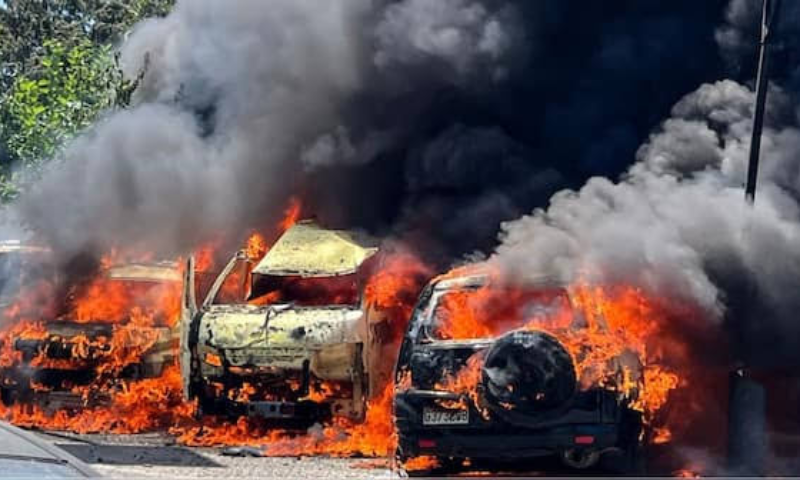
In Lebanon, Israeli strikes reportedly killed several people in the southern city of Tyre, further complicating efforts to establish a comprehensive regional ceasefire. Iran has repeatedly linked progress in its discussions with Washington to developments involving its regional allies.
Security analysts warn that simultaneous flashpoints involving Iran, Israel, Hezbollah and U.S. military assets increase the risk of miscalculation and unintended escalation.
International concern mounts
Governments around the world have called for restraint as fears grow that the conflict could spread beyond the Gulf region.
The United Nations and several international partners are expected to renew appeals for de-escalation and a return to diplomacy, emphasising the need to safeguard civilian populations, maintain freedom of navigation and prevent a wider regional war.
As military activity intensifies and diplomatic channels come under increasing pressure, the coming days are likely to prove critical in determining whether the latest crisis can be contained or evolves into a broader confrontation with global implications.