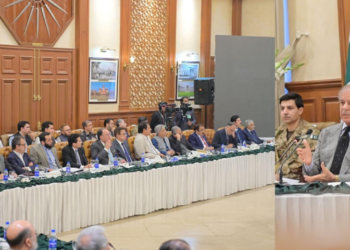
Islamabad, June 10,2026: Prime Minister Shehbaz Sharif on Wednesday said the federal and provincial governments had taken key decisions in the “best interest” of Pakistan as the National Economic Council (NEC) met to finalise development priorities ahead of the federal budget for fiscal year 2026-27.
Chairing the NEC meeting, the prime minister said extensive consultations had been held between the Centre and provinces on all major issues, resulting in consensus-based decisions aimed at strengthening the country’s economy and development agenda.
“The Centre held consultations with the provinces on all matters with extreme seriousness, and we made decisions in the best interest of Pakistan,” PM Shehbaz said, while thanking the chief ministers for their cooperation and support.
The NEC, the country’s highest economic decision-making forum, reviewed federal and provincial development plans worth Rs4.715 trillion for the upcoming fiscal year. The council comprises the prime minister, chief ministers of all four provinces, and key federal ministers.
The prime minister noted that despite significant economic challenges, Pakistan had achieved macroeconomic stability. However, he stressed that accelerating economic growth through increased employment, production, exports, and investment remained the government’s top priority.
“Advancing employment, production, exports and economic activity is our collective responsibility,” he said.
Referring to Pakistan’s ongoing programme with the International Monetary Fund (IMF), PM Shehbaz said all governments had remained committed to meeting programme requirements despite facing difficult circumstances. He also disclosed that IMF Managing Director Kristalina Georgieva had appreciated Pakistan’s sincere efforts towards economic reforms during a recent telephone conversation.
The premier highlighted national security as one of the country’s most pressing challenges, stressing the need to strengthen defence capabilities and intensify efforts against terrorism.
“The entire nation, especially Khyber Pakhtunkhwa and Balochistan, along with law enforcement agencies and the armed forces, is making sacrifices in the fight against terrorism,” he said, adding that terrorism could only be defeated through collective national efforts.
PM Shehbaz also underscored the importance of introducing incentives for export-oriented industries and manufacturing sectors to accelerate GDP growth and create employment opportunities.
He said ordinary citizens were more concerned about jobs, agricultural and industrial development, and rising exports than macroeconomic indicators.
Addressing recent global oil price volatility, the prime minister said coordinated efforts between the federation and provinces had helped the country manage the situation effectively without disruptions in fuel supplies.
“It was the result of our mutual understanding and teamwork that there were no long queues at petrol stations and we fulfilled the expectations of the public,” he said, adding that the federal government had already spent Rs128 billion from its limited resources to cushion the impact of rising petroleum prices.
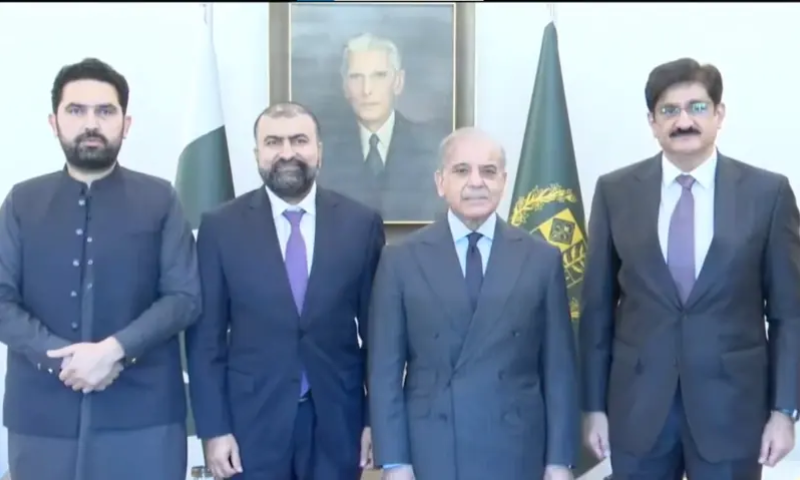
The prime minister also thanked President Asif Ali Zardari, PPP Chairman Bilawal Bhutto Zardari, PML-N President Nawaz Sharif, Punjab Chief Minister Maryam Nawaz, Sindh Chief Minister Murad Ali Shah, Khyber Pakhtunkhwa Chief Minister Sohail Afridi, and Balochistan Chief Minister Sarfraz Bugti for their cooperation in addressing national challenges.
Meanwhile, Khyber Pakhtunkhwa Chief Minister Sohail Afridi said after the meeting that the federal government had assured provinces that formal consultations on updating the National Finance Commission (NFC) Award would be completed within 180 days.
According to the KP government, Afridi strongly advocated for the province’s constitutional, financial, and development rights during the meeting. He said the revised NFC Award would include the financial share of the merged districts, describing it as a significant development.
The chief minister also expressed optimism regarding increased allocations for the merged districts under the Accelerated Implementation Programme (AIP) and the Annual Development Programme (ADP) following negotiations with the federal government.
The NEC reviewed the Annual Plan 2025-26, approved the Annual Plan 2026-27, examined key socio-economic indicators, and discussed public sector investment priorities. The council also considered federal and provincial development programmes and reviewed progress on development projects approved by the Central Development Working Party (CDWP) and the Executive Committee of the National Economic Council (ECNEC).
The meeting came ahead of the presentation of the federal budget for FY2026-27, expected later this week.