Islamabad/Tehran/Washington, June 13, 2026: A landmark diplomatic breakthrough appears imminent as the United States and Iran have agreed on a framework for a peace deal following more than three months of conflict, with the initial agreement expected to be formally signed within the next 24 hours.
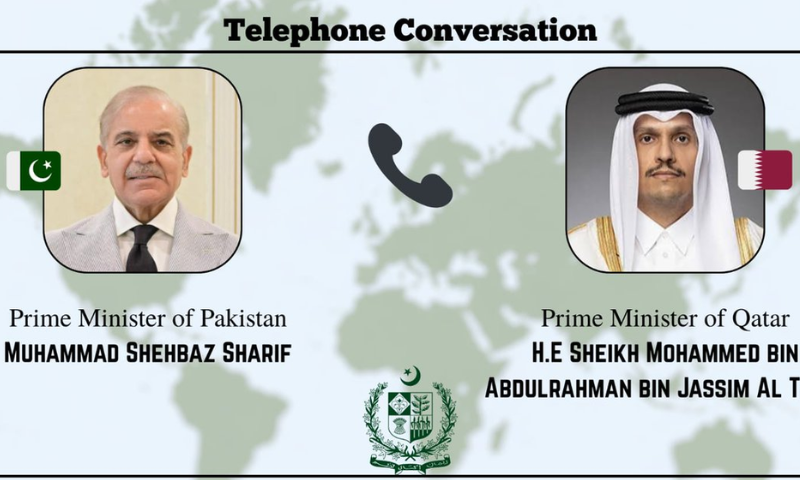
Prime Minister Shehbaz Sharif announced on Saturday that the two sides had reached a broad understanding and were moving toward the finalisation of an agreement brokered by Pakistan.
“With finalisation likely expected in the next 24 hours, Pakistan is preparing for the electronic signing of the peace deal immediately afterwards, followed by technical-level talks next week,” the prime minister said.
He thanked both Washington and Tehran for their continued engagement in negotiations and expressed appreciation to regional partners for supporting diplomatic efforts aimed at ending one of the most dangerous conflicts in recent Middle Eastern history.
“We are confident that this historic peace deal will form a strong foundation for lasting peace,” he added.
Interior Minister Mohsin Naqvi on Saturday said that Prime Minister Shehbaz Sharif and COAS-CDF Field Marshal Asim Munir will represent Pakistan at the signing ceremony of the proposed US-Iran peace deal.
Speaking to reporters in Lahore, the interior minister expressed optimism about a swift resolution to the US-Iran conflict, saying that “positive news” regarding the proposed deal is expected within the next two days.
Pakistan’s mediation effort
The proposed agreement is the culmination of more than two months of intensive diplomacy led by Pakistan after it successfully brokered a ceasefire on April 8 that halted hostilities between Iran, the United States and Israel.
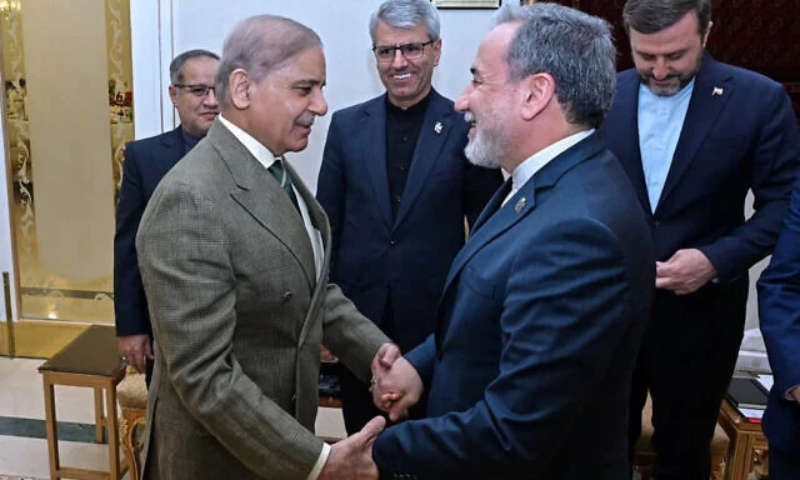
Speaking to Iranian state television, Iranian Foreign Minister Abbas Araghchi confirmed that Tehran and Washington were in the final stages of negotiating a memorandum of understanding (MoU) designed to formalise the ceasefire and pave the way for a broader settlement.
According to Iranian state media, Araghchi described the document as the result of sustained negotiations conducted under Pakistan’s mediation and coordinated closely with Iran’s political and military leadership.
“One of the missions entrusted to the Foreign Ministry was to pursue a negotiating track that would preserve and consolidate the achievements of the Iranian nation,” Araghchi said.
He stressed that Iran’s diplomatic and military institutions had worked in complete coordination throughout the process.
A 14-point memorandum
The emerging agreement is understood to be a concise 14-point memorandum of understanding covering key political, military and economic issues.
Although Araghchi declined to disclose the full contents before finalisation, he said the document had undergone repeated review by Iran’s Supreme National Security Council and other state institutions.
“This process has now reached its final stages, resulting in a 14-point memorandum of understanding. The details will not be disclosed until it is finalised, as changes may still be made up until the very last moment,” he said.
The Iranian foreign minister revealed that the agreement envisions a comprehensive end to hostilities across all theatres of conflict, including Lebanon, and contains mutual commitments to refrain from future military aggression.
“The war will come to an end on all fronts, including in Lebanon, and there will be a commitment not to initiate any new war or resort to threats or the use of force,” Araghchi said.
He further claimed that the agreement would include an explicit written commitment by Washington to respect Iran’s sovereignty, describing it as an unprecedented development in relations between the two countries.
Pathway to nuclear talks and sanctions relief
According to Iranian officials, the signing of the memorandum would be followed by a 60-day negotiation process focused on Iran’s nuclear programme, sanctions relief, reconstruction and broader regional security issues.
The talks are expected to address contentious issues such as uranium enrichment, Iran’s stockpile of highly enriched uranium, economic sanctions, and post-war reconstruction.
Araghchi said successful diplomacy requires both sides to secure meaningful gains.
“There is no agreement in which one side achieves everything while the other gains nothing. The satisfaction of both parties is vital,” he noted.
Strait of Hormuz central to agreement
One of the most significant elements of the proposed framework concerns the strategically important Strait of Hormuz, through which roughly one-fifth of global oil and gas supplies traditionally transit.
According to details cited by international media, the first phase of the agreement would involve reopening the waterway and lifting restrictions imposed during the conflict.
Iran has also indicated that future arrangements governing the strait may differ substantially from past practices. Araghchi suggested that maritime services currently provided free of charge—including navigation assistance, environmental protection, shipping lane management and search-and-rescue operations—could eventually be subject to fees.
He said Iran had conducted extensive consultations with Oman, its key partner in managing security and navigation issues related to the strategic waterway.
Even as negotiations advanced, military tensions persisted in the Gulf region.
US forces reportedly intercepted multiple Iranian drones heading toward the Strait of Hormuz on Friday after determining they posed a potential threat to commercial shipping traffic.
Iranian media simultaneously reported explosions near Sirik Port and Qeshm Island, with local authorities attributing the incidents to warning shots fired by Iranian forces.
The developments underscored the fragile nature of the ceasefire and highlighted the urgency of concluding a formal agreement.
Diverging narratives over nuclear programme
While both sides appear committed to pursuing a diplomatic settlement, significant differences remain regarding Iran’s nuclear future.
Senior US officials have stated that any final agreement must result in the dismantling of Iran’s nuclear programme and the removal of highly enriched uranium stockpiles.
Iran, however, has rejected such characterisations.
Araghchi reiterated that Tehran’s preferred solution would involve down-blending enriched uranium rather than surrendering or destroying its nuclear assets.
“If threats and pressure were effective, Iran would have backed down long ago,” he said. “Our clear message is that threats are counterproductive.”
Israel remains outside negotiations
Israel has not participated in the talks and has signalled reservations regarding the emerging framework.
Prime Minister Benjamin Netanyahu has stated that Israel will not be a party to the agreement and has resisted calls to limit military operations in Lebanon.
Israeli officials have also indicated that they expect to retain freedom of action against what they perceive as security threats, even if a US-Iran understanding is reached.
Global markets respond positively
Financial markets reacted positively to reports that an agreement could be imminent.
Global stock markets rose while oil prices declined sharply, with benchmark Brent crude falling more than three per cent at one stage to its lowest level in nearly two months.
Analysts said investors viewed the potential reopening of the Strait of Hormuz and the prospect of reduced regional tensions as positive developments for global energy supplies and economic stability.
A defining diplomatic moment for Pakistan
If signed, the agreement would represent one of the most significant diplomatic achievements in Pakistan’s recent history, placing Islamabad at the centre of efforts to resolve a major international conflict.
The proposed memorandum would not only formalise the ceasefire that ended months of warfare but also establish a framework for addressing longstanding disputes over Iran’s nuclear programme, sanctions relief, regional security and economic reconstruction.
With negotiators indicating that only final technical details remain unresolved, attention is now focused on the coming days, when the agreement could mark the beginning of a new chapter in relations between Washington and Tehran—and a major diplomatic success for Pakistan.