Islamabad, June 13, 2026: Federal Minister for Housing and Works Mian Riaz Hussain Pirzada has pledged support for the promotion of rainwater harvesting systems across government buildings, describing the initiative as a practical step toward addressing the growing challenges of climate change and water scarcity in Pakistan.
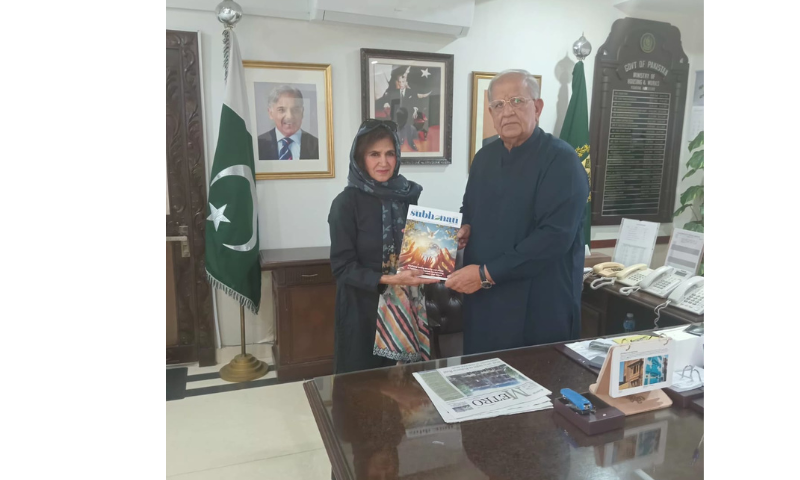
The minister made these remarks during a meeting with noted environmentalist and social activist Shahdia Kausar Farooq, Chairperson of Subh-e-Nau (SN), who called on him to discuss climate resilience and sustainable water management strategies.
Pirzada said Pakistan is already experiencing the severe impacts of climate change, making the country increasingly vulnerable to natural disasters and environmental pressures.
“Climate change has created a dual challenge for Pakistan. While we are facing devastating floods and unseasonal heavy rainfall in some regions, recurring droughts in others are threatening food security and livelihoods,” he said.
Emphasizing the need for urgent action, the minister endorsed Shahdia Farooq’s proposal to promote rainwater harvesting and stressed that Pakistan must adopt innovative and sustainable approaches to water conservation.
“We will utilize the rooftops of major buildings under the Ministry of Housing and Works for rainwater harvesting, including the Federal Secretariat and other government buildings,” Pirzada announced. He added that such initiatives would help conserve water resources, recharge groundwater reserves, and strengthen the country’s resilience to climate-related challenges.
The minister also highlighted the importance of efficient water use, saying that alongside responsible consumption, greater efforts are needed to restore declining groundwater levels and secure future water supplies.
During the meeting, Shahdia Farooq thanked the minister for his support and underscored the urgency of addressing climate change and global warming as national priorities requiring collective action.
She noted that Pakistan remains among the countries most vulnerable to climate change, facing rising temperatures, glacial melting, erratic rainfall patterns, prolonged droughts, and increasing stress on the agricultural sector.
“Citizens should not leave the entire responsibility to the government. Everyone must play a role by conserving water, planting trees, and adopting environmentally responsible lifestyles,” she said.
Farooq pointed out that Islamabad and many other parts of the country are experiencing increasing water shortages and argued that rainwater harvesting offers a practical solution to improve water availability while reducing pressure on underground water resources.
The federal minister praised Shahdia Farooq’s contributions to environmental awareness and urged citizens to embrace sustainable practices.
“There is still time for us to act and protect our future. Every citizen must contribute to tackling climate change and conserving our precious natural resources,” Pirzada said.
The meeting concluded with a shared commitment to promoting climate-resilient policies and encouraging greater public participation in environmental conservation efforts.