Islamabad, June 14, 2026: Opposition leaders on Sunday strongly rejected the federal budget for the fiscal year 2026-27, describing it as anti-people, tax-heavy and disconnected from the economic hardships faced by ordinary Pakistanis, while the government defended the budget as a relief-oriented package aimed at sustaining economic recovery.
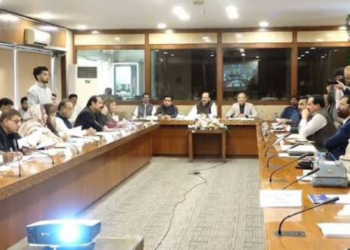
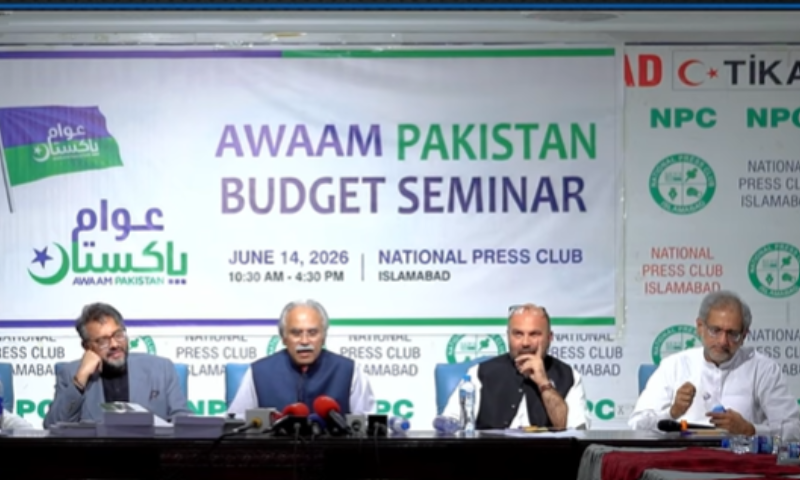
The criticism came during a budget seminar in Islamabad, where leaders from various opposition parties questioned the government’s economic policies, rising debt burden and taxation measures, arguing that the budget failed to address growing poverty, inflation and unemployment.
Speaking at the seminar, Senate Opposition Leader Allama Raja Nasir Abbas accused the government of ignoring ground realities and misleading itself about the country’s economic condition.
“They are deceiving themselves,” Abbas said while criticizing official poverty benchmarks and claiming that the government had failed to provide meaningful relief to the public.
He said Pakistanis were being “crushed under poverty” as food prices continued to rise, adding that the government’s expenditure remained higher than its income, forcing the country to rely on borrowing and asset sales.
Drawing a comparison with a household budget, Abbas said that when expenses exceed income, families fall into debt and are eventually compelled to sell their assets.
“Pakistan’s income is less than its expenses, yet no serious effort has been made to reduce expenditures and increase revenues,” he remarked.
The opposition leader also warned that if future elections were conducted under the existing system, the outcome would be detrimental for the country.
Tehreek-e-Tahafuz-e-Ayeen-e-Pakistan leader Mustafa Nawaz Khokhar said increasing poverty levels reflected the failure of economic policies.
“The real measure of economic growth is improvement in people’s lives,” he said, adding that life had become increasingly difficult for low-income households.
Khokhar argued that taxation could not be justified without corresponding public services and welfare benefits.
“Economic success is meaningless if poverty is not reduced,” he said, stressing that a budget could not succeed unless it addressed the problems faced by ordinary citizens.
He also criticized the government for failing to reduce its own expenditures while continuing to impose additional taxes on the public.
Pakistan Tehreek-e-Insaf (PTI) leader Salman Akram Raja described the budget as evidence of an ongoing economic emergency.
He said Pakistan remained trapped in a severe debt crisis and warned that increasing reliance on borrowing posed a threat to the country’s future.
“The federal government is trapped in interest payments,” he said, adding that financing expenditures through loans was not a sustainable economic strategy.
Raja argued that poverty was rising despite official claims of economic improvement and noted that Pakistan lagged significantly behind many countries in spending on health and education.
“Investment in human development is essential if Pakistan wants to compete globally,” he said, calling for structural reforms to address the economic crisis.
Former prime minister and Awam Pakistan Party leader Shahid Khaqan Abbasi described the past four years as among the most difficult periods for Pakistan’s economy.
He said government expenditures had surpassed development spending, while pension obligations had exceeded the cost of running the government.
“Interest and debt repayments are now exceeding income,” Abbasi said, warning that the country’s debt burden was growing each year.
He maintained that additional taxes would place further pressure on citizens and argued that budgetary relief measures did not reflect the realities faced by ordinary Pakistanis.
Abbasi also stressed the need for comprehensive reforms, saying investment would not increase without political stability, rule of law and continuity in economic policies.
Jamaat-e-Islami Emir Hafiz Naeemur Rehman termed Pakistan’s taxation regime “cruel” and alleged that ordinary citizens were paying an excessive share of taxes.
“The people receive no real relief in the budget; only the numbers change,” he said during a separate press conference.
He demanded the abolition of the petroleum levy, the elimination of capacity payments to independent power producers (IPPs), and an end to development funds allocated to members of parliament under the Public Sector Development Programme (PSDP).
Hafiz Naeem also proposed restrictions on official vehicles exceeding 1300cc and argued that electricity, fuel and gas prices continued to place a heavy burden on consumers.
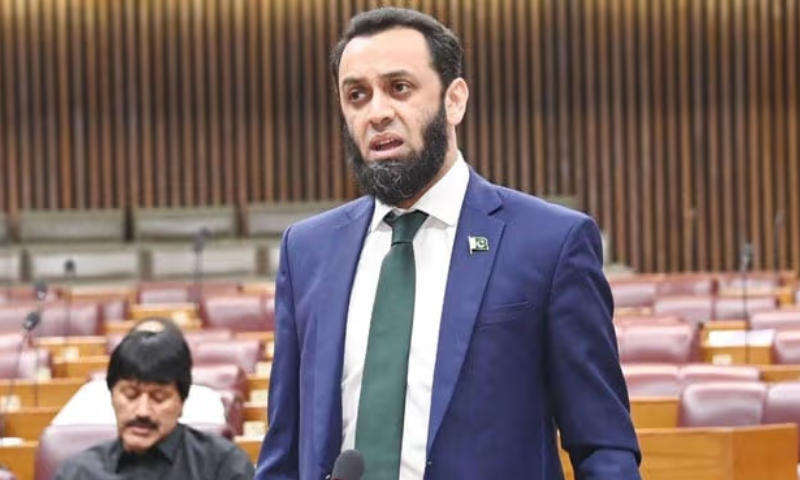
Responding to opposition criticism, Minister for Information and Broadcasting Attaullah Tarar defended the budget during a session of the National Assembly, describing it as a “relief-oriented budget” designed to benefit all segments of society.
He said the budget had received positive feedback from economists and opinion-makers and welcomed constructive suggestions from opposition parties.
Tarar highlighted tax relief for salaried individuals, noting that those earning up to Rs50,000 per month would remain exempt from income tax, while individuals earning between Rs50,000 and Rs100,000 would pay only a one percent tax.
The minister said Pakistan had achieved macroeconomic stability through the government’s policies and credited both the civilian and military leadership for supporting economic recovery.
Expressing confidence in the country’s economic outlook, he said Pakistan was firmly on the path to growth.
Tarar also pointed to reforms within the Federal Board of Revenue (FBR), saying the government was introducing measures to ensure that tax-compliant citizens would no longer bear the burden of those who evade taxes.
The sharp exchange of views reflects the deep political divide over the government’s economic strategy as parliament begins debating the federal budget for the upcoming fiscal year.
While the government maintains that the budget balances fiscal responsibility with public relief, opposition leaders insist that rising poverty, increasing debt and higher taxation will continue to weigh heavily on ordinary Pakistanis unless broader structural reforms are undertaken.