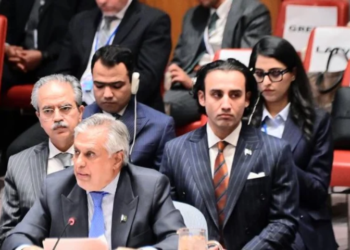
United Nations/Islamabad, June 25, 2026: China and Pakistan jointly convened an Arria-Formula meeting of the United Nations Security Council (UNSC) on Thursday, urging the international community to bridge the implementation gap in Security Council resolutions and strengthen the Council’s credibility in maintaining international peace and security.
Titled “Bridging the Implementation Gap: Security Council Resolutions and the Maintenance of International Peace and Security,” the meeting provided a platform for UN member states to discuss ways to ensure the full, effective and non-selective implementation of UNSC resolutions.
The session was briefed by UN Assistant Secretary-General Khaled Khiari, Executive Director of Security Council Report Shamala Kandiah, and Richard Gowan of the International Crisis Group. The speakers emphasized that implementation is central to the Security Council’s authority, effectiveness and credibility.
The briefers noted that resolutions must be supported by realistic mandates, clearly defined implementation pathways, sustained reporting mechanisms, adequate resources and strong political commitment to translate Council decisions into tangible outcomes on the ground.
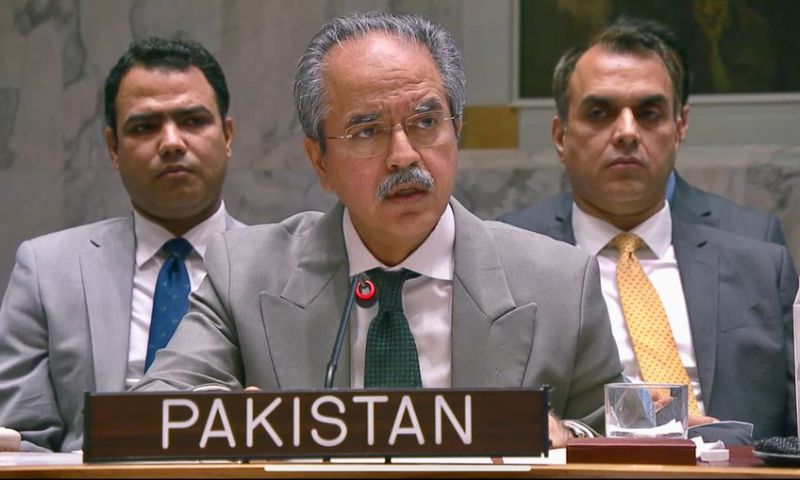
Addressing the meeting, Pakistan’s Permanent Representative to the United Nations, Asim Iftikhar Ahmad, stressed that Security Council resolutions are not merely statements of intent but legally binding obligations under the UN Charter.
He warned that selective implementation or prolonged inaction undermines the Council’s authority, prolongs unresolved conflicts and exacerbates human suffering. Referring to disputes such as Palestine and Indian Illegally Occupied Jammu and Kashmir (IIOJK), Ambassador Ahmad said the continued non-implementation of Security Council resolutions on Jammu and Kashmir has left a major international dispute unresolved, posing serious implications for regional and global peace and security while prolonging the suffering of the Kashmiri people.
Pakistan also put forward a series of practical proposals aimed at improving implementation. These included an annual review of unimplemented and partially implemented resolutions, the development of clearer implementation frameworks, strengthened follow-up mechanisms and closer alignment of the UN Secretary-General’s good offices, peace operations and regional arrangements with Security Council decisions.
Representatives of Security Council members and other participating UN member states welcomed the initiative by China and Pakistan and shared recommendations for strengthening implementation across both country-specific and thematic issues. Participants highlighted the importance of ensuring that Council decisions remain realistic, actionable and backed by sustained diplomacy, regular assessments, timely reporting and adequate resources.
The meeting concluded with a broad consensus that implementation remains a critical test of the Security Council’s relevance and effectiveness. Participants underscored the need for consistency, objectivity and determination in carrying forward Council decisions.
By jointly organizing the discussion, China and Pakistan reaffirmed their commitment to multilateralism, the authority of the United Nations Security Council and the principles and purposes enshrined in the UN Charter.