Tehran/Washington/Beirut, June 25, 2026: Tensions over southern Lebanon intensified on Thursday as Iran’s Quds Force commander threatened Israel with expulsion from Lebanese territory, while the United States sought to advance a plan aimed at gradually restoring Lebanese government control in the region.
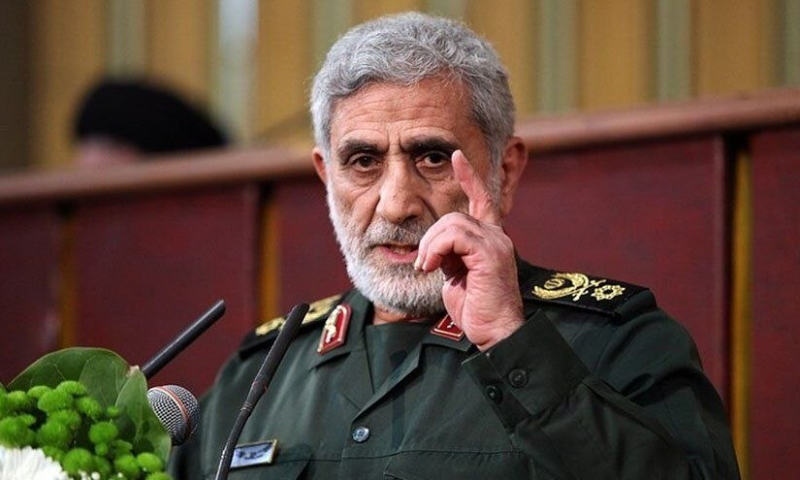
Addressing the issue, Esmaeil Qaani warned that Israel must withdraw completely from Lebanese territory or face defeat.
“You are required to evacuate all of Lebanon. Should you fail to retreat on your own accord today, you will inevitably be driven out in humiliation and failure tomorrow,” Qaani said, according to Iranian state media.
His remarks came amid conflicting claims regarding Israeli troop movements in southern Lebanon. A US State Department official said Israel had already withdrawn from part of its self-declared buffer zone as a goodwill gesture towards Lebanon’s government.
The official described the move as part of a US-backed “pilot zone” initiative under discussion between Israeli and Lebanese representatives in Washington. The proposal would involve the gradual transfer of certain occupied areas in southern Lebanon to the Lebanese Armed Forces (LAF).
According to the State Department, the process is intended to facilitate the verifiable dismantling of Hezbollah’s military infrastructure and other non-state armed groups operating in the area.
“Israel has already taken a concrete step by pulling back from a part of its buffer zone. This is a significant demonstration of good faith toward Lebanon’s legitimate government,” the US official said.
The official added that the Lebanese military would be expected to secure the areas, eliminate militant infrastructure and help pave the way for the return of displaced residents and reconstruction efforts.
Despite Washington’s claims, both Israeli and Lebanese officials disputed reports of an Israeli withdrawal.
A senior Israeli defence official told Reuters that Israel had no intention of abandoning what it describes as a security buffer zone in southern Lebanon.
Similarly, a senior Lebanese military official said recent developments on the ground did not indicate any Israeli pullback.
“Developments in recent days show the opposite of a withdrawal,” the official said, adding that Israeli forces continued enforcing restrictions in areas under their control and preventing access by Lebanese troops and civilians.
Meanwhile, US Secretary of State Marco Rubio concluded a three-day tour of Gulf states aimed at reassuring regional allies about the Trump administration’s emerging agreement with Iran.
Speaking at a meeting of Gulf foreign ministers in Bahrain, Rubio said any future arrangement with Tehran would fully consider the security interests of America’s regional partners.
“We’re not going to do anything that undermines the security of our allies, our longstanding allies in the region,” Rubio told reporters.
The diplomatic effort follows a preliminary US-Iran framework agreement announced last week after months of conflict and negotiations.
Gulf states have expressed concerns that excessive concessions to Tehran could alter the regional security balance and strengthen Iranian influence across the Middle East.
Separately, Iran’s Islamic Revolutionary Guard Corps (IRGC) strongly objected to the announcement of a new maritime corridor through the Strait of Hormuz proposed by regional actors without Tehran’s involvement.
In a statement carried by state media, the IRGC said safe passage through the strategically vital waterway could only occur through routes approved by Iran.
The force warned that all vessels transiting the strait must coordinate with Iranian naval authorities via international maritime communication channels and cautioned that non-compliance could result in action against offending vessels.
The warning came after Gulf officials welcomed Oman’s initiative to establish a safe navigation corridor through the Strait of Hormuz, one of the world’s most critical energy transit routes.
Iran also sharply criticized comments by NATO Secretary General Mark Rutte regarding allied support for the United States during its recent military operations against Iran.
Speaking to Fox News, Rutte said several NATO allies had facilitated US military activities, including the use of bases and logistical support during Operation Epic Fury.
According to Rutte, hundreds of US aircraft operated from facilities in Italy, while other allies assisted with logistical arrangements.
Iranian Foreign Ministry spokesman Esmaeil Baqaei condemned the remarks, accusing NATO of direct involvement in what Tehran described as an unlawful war.
“This is a clear and damning admission of NATO’s active complicity in an unlawful war of aggression against a sovereign UN member state,” Baqaei said.
Italy later distanced itself from Rutte’s comments, insisting it had only authorised technical and logistical support flights under existing bilateral agreements with the United States.
At the White House, US President Donald Trump said any final agreement with Iran that imposed shipping or maritime transit fees through the Strait of Hormuz would be unacceptable to Washington.
“It would be unacceptable to me,” Trump told reporters during a meeting with NATO Secretary General Mark Rutte.
The US president argued that allowing such fees would establish a precedent that could encourage similar restrictions elsewhere and disrupt international commerce.
The remarks underscored continuing disagreements over key elements of a potential long-term agreement between Washington and Tehran, even as diplomatic efforts continue across the region.
As negotiations proceed, Lebanon’s future, the security of the Strait of Hormuz and broader regional stability remain central issues shaping the evolving geopolitical landscape of the Middle East.