Washington/Tehran, July 14, 2026: US President Donald Trump on Tuesday abandoned his proposal to impose a 20 percent fee on all cargo transiting the Strait of Hormuz, saying the United States would instead pursue trade and investment agreements with Gulf states, even as tensions with Iran continued to intensify across the region.
In a post on Truth Social, Trump said the decision followed “highly productive conversations” with leaders from the Middle East.
“Based on highly productive conversations with Middle East leadership, I have decided to replace the 20% United States reimbursement fee with trade and investment deals that the various Gulf states will be making into the United States,” he wrote.
Trump did not disclose any specific commitments from Gulf countries but predicted that future investments would be “massive” while also benefiting the region’s long-term economic interests.
The announcement marked a significant shift from Trump’s proposal a day earlier to charge a 20 percent fee on all cargo passing through the strategic waterway, a move that had drawn criticism from the international shipping industry and maritime organizations.
The US president, however, maintained a hardline stance on Iran, declaring that while the Strait of Hormuz would remain open to international shipping, vessels linked to Iran would face a complete blockade.
“We will therefore have a full blockade, but only on ships coming to and from Iranian ports, or carrying anything to do with Iranian cargo,” Trump said.
The United Nations’ shipping agency reiterated its opposition to imposing fees on vessels using international waterways, saying such measures lack legal justification under international maritime law.
Iran responded by signalling tougher measures over the strategic waterway.
Ebrahim Azizi, chairman of the Iranian Parliament’s National Security and Foreign Policy Committee, announced that a bill had been submitted to parliament to regulate transit through the Strait of Hormuz following the latest military escalation with the United States.
“We remain steadfast in defending our red lines, particularly regarding the management of the Strait of Hormuz,” Azizi said, warning that additional measures could follow.
Iranian military spokesman Mohammad Akraminia said the strait would only fully reopen when “the rights of the Iranian people are respected,” insisting that military pressure would not force Tehran to alter its position.
The regional security situation deteriorated further as Iran and the United States exchanged fresh military strikes.
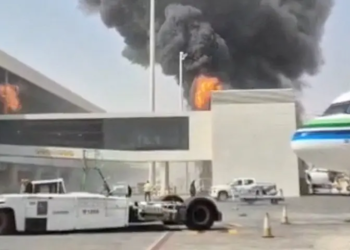
Iranian state media reported that the country’s armed forces launched drone and missile attacks on US military facilities in Kuwait, targeting communications systems, fuel depots, ammunition warehouses and Patriot missile batteries. Iran also claimed to have struck a US naval vessel with cruise missiles and downed an American MQ-1 drone over the Strait of Hormuz.
The US military continued a third consecutive night of strikes against Iranian targets, saying the operations were aimed at degrading Iran’s military capabilities in and around the strategic waterway.
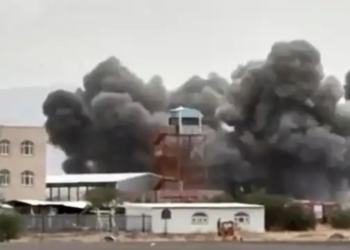
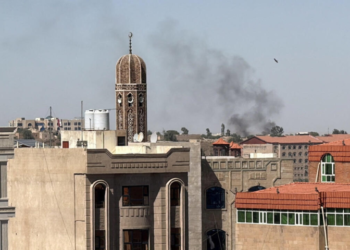
Iranian officials reported explosions in Bandar Abbas, Bushehr, Khuzestan province, Kish Island, Qeshm Island and Abu Musa Island. Authorities said at least four people were injured in Omidiyeh in southwestern Iran following US strikes.
Meanwhile, Jordan’s armed forces said they intercepted four Iranian missiles that entered the country’s airspace after Iran claimed to have targeted a US air base in Jordan.
Bahrain also confirmed that its air defence systems intercepted aerial attacks over the kingdom.
Regional tensions escalated further after the United Arab Emirates accused Iran of attacking two Emirati oil tankers transiting the Strait of Hormuz.
According to the UAE Ministry of Defence, one Indian crew member was killed and eight others—including six Indians and two Ukrainians—were injured when cruise missiles struck the vessels Mombasa B and Al Bahyah. Fires aboard both tankers were later brought under control.
The ministry condemned the incident as a “blatant attack” and reserved the UAE’s right to respond.
Iran’s Islamic Revolutionary Guard Corps (IRGC) acknowledged targeting two “offending” supertankers, alleging they had ignored repeated warnings and attempted to navigate through what it described as a mined route after switching off their navigation systems.
Separately, the United Kingdom Maritime Trade Operations (UKMTO) reported that another tanker was struck by an unidentified projectile northeast of Oman’s coast, although all crew members remained safe.
Kuwait condemned the attacks on the Emirati tankers, calling them a flagrant violation of international law and a direct threat to maritime security and global energy supplies.
Oman reiterated its neutral role in the crisis, saying it continues to work with all parties to restore freedom of navigation in the Strait of Hormuz while remaining fully committed to international maritime law.
The Sultanate urged all sides to respect international legal obligations and avoid further escalation.
The renewed confrontation has rattled global energy markets.
Brent crude rose to around $85.20 per barrel, while US West Texas Intermediate climbed to $80.05, both reaching their highest levels in nearly a month. Brent prices had surged almost 10 percent in the previous trading session—the sharpest daily increase since May 2020.
Maritime analysts estimate that before the conflict, nearly one-fifth of global oil and gas shipments passed through the Strait of Hormuz each day, transporting more than 15 million barrels of oil valued at approximately $1.2 billion.
According to TankerTrackers, Iran has exported more than 80 million barrels of crude oil and refined products over the past four weeks, with an estimated value of $6 billion, while millions of additional barrels remain in storage awaiting shipment.
The latest developments have intensified concerns over the security of one of the world’s most strategically important maritime chokepoints, raising fears of prolonged disruptions to global energy supplies and further instability across the Middle East.