London, July 15,2026: Global oil prices extended their gains on Wednesday as renewed military confrontation between the United States and Iran heightened concerns over crude supplies from the Gulf, with investors closely watching developments around the Strait of Hormuz.
Brent crude futures rose 99 cents, or 1.2 percent, to $85.72 a barrel, while US West Texas Intermediate (WTI) crude gained 64 cents, or 0.8 percent, to $79.98 a barrel in early trading.
The gains followed a two percent surge on Tuesday, when both benchmarks settled at their highest levels in about a month after renewed hostilities disrupted shipping through the Strait of Hormuz, a vital waterway that previously handled nearly one-fifth of global oil and liquefied natural gas (LNG) supplies.
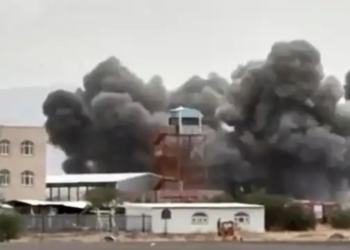
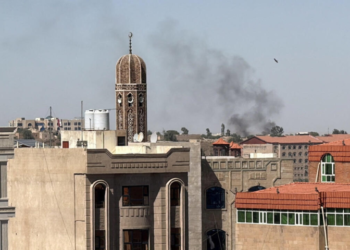
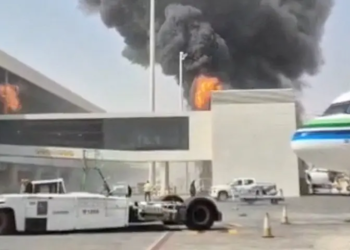
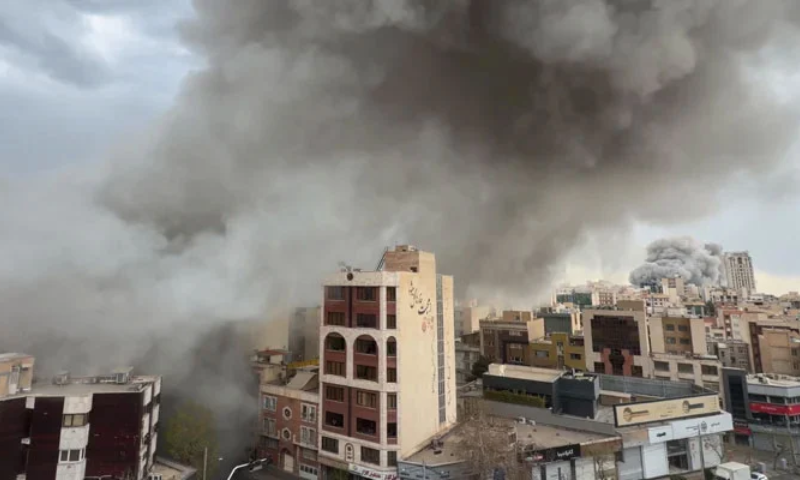
Market sentiment was further shaken after US President Donald Trump reimposed a naval blockade on Iranian ports and US forces launched a fresh wave of strikes against Iranian military targets, saying the operations were intended to reduce Tehran’s capability to threaten commercial shipping in the Strait of Hormuz.
Iran has claimed it has once again closed the strategic waterway after fighting with the United States resumed last week, undermining a fragile truce reached in June following months of conflict.
Speaking in a television interview, Trump warned that Washington could target Iran’s energy infrastructure if Tehran failed to return to negotiations.
“I’ll save the energy targets for last, but ultimately we’ll hit energy targets,” the US president said.
Iranian officials said their military launched drone attacks targeting US positions at Jordan’s Azraq Air Base, while the Islamic Revolutionary Guard Corps (IRGC) claimed it had also struck military facilities in Bahrain and Kuwait. Those claims have not been independently verified.
Analysts warned that although the global oil market remains adequately supplied for now, any further escalation involving the Strait of Hormuz could significantly tighten supplies and drive prices higher.
“While the physical oil market remains adequately supplied, any further escalation involving the Strait of Hormuz or additional sanctions on Iranian exports could quickly tighten market sentiment and add further risk premiums,” said Priyanka Sachdeva, senior market analyst at Phillip Nova.
Tim Waterer, chief market analyst at KCM Trade, said Brent crude could climb toward $100 a barrel if hostilities intensify and energy infrastructure in the Gulf is damaged. However, he noted that prices could retreat to the $75-$80 per barrel range if diplomatic efforts succeed in restoring stability and reopening the Strait of Hormuz.
The latest escalation has added to uncertainty in global energy markets, raising fears of prolonged supply disruptions from one of the world’s most important oil-exporting regions.