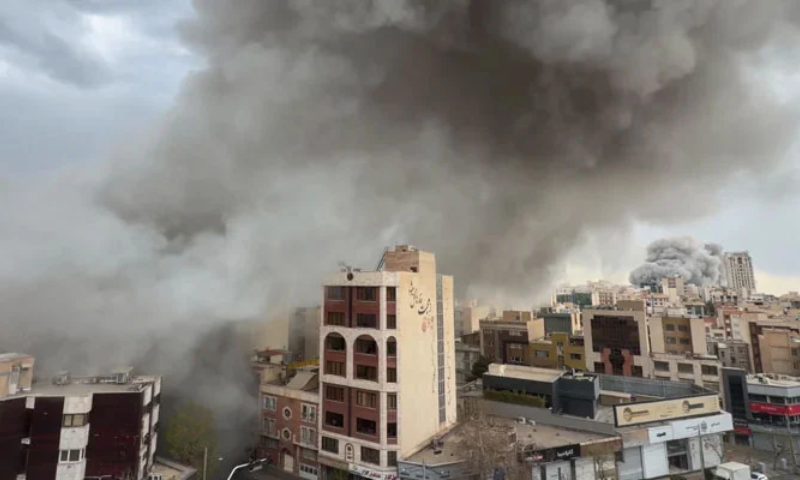
Washington/Tehran, July 15,2026: The United States and Iran exchanged fresh military blows on Wednesday as renewed US airstrikes targeted multiple Iranian military and civilian sites, prompting Tehran to vow retaliation and threaten further disruption to global energy routes.
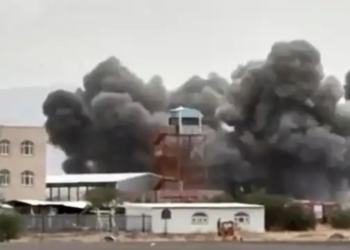
According to Iran’s semi-official Tasnim News Agency, at least seven military personnel were killed in overnight US strikes on an Iranian military base in Bampur, near the southeastern city of Iranshahr. Iranian military officials said 13 missiles struck a guesthouse, guard posts and accommodation facilities at the base, injuring several others and describing the attack as an attempt to inflict maximum casualties.
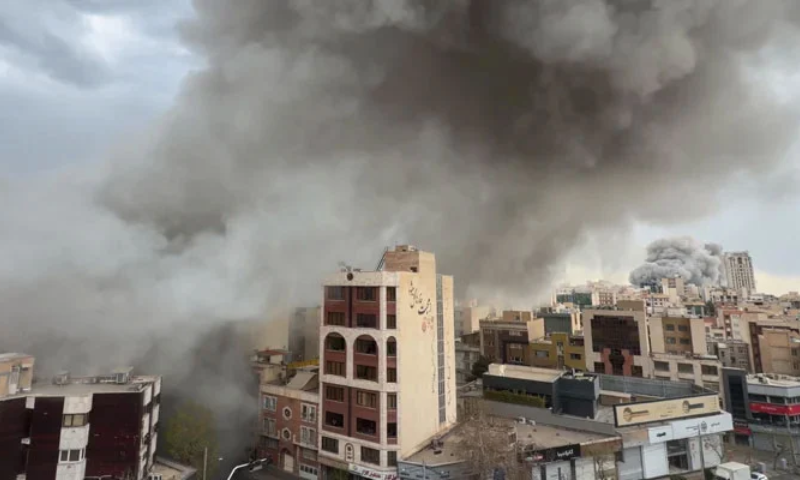
Iranian government spokeswoman Fatemeh Mohajerani said more than 30 civilians had also been killed in recent attacks in southern Iran, although she did not specify the locations.
Fresh US strikes were also reported in the southwestern city of Bushehr, where local authorities said three locations were targeted without causing casualties. In southeastern Iran, officials said projectiles hit the maritime traffic control centre at Chabahar Port, damaging a civilian facility used for maritime navigation, search-and-rescue operations and the protection of commercial shipping.
Iran also reported that a wheat storage silo and another site in Khuzestan province were struck overnight, though no casualties were recorded. Meanwhile, Iranian Health Ministry spokesman Hossein Kermanpour said more than 260 people were injured in the latest wave of attacks, with at least two fatalities confirmed.
The US Central Command (CENTCOM) confirmed it had completed another round of strikes, targeting dozens of Iranian missile sites, drone facilities, naval assets and coastal defence systems during a seven-hour operation aimed at reducing Iran’s ability to threaten commercial shipping in the Strait of Hormuz.
The latest military action followed Washington’s decision to resume a naval blockade on vessels travelling to and from Iranian ports.
US President Donald Trump warned that further strikes could target Iran’s energy infrastructure if Tehran refuses to return to negotiations.
“I’ll save the energy targets for last, but ultimately we’ll hit energy targets,” Trump said in an interview, adding that US officials had urged Iran to resume talks.
Iran’s Islamic Revolutionary Guard Corps (IRGC) responded by declaring that the Strait of Hormuz would remain closed until what it described as “the end of America’s evils.” The IRGC also threatened to shut other strategic export corridors serving the United States and its allies, declaring that “regional energy exports are either shared by all, or denied to all.”
The statement has intensified concerns over the security of the Bab el-Mandeb Strait linking the Red Sea and Gulf of Aden. Iranian media reported that Tehran’s Houthi allies in Yemen have warned they could also close the strategic waterway if hostilities continue, raising fears of a major disruption to global oil supplies.
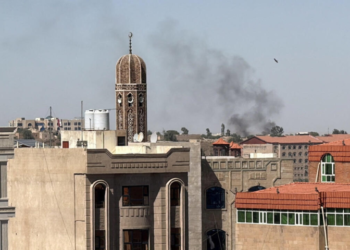
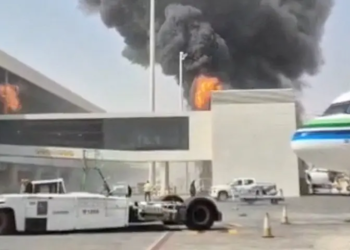
The Houthis, who resumed missile attacks on Saudi Arabia this week after accusing Riyadh of bombing an airport under their control, had previously targeted commercial shipping in the Red Sea during the Gaza conflict.
Regional tensions spread further as Jordan’s armed forces announced that air defence systems intercepted three Iranian ballistic missiles that entered its airspace early Wednesday, with no casualties or damage reported.
Iran claimed it had also targeted US military facilities in Bahrain, Kuwait and Jordan in retaliation for the latest American attacks, although those claims have not been independently verified.
At the United Nations, the conflict triggered a diplomatic confrontation between Washington and Beijing. Chinese Ambassador Sun Lei accused the United States of pushing the Middle East “to a dangerous precipice” through its military actions, while US Ambassador Mike Waltz accused China of failing to curb the transfer of dual-use goods and satellite imagery to Iran and the Iran-backed Houthis.
The latest escalation has rattled global energy markets, with oil prices extending gains after rising more than two percent on Tuesday amid growing fears that prolonged disruption in the Strait of Hormuz could threaten one of the world’s most critical energy shipping routes.