By Shah Khalid Khan, Resident Editor, USA
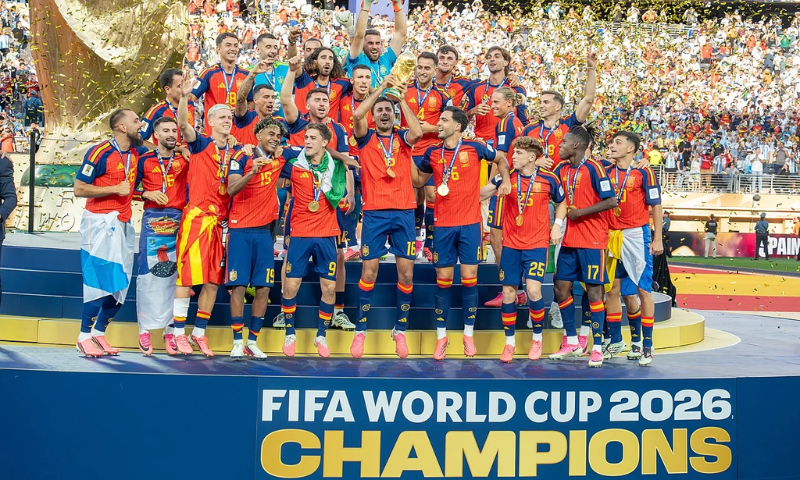
New Jersey, July 20,2026: East Rutherford, New Jersey — On a sun-drenched Sunday evening at MetLife Stadium, Spain delivered a masterclass in controlled football to dethrone defending champions Argentina, winning the 2026 FIFA World Cup 1-0 in extra time. Ferran Torres’ clinical strike in the 106th minute proved to be the decisive blow in a match that showcased La Roja’s tactical superiority and defensive steel. Sixteen years after their maiden triumph in South Africa, Spain are world champions once again.
The final was a tale of dominance rather than drama. Spain dictated proceedings from the first whistle, outshooting Argentina 20-2, enjoying 65% possession, and completing 858 passes compared to their opponents’ 456. Unai Simón was barely tested, while Argentina managed just two shots — neither on target. Enzo Fernández’s second yellow card left the Albiceleste with ten men for extra time, effectively sealing their fate.
This victory was no fluke. Spain marched through the tournament conceding just one goal — a record for a World Cup-winning side. Simón kept seven clean sheets, another tournament benchmark, while the team went 650 minutes without conceding. Captain Rodri anchored the midfield with authority, earning the Golden Ball as the tournament’s outstanding player. Young defender Pau Cubarsí, just 19, was named Best Young Player, underlining the emergence of a vibrant new Spanish generation.
Individual honours were heavily tilted in Spain’s favour. Kylian Mbappé claimed the Golden Boot with 10 goals, becoming the first player to win the award in consecutive World Cups and extending his record as the all-time leading scorer in men’s World Cup history with 22 goals. Lionel Messi, despite eight goals and a valiant campaign, had to settle for the Silver Ball after a goalless final.
England secured third place with a thrilling 6-4 victory over France in the bronze-medal match. The 48-team tournament, the largest in World Cup history, featured 104 matches and delivered both surprises and moments of brilliance.
For Spain, the triumph brings far more than silverware. The squad returns home with $51 million in prize money, the top spot in the FIFA rankings, and a historic double — having also won the European Championship. Under coach Luis de la Fuente, La Roja blended youthful exuberance with mature tactical discipline, proving that collective intelligence can overcome individual stardust.
Argentina’s campaign, though heroic, ended in heartbreak. The side that had lifted the trophy in 2022 and dominated continental football could not repeat the feat. At 39, Messi gave everything in what was likely his final World Cup, but the fairytale ending eluded him. His tears at the medal ceremony spoke volumes — a champion’s pride mixed with the pain of defeat.
The 2026 World Cup will be remembered as a landmark event: the expansion to 48 teams, record-breaking individual performances, and the crowning of a deserving champion. Spain’s disciplined, attractive style has set a new benchmark, while the emergence of young stars signals an exciting future for the beautiful game.
As the curtain falls on this memorable tournament, one truth stands clear: football continues to evolve, rewarding those who blend heart, intelligence, and unity. Spain has earned its place atop the world — a victory forged in strategy, sealed in resilience, and celebrated in glory.