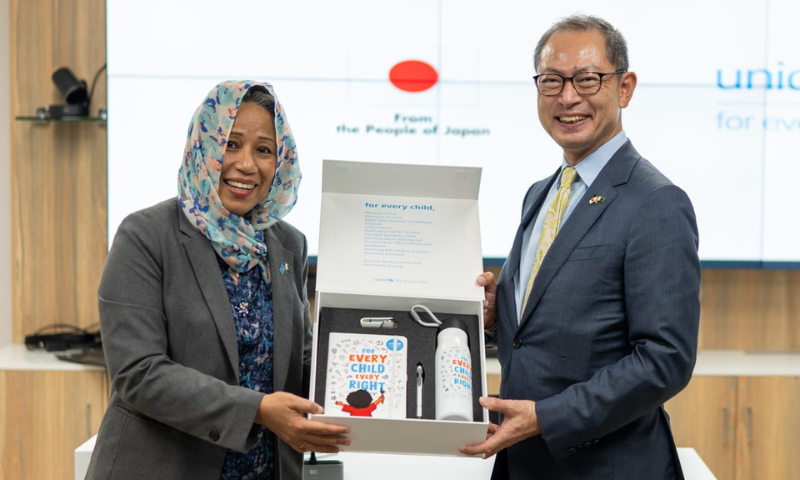
Islamabad, July 28, 2026: The Government of Japan and UNICEF have reaffirmed their decades-long partnership to advance the rights and well-being of children in Pakistan, highlighting continued cooperation in health, nutrition, education, water and sanitation, child protection, emergency response and long-term development.
Speaking at a ceremony in Islamabad, Ambassador of Japan to Pakistan Mr. Akamatsu Shuichi said the partnership between Japan and UNICEF is one of the most enduring collaborations in international development, built on the shared commitment to ensuring every child has the opportunity to lead a healthy, safe and dignified life.
He said Japan’s foreign policy is guided by the belief that human development, particularly the well-being of children, is the true measure of progress. The ambassador also reaffirmed Japan’s longstanding commitment to Pakistan’s polio eradication efforts, noting that Japanese support has helped vaccination campaigns reach millions of children in some of the country’s most remote and underserved areas.
Japan is one of UNICEF’s largest and longest-standing global partners. In Pakistan, the partnership has supported children and families through programmes in healthcare, nutrition, education, water, sanitation and hygiene (WASH), child protection and humanitarian assistance.
Following the devastating 2022 floods, Japan contributed US$6.48 million to UNICEF’s emergency response in some of the worst-affected communities in Sindh and Balochistan. The funding enabled vulnerable families to access safe drinking water, sanitation facilities, healthcare and nutrition services while strengthening community resilience against future disasters.
Acting UNICEF Representative in Pakistan Sharmeela Rasool praised Japan’s sustained support, saying the partnership has helped millions of children survive, recover and thrive through both emergency assistance and long-term investments in essential public services.
She said Japan’s continued commitment not only addresses urgent humanitarian needs but also strengthens national systems that will benefit children and families for years to come.
The two partners reaffirmed their commitment to continuing collaboration aimed at improving the lives of children across Pakistan through sustainable development initiatives and humanitarian support.