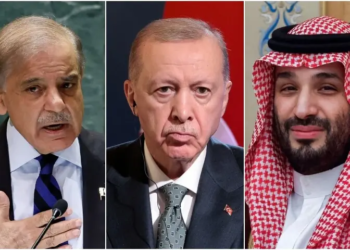
Tehran, August 10, 2026: Iran on Monday described the Makkah Joint Defence Agreement signed by Pakistan, Saudi Arabia and Türkiye as a reflection of what it called a changing perception among regional countries toward reliance on the United States for security.
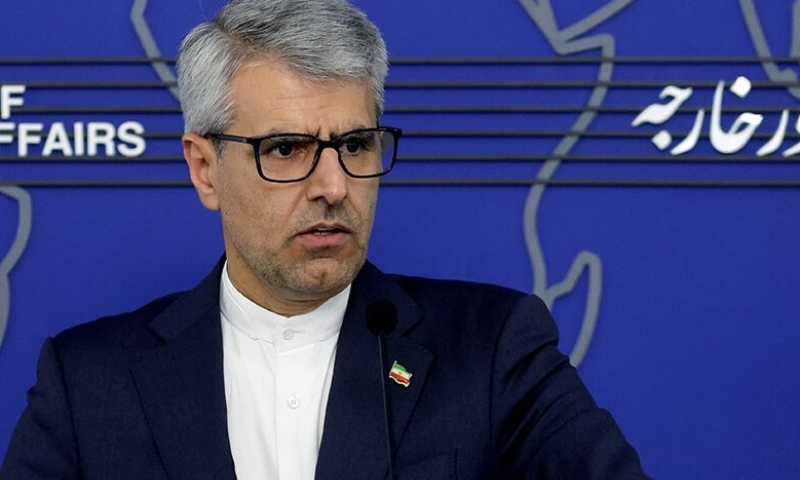
Iranian Foreign Ministry spokesperson Esmaeil Baqaei said the agreement represented an emerging effort by regional states to strengthen collective security through their own capabilities and regional cooperation.
“This development is a sign of a change in the perception of the countries of the region,” Baqaei said during a weekly press briefing, according to Iranian state media.
He said developments over the past two to three years had demonstrated to regional countries that security could not be guaranteed by relying on external powers. “The countries of the region have realised that security is not a commodity that can be bought from false security brokers,” he said, in an apparent reference to the United States.
The Makkah Joint Defence Agreement, signed in Makkah on Friday by Pakistan, Saudi Arabia and Türkiye, provides for collective defence, with an armed attack against one signatory to be treated as an attack against all three. The agreement has been presented by its members as a defensive arrangement aimed at strengthening regional security and strategic cooperation.
Baqaei said Iran had “no reason to worry” that the agreement was directed against it, pointing to Tehran’s longstanding religious, historical and civilisational ties with Pakistan, Türkiye and Saudi Arabia.
He said any regional security arrangement based on the geopolitical and historical realities of the region, and which was comprehensive and inclusive, could contribute to strengthening security and preventing instability.
Asked whether Iran could potentially join the defence framework, Baqaei said Tehran had consistently advocated regional security mechanisms based on cooperation among regional states and free from what he called “destructive intervention” by external actors.
“Those plans still exist and can certainly be updated in light of developments,” he said, adding that Iran remained in close contact with neighbouring and regional countries.
Baqaei also highlighted the importance of Pakistan-Iran relations, saying the relationship had become “even more important than before” over the past seven or eight months.
Responding to questions about invitations extended by Pakistan to Iranian Parliament Speaker Mohammad Bagher Ghalibaf and Foreign Minister Abbas Araghchi, he said the visits would take place “whenever the time is right”, with bilateral relations remaining the main consideration.
Meanwhile, Pakistan’s Deputy Prime Minister and Foreign Minister Ishaq Dar said on Sunday that the Makkah agreement remained open to any country in the region willing to uphold its fundamental principles.
Dar described the agreement as the culmination of years of consultations and coordination and stressed that it was “purely defensive” and not directed against any country.
“It is not targeted against any country and its sole purpose is to further strengthen our ongoing efforts towards peace, stability and prosperity in the wider region,” Dar said.
He also clarified that the agreement did not replace or undermine any existing bilateral or multilateral agreements between the three signatories or their arrangements with other countries and international organisations.
The agreement has also prompted diplomatic outreach by Pakistan. According to the Foreign Office, Dar received a telephone call from Kuwait’s Foreign Minister Sheikh Jarrah Jaber Al-Ahmad Al-Sabah, who congratulated him on the signing of the Makkah agreement.
The two officials also discussed the regional situation, including occupied East Jerusalem, bilateral relations and follow-up to the Kuwaiti foreign minister’s recent visit to Pakistan. They agreed to maintain close engagement and enhance cooperation, particularly in key economic and investment sectors.
Dar also discussed the agreement with Democratic Republic of the Congo President Félix-Antoine Tshisekedi and former Guinea-Bissau president General Umaro Sissoco Embaló. The discussions covered the agreement’s significance for strategic cooperation and regional peace, stability and security, while Dar and Tshisekedi also reviewed Pakistan-DRC relations.
The Pakistani deputy prime minister had earlier spoken with Canadian Foreign Minister Anita Anand about the regional situation and briefed her on the essence of the Makkah agreement and the three countries’ shared resolve to contribute to regional peace and stability.
The developments come as regional countries seek greater coordination amid heightened security tensions across the Middle East. Iran’s response indicates that Tehran views the emergence of new regional security arrangements as part of a broader debate over the future architecture of security in the region, while Pakistan has stressed that the Makkah pact is defensive and aimed at promoting peace, stability and collective security.