
Peshawar, November 8,2026: The Khyber Pakhtunkhwa administration has planned to establish faceless anti-terrorism courts to protect witnesses, prosecutors and judges in terrorism-related cases, alongside a Rs70 billion annual allocation for strengthening the Counter-Terrorism Department (CTD) and police.
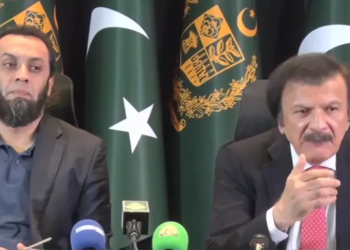
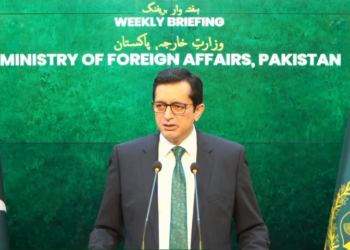
The proposed measures were outlined by KP Secretary Home Amjad Ali Khan during a televised briefing attended by Governor Faisal Karim Kundi on Sunday.
Khan said an amendment had recently been sent to establish faceless anti-terrorism courts, as witnesses were often reluctant to testify in terrorism cases due to security concerns.
“So, we have recently sent the amendment to set up faceless anti-terrorism courts. Through this, not just the protection of witnesses, but that of prosecutors and judges will also be ensured,” he said.
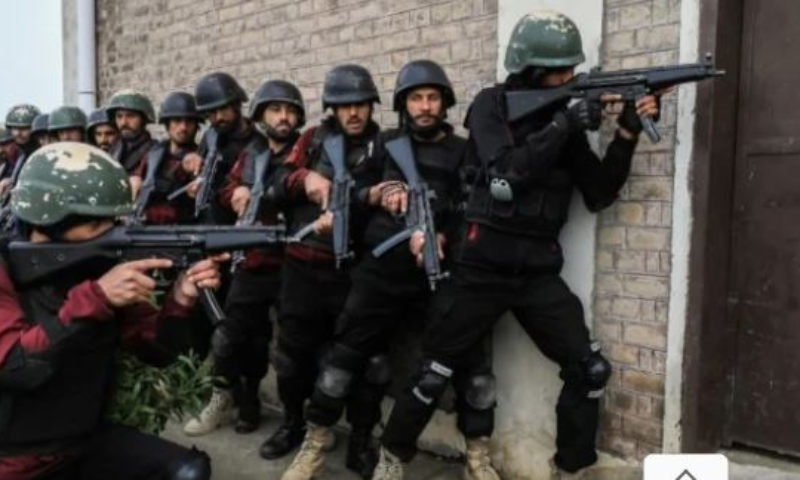
He said the provincial administration planned to spend Rs70 billion annually on the police and CTD to improve their operational capacity, infrastructure, equipment and training.
Rs70 billion for police and CTD
Giving details of the proposed allocation, the home secretary said Rs59.8 billion would be provided to the police, including Rs33.4 billion for infrastructure and Rs26.4 billion for procurement.
The CTD would receive Rs10.3 billion, comprising Rs5.4 billion for infrastructure and Rs4.9 billion for procurement.
He said the administration also planned to improve police surveillance capacity from the existing 15 per cent to 60 per cent, while the CTD’s surveillance capacity would be enhanced by 70 per cent.
The police’s counter-aerial threat capacity would be increased from one per cent to 50 per cent, while air-strike capability would rise from 18 per cent to 50 per cent. Night-fighting capabilities and vehicle protection would also be improved.
Khan said jammer availability would be increased from 40 per cent to 50 per cent, while counter-drone capability would rise from 52 per cent to 60 per cent.
Protective equipment, vehicles and specialised training would also be improved in collaboration with the Pakistan Armed Forces.
Police infrastructure and security measures
The home secretary identified several challenges facing law enforcement agencies, including a shortage of more than 10,000 police personnel, inadequate infrastructure, insufficient funding and limited specialised training, particularly in the merged districts.
He said only 3.2 per cent of the budget in the merged districts was allocated for security, while police operations in several areas remained heavily dependent on former FATA Khasadars and Levies personnel.
He also highlighted inadequate counter-drone protection, saying the available system had only 12 per cent capacity, while terrorists were increasingly using drone technology.
The administration planned to fortify sensitive police stations and check posts, extend the Safe City project and establish anti-drone systems in Dera Ismail Khan, Lakki Marwat and Bannu.
District Nerve Centres would also be made functional in 10 districts to provide updated information to law enforcement agencies.
Additionally, satellite communication systems were being introduced in areas without existing communication facilities, while artificial intelligence tools would be deployed to monitor social media and counter terrorist narratives
Khan said police personnel would receive specialised training in modern technologies, including anti-drone systems and sniping.
Expanded counterterrorism operations
The home secretary said kinetic operations would be intensified to eliminate militancy through enhanced intelligence-based operations, area clearance, arrests of terrorist facilitators and re-verification of individuals placed on the Fourth Schedule.
The Rapid Response Force would also be mobilised, while the number of police check posts would be increased.
He said the administration would strengthen public outreach through District Dispute Resolution Councils and tribal liaison committees, alongside regular jirgas with tribal elders and greater community engagement.
The official said the province had suffered significant losses over the past two to three years, with 1,003 armed forces personnel, 627 police personnel and 808 civilians martyred or killed in terrorism-related incidents.
He also referred to the federal government’s Rs160 billion development package for KP, expressing hope that coordinated efforts between the federal and provincial administrations would produce visible results.
Khan said the overall objective of the measures was to provide the people of KP with a safe and secure environment in which they could live according to their traditions and values.
Governor calls for political ownership of counterterrorism efforts
Speaking at the briefing, Governor Faisal Karim Kundi said restoring peace and strengthening the police force were the administration’s foremost priorities, adding that development could only follow once security was ensured.
He said police personnel were at the forefront of the fight against terrorism and needed adequate weapons, ammunition, equipment and financial resources.
“Until we strengthen and facilitate [the police], how will they fight using just one Kalashnikov and a few bullets?” he asked.
Kundi said the government had announced improved compensation packages for families of police personnel martyred or injured in the line of duty and was also working to improve police salaries.
He highlighted the lack of police infrastructure in the merged districts, saying not even a single police line had been established there, and called for better police stations, check posts and facilities.
The governor said the chief secretary and additional chief secretary had been directed to prepare a comprehensive package for improving police infrastructure, including solarisation and provision of necessary equipment.
He also stressed the need for political ownership and coordination in the fight against terrorism, recalling that some political voices had previously described the conflict as “not our war”.
Kundi said a lack of collective ownership weakened coordination and undermined the sacrifices of security personnel.
He maintained that decisions concerning Pakistan’s security and national policies would be made in Islamabad and not in Kabul, Kandahar or Jalalabad.
The governor also expressed concern over the use of Afghan territory for activities against Pakistan, alleging that Afghanistan was facilitating India and Israel in using its territory against the country. He said Pakistan had repeatedly raised its concerns at international forums through diplomatic channels but had yet to see a satisfactory response from Kabul.
Kundi asserted that those rejecting the Constitution and taking up arms against the state could not be offered dialogue.
Public support essential for lasting peace
Emphasising the importance of public confidence, the governor recalled that the province had begun its journey towards peace in 2008 amid suicide bombings, target killings and kidnappings for ransom.
He said public support had played a crucial role in previous military operations, including the clearance of Swat, and would remain essential for future counterterrorism efforts.
Reiterating the government’s zero-tolerance policy towards terrorism, Kundi said security must take precedence over development projects.
He stressed that people should be able to send their children to schools, colleges and playgrounds, travel to work and conduct businesses without fear.
The governor also called for greater engagement of the province’s large youth population through constructive and positive activities, saying public trust and cooperation were vital to restoring lasting peace in Khyber Pakhtunkhwa.