Tehran/Washington, August 13, 2026: Iran on Thursday rejected US claims that vessels were transiting the Strait of Hormuz normally, insisting that no commercial ship or oil tanker could safely pass through the strategic waterway without Tehran’s permission and supervision.
Ebrahim Zolfghari, spokesperson for Iran’s Khatam al-Anbiya Central Headquarters, said the strait remained under the “full management and control” of Iran, according to Iranian state media.
“No commercial vessel or oil tanker can or will have safe passage through the Strait without the permission and supervision of Iran’s powerful Armed Forces,” Zolfghari said.
The statement came a day after US President Donald Trump said Washington had “total control” over the strategic waterway, escalating the war of words between Tehran and Washington over one of the world’s most important energy routes.
US Defence Secretary Pete Hegseth meanwhile said the United States could maintain its blockade of Iranian ports indefinitely.
“Indefinitely, the United States Navy can maintain a blockade like that because we’ll rotate ships in and out, as we have, and we’ll continue to,” Hegseth told reporters.
Iranian officials also stepped up warnings of a stronger military response in any future confrontation.
Brigadier General Rasoul Sanaei-Rad, political adviser in the office of Iran’s Supreme Leader, said Tehran would act more aggressively if another war broke out.
“We stood firm in the recent war and, God willing, we will stand firmer and more aggressively in a possible future war,” he said, according to Iranian media.
Without directly naming the United States, Sanaei-Rad accused Iran’s adversaries of seeking to create internal divisions through economic pressure, saying the strategy had failed.
Iranian Foreign Minister Abbas Araghchi also criticised Washington’s assessment of the conflict, saying the United States had repeatedly miscalculated because of intelligence failures.
“They were making an even bigger miscalculation on the Strait of Hormuz,” Araghchi said, warning against what he described as “fake intelligence”.
His comments followed Trump’s assertion that the United States had complete control over the waterway.
The head of Iran’s Basij paramilitary force, Hossein Taeb, separately said the Strait of Hormuz remained under Iran’s “control and management”, according to the semi-official Fars news agency.
The Persian Gulf Strait Authority also rejected US statements suggesting that the blockade had been lifted.
“The Strait of Hormuz remains blocked and will not be reopened until Iran’s conditions are accepted,” the authority said in a post on X.
The dispute has further complicated international shipping and energy markets. Before the conflict, the Strait of Hormuz handled around a fifth of global oil and liquefied natural gas flows, making any prolonged disruption a major concern for global energy supplies.
The impact of the conflict is already being felt by major shipping companies.
German container shipping giant Hapag-Lloyd said it incurred around $600 million in additional costs during the second quarter because of the Middle East conflict.
The company said the disruption around the Strait of Hormuz generated additional expenses related to bunker fuel, insurance, storage, service rerouting and inland transportation.
Hapag-Lloyd reported group profit of $83 million for April-June, down from $306 million a year earlier, while EBITDA edged up to $829 million from $820 million.
The company said stronger exports from Asia and improved US demand helped offset some of the additional costs.
Transport volumes rose to 3.5 million twenty-foot equivalent units from 3.4 million a year earlier, while the average freight rate increased 9% to $1,475 per TEU.
The company nevertheless warned that its outlook remained subject to considerable uncertainty because of volatile freight rates and the continuing Middle East conflict.
Meanwhile, Tehran and Washington remain deadlocked over efforts to revive an interim peace agreement and establish a framework for ending the conflict.
A senior Iranian source said there had been no progress on proposals for the United States to return to the June interim agreement and establish a timetable for implementing its commitments.
The June agreement had called for an immediate and permanent end to military operations, but it quickly unravelled. Trump declared the arrangement over on July 7, while Iran subsequently said it had been suspended.
Washington accuses Tehran of failing to honour commitments to reopen the Strait of Hormuz, while Iran maintains that the United States violated its own obligations, including those concerning Iranian ports and frozen assets.
The Iranian source also rejected reports that the 60-day period established under the June agreement could be extended.
“There is no talk of an extension,” the source said, arguing that Iran considered the original agreement to have been violated shortly after it was reached.
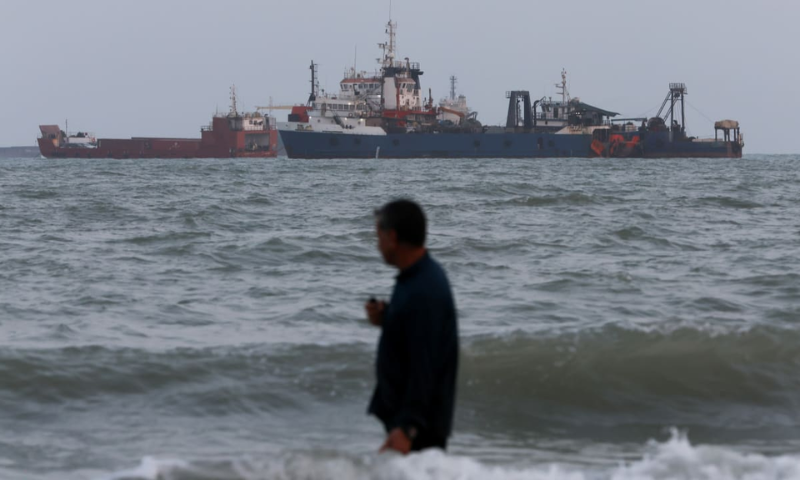
Iranian Foreign Ministry spokesperson Esmaeil Baghaei meanwhile called for environmental protection to be incorporated into any future arrangements governing the Strait of Hormuz.
He pointed to reports of oil pollution along the coast of Qeshm Island and said preliminary evidence indicated that a foreign bulk carrier could have been responsible.
Baghaei argued that countries and commercial interests benefiting from shipping through the waterway had both legal and moral responsibilities to address environmental damage affecting the Persian Gulf and Sea of Oman.
With military tensions continuing, diplomatic efforts stalled and shipping disrupted, the dispute over the Strait of Hormuz has emerged as one of the most critical flashpoints in the wider US-Iran confrontation, with potential consequences for global energy supplies, maritime trade and regional stability.