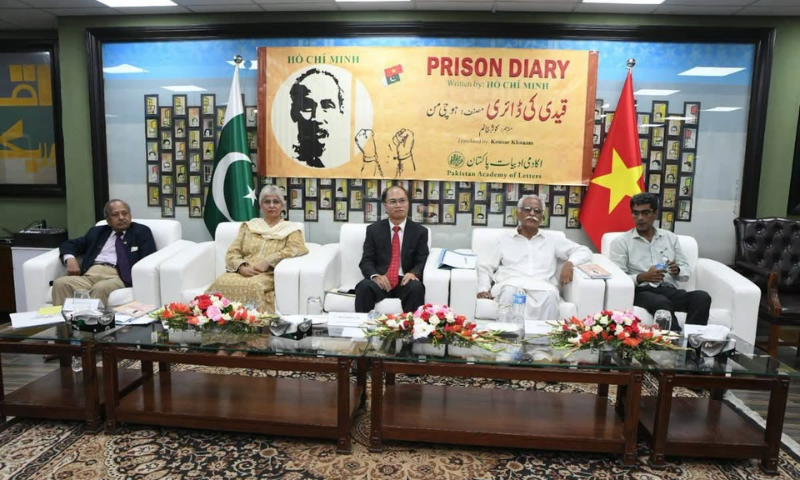
Islamabad, August 18, 2026: The Pakistan Academy of Letters (PAL), under the National Heritage and Culture Division, Government of Pakistan, organised a ceremony in Islamabad to launch the Urdu translation of Prison Diary, the celebrated poetic work of Ho Chi Minh, the Vietnamese revolutionary leader, poet and founder of modern Vietnam.
The ceremony was held at the Sheikh Ayaz Conference Hall of the Pakistan Academy of Letters and was attended by diplomatic representatives from ASEAN countries, writers, intellectuals and prominent literary figures. Ambassadors and representatives of Thailand, Malaysia, Brunei Darussalam, Cuba, Indonesia and Myanmar were among the distinguished guests.
The ceremony was moderated by Dr Hamza Hassan Sheikh. Chairperson of the Pakistan Academy of Letters, Prof. Dr Najiba Arif, welcomed the guests and diplomatic representatives, describing Prison Diary as more than an account of a revolutionary leader’s imprisonment.
She said the work was also a powerful poetic expression of human freedom, hope, courage and determination. She noted that the Urdu translation had been undertaken under a Memorandum of Understanding signed between the Pakistan Academy of Letters and Vietnam, describing the initiative as an important milestone in strengthening literary and cultural cooperation between the two countries.
Dr Najiba Arif also expressed her resolve to further expand literary and cultural ties between Pakistan and ASEAN countries.
At the conclusion of her address, Dr Najiba Arif led a Fatiha for renowned writer, poet and intellectual Haleem Qureshi, who passed away a day earlier, and paid tribute to his valuable contribution to literature.
Prof. Munir Fayyaz and former ambassador Salahuddin Chaudhry discussed various aspects of Prison Diary, Ho Chi Minh’s personality, poetry and political struggle. They also recited selected verses from the work.
Presiding over the session, Imdad Akash described Ho Chi Minh as a symbol of courage, resistance and freedom for oppressed nations and also recited selected verses from the book.
Ambassador of Vietnam to Pakistan Pham Anh Tuan thanked Dr Najiba Arif and the Pakistan Academy of Letters for organising the ceremony. He said Ho Chi Minh’s poetry reflected Vietnamese national thought, freedom and sovereignty.
The ambassador described the Urdu and English translations of Prison Diary as significant developments in promoting literary relations and cultural understanding between Pakistan and Vietnam.
Prison Diary is regarded as one of the significant literary works of the 20th century. Written during Ho Chi Minh’s imprisonment, the collection gives poetic expression to loneliness, suffering and confinement while conveying themes of freedom, hope, courage and unwavering determination.
The Urdu translation has been rendered by Kausar Khanum, while Najma Saqib undertook its revision.
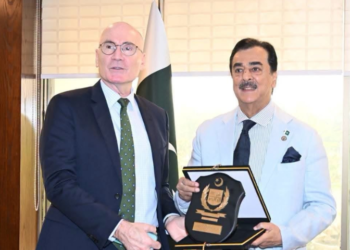
At the conclusion of the ceremony, Ambassador Pham Anh Tuan presented commemorative gifts to Dr Najiba Arif, speakers and organisers. Dr Najiba Arif, in turn, presented distinguished guests with gift packages containing publications of the Pakistan Academy of Letters.
Following the ceremony, diplomatic representatives and other guests visited a book exhibition and cultural stall arranged by the Embassy of Vietnam at the Pakistan Academy of Letters. The exhibition featured books highlighting Vietnam’s rich literary and cultural heritage, along with a range of cultural artefacts.
The event highlighted the role of literature and cultural exchange in strengthening mutual understanding and reaffirmed the commitment of Pakistan, Vietnam and ASEAN countries to expanding literary, cultural and people-to-people ties.