Islamabad, August 19, 2026: The government on Wednesday announced a significant reduction in the price of diesel following negotiations with petroleum refineries, with Petroleum Minister Ali Pervez Malik saying the cut would exceed Rs30 per litre.
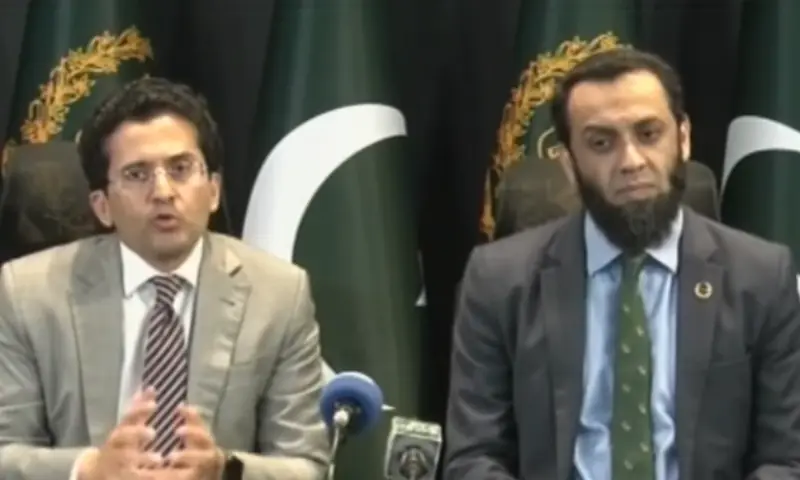
Speaking to the media, Malik said refineries had agreed to the government’s request for a reduction of more than Rs30 to Rs32 in the diesel price after several rounds of discussions.
“I’m happy to announce that the refineries have accepted the government’s demand while acknowledging the difficulties, and decided on a significant decrease of more than Rs30 or Rs32 in the diesel price,” he said.
The minister said the Oil and Gas Regulatory Authority (Ogra) would complete its calculations and formally determine the revised price.
Malik said Prime Minister Shehbaz Sharif had personally intervened and directed him to negotiate with refineries to provide relief to consumers amid rising global petroleum prices.
He said the government was aware of the financial pressure on the public caused by the sharp increase in fuel prices following renewed conflict in the Middle East.
“The government is trying its best to address these issues using its limited resources,” Malik said, adding that the government had allocated more than Rs100 billion over the past three to four months to cushion consumers from rising fuel prices despite Pakistan being under an International Monetary Fund programme.
The minister said the escalation of conflict in the region had pushed up international prices of refined petroleum products, with diesel crack margins over crude oil reaching $60 to $70.
He said a substantial share of diesel consumed in Pakistan was supplied to oil marketing companies after being refined domestically.
Malik said the reduction would provide relief to farmers using diesel-powered tractors and tube wells, as well as public transport operators and consumers.
He also announced plans to visit Karachi next week with a government delegation to thank local refineries for their cooperation.
Malik said the government would initiate work on upgrading Pakistan’s refineries within days under the direction of the prime minister.
He said the initiative was aimed at strengthening the country’s domestic refining capacity and reducing vulnerability to international fuel market fluctuations.
The government would also work on operationalising bonded oil storage schemes at border locations in cooperation with friendly countries, he added.
Information Minister Attaullah Tarar, speaking after Malik, said the prime minister had chaired a meeting earlier in the day and directed the petroleum ministry to negotiate with refineries and secure whatever relief was possible for consumers.
“Refining is a key part of diesel production,” Tarar said, adding that Ogra was expected to announce a reduction of around Rs32 per litre.
He said the government had already spent around Rs130 billion through subsidies and other measures to prevent international oil price increases from being fully passed on to consumers.
“This is a major step and a gift from the prime minister to the people,” Tarar said, noting that goods transporters and public transport operators were particularly dependent on diesel.
He expressed hope that the reduction would ease inflationary pressure and support economic activity, while hinting at further relief measures in the coming days.
The price of diesel had reached a peak of Rs520.35 per litre on April 3 after rising sharply from Rs281 per litre following the outbreak of the US-Iran conflict on February 28.
The government subsequently introduced frequent fuel price adjustments in response to volatility in international markets. Earlier, the petroleum minister had announced that fuel prices would be reviewed and fixed on a daily basis because of continuing fluctuations in global oil prices.
The government had also introduced fuel conservation measures amid concerns over possible disruptions to international oil supplies caused by the conflict in the Middle East.
The exact revised diesel price will be notified after Ogra completes its calculations.