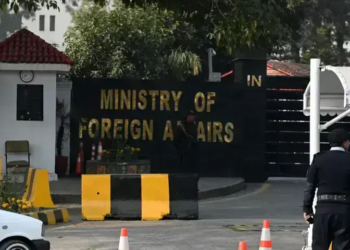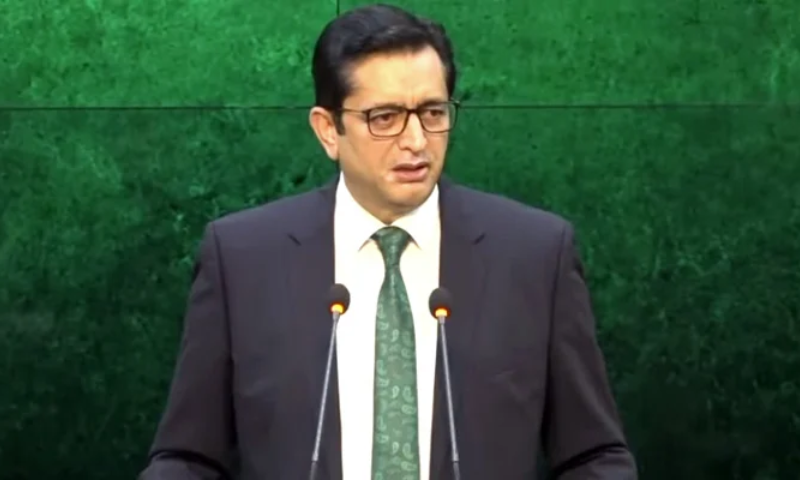
Islamabad, September 10, 2026: Foreign Office Spokesperson Sajjad Haider Khan has said that “more time is needed” to implement the Makkah Defence Pact between Pakistan, Saudi Arabia and Turkiye, as the kingdom faces repeated attacks by Yemen’s Houthi rebels.
Addressing the weekly press briefing on Thursday, the spokesperson said Pakistani forces were currently present in Saudi Arabia for training and logistical purposes, while further aspects of defence cooperation under the agreement would emerge soon.
The clarification came in response to a question about how Pakistan planned to fulfil its obligations under the pact following Houthi attacks on Saudi territory.
The trilateral Makkah agreement, signed by Pakistan, Saudi Arabia and Turkiye on August 7, provides for collective security and defence cooperation among the three countries. Under the agreement, an armed attack against any one of the three members is to be regarded as an attack against all.
The FO spokesperson strongly condemned the Houthi attacks on civilian and economic sites in Saudi Arabia and reaffirmed Pakistan’s “unwavering support” for the kingdom’s sovereignty, territorial integrity, security and prosperity.
His remarks came a day after the Saudi-led coalition in Yemen said the Houthis had attacked the southern Saudi cities of Abha, Khamis Mushait and Jazan with ballistic missiles and drones, marking the second consecutive day of attacks on the kingdom.
More than 70 people were reportedly injured on Tuesday after Houthi attacks targeted several Saudi cities, further raising concerns about regional stability.
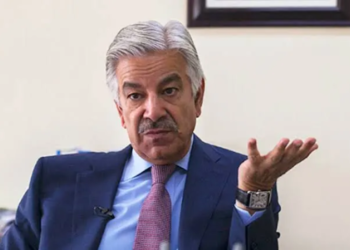
Earlier this week, Defence Minister Khawaja Asif had said that Houthi attacks on Saudi territory would invoke the Makkah Defence Alliance.
“Under the trilateral agreement, any aggression against any of the three [countries] is regarded as an aggression against all. There is no ambiguity about that,” he said during a talk show,
Asif said unprovoked aggression or any spillover from Yemen into Saudi Arabia would “definitely” operationalise the alliance.
“There should be no doubt about it. We are bound by the terms and conditions of this pact, and we will honour them in case there is a need,” he said, while expressing hope that the situation would be brought under control.
FO condemns ‘systematic’ demolition of Muslim religious sites in India
The Foreign Office spokesperson also condemned what he described as the “systematic” and “state-sanctioned” demolition of Muslim places of worship in India.
Responding to a question, Khan said Pakistan “expresses deep concern and condemns the systematic state-sanctioned demolition of Islamic holy places in India under different pretexts.”
He said such demolitions violated the Liaquat-Nehru Pact of 1950, which guarantees the security and rights of religious minorities.
The spokesperson also maintained that the demolitions violated Indian laws, particularly the Places of Worship (Special Provisions) Act, 1991, which requires the religious character of places of worship to be preserved as it existed on August 15, 1947.
Referring to the recent demolition of a mosque in Uttar Pradesh, he said the “Hindu-driven Islamophobic campaign” had created an imminent threat to centuries-old heritage sites and places of worship.
He cited the Akhonji Mosque, Ajgaib Shaheed Mosque and Saharanpur Collectorate Mosque, as well as the 1,000-year-old Ganj Shahida Mosque, which has recently received court notices.
Khan called on the international community to take notice of what he described as the continued persecution of Muslims in India.
He also rejected a statement by India’s Ministry of External Affairs concerning a Hindu temple in Narowal, saying the structure had been damaged by torrential rain rather than deliberately.
FO urges UN to take notice of Yasin Malik’s situation
The Foreign Office spokesperson also condemned the alleged mistreatment of jailed Kashmiri leader Yasin Malik and urged the international community to take notice of his situation.
Khan said Malik’s decision to withdraw from his defence was a protest against what he described as the Indian judicial system.
“The Indian judicial system has become a means of depriving the Kashmiri people of justice,” he said.
He urged the international community not to allow India to use Malik’s life and health for political purposes and called on the United Nations and international human rights organisations to take notice of the Kashmiri leader’s situation.