Dubai/Tehran/Riyadh, September 16, 2026: Tensions across the Middle East intensified on Wednesday as Yemen’s Houthi group claimed attacks on Saudi facilities, Iran said it had shot down a US MQ-9 Reaper drone over Qeshm Island, and the United States House of Representatives passed a resolution seeking to end US military involvement in hostilities with Iran.
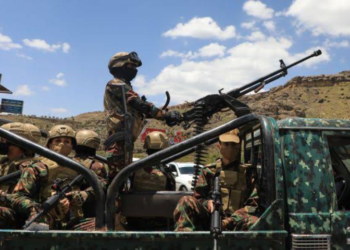
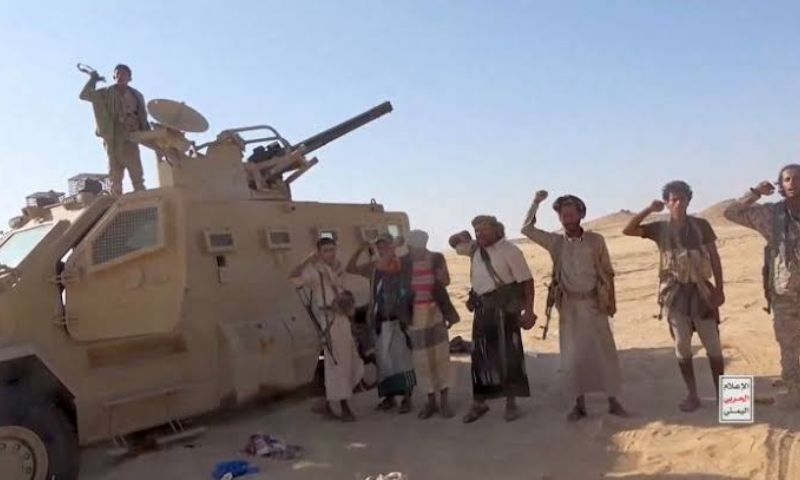
Houthi military spokesman Yahya Saree claimed on Wednesday that the group had attacked Aramco facilities in Yanbu and an airbase in Khamis Mushait.
Saudi authorities had yet to confirm the reported attacks.
The claims came amid renewed confrontations involving the Houthis and Saudi Arabia, with the Saudi-led coalition also reporting a drone incident near Makkah earlier this week.
Iran’s Islamic Revolutionary Guard Corps (IRGC) said it had shot down an American MQ-9 Reaper drone over Qeshm Island in the Strait of Hormuz during the early hours of Wednesday.
In a statement, the IRGC said Iranian air defence systems detected the drone over Qeshm Island at 2:29am local time and subsequently brought it down.
The IRGC claimed it was the 52nd US drone of the same type to have been shot down. The US military did not immediately comment on the claim.
Iranian state media IRNA separately reported that the IRGC had destroyed an MQ-9 Reaper over Qeshm Island, while saying two other MQ-9 drones had been shot down over the Strait of Hormuz the previous day.
Vance says US policy cannot be ‘subservient’ to Israel
US Vice President JD Vance said on Tuesday that Washington did not always agree with Israel and could not allow its Middle East foreign policy to be “subservient to the state of Israel”.
Speaking on the All-In Podcast, Vance said President Donald Trump recognised Israel’s importance as a partner in military technology and intelligence sharing but was also willing to disagree with the Israeli government when US and Israeli interests differed.
Vance compared Washington’s relationship with Israel to its ties with NATO members, saying the United States maintained important partnerships without allowing those relationships to determine its entire foreign policy.
“We’re gonna work with people when we work with them; we’re gonna disagree when we disagree. And we’re gonna pursue America’s interests,” he said.
Brigadier General Yahya Saree, spokesman for the Yemeni Armed Forces, said Yemeni forces had shot down a Saudi F-15 over Ma’rib while it was carrying out what he described as “hostile activities”.
According to the statement, the aircraft was operating in support of forces affiliated with Saudi Arabia.
Saree also claimed that Yemeni forces forced another Saudi F-15 and Typhoon fighter aircraft to withdraw from the area while they were searching for the wreckage of the downed aircraft.
Earlier, Houthi rebels had also claimed responsibility for shooting down the Saudi fighter jet, saying a locally manufactured air-to-air missile was used.
The Houthis accused Saudi Arabia of carrying out 450 strikes, although the claim could not immediately be independently verified.
Saudi air defences intercepted and destroyed a drone said to have been launched by the Houthi group near Makkah early Wednesday, according to the Saudi-led coalition.
Coalition spokesman Turki al-Malki said the drone was intercepted at around 6:50pm local time on Tuesday before entering restricted airspace, with its wreckage falling south of the city.
Al-Malki described the incident as the second reported Houthi attempt to target Makkah, referring to a ballistic missile launched towards the city in July 2017.
He said the security of the Two Holy Mosques and pilgrims was a “red line” and warned that the coalition would take measures to deter further attacks.
The incident followed the coalition’s report that 13 civilians had been injured in missile and drone attacks on Khamis Mushait, Abha and Taif, with seven homes and two vehicles damaged.
The Houthis denied targeting Makkah, with a Houthi official dismissing the Saudi-led coalition’s claim as false.
The Organisation of Islamic Cooperation (OIC) condemned what it described as Houthi attacks targeting Makkah and the Madinah region.
According to Al Jazeera, the organisation described the reported attacks as “heinous” and said they were intended to terrorise civilians and violate the sanctity of holy sites and mosques.
Confrontations between forces of Yemen’s internationally recognised government and the Houthis have intensified since early July after years of relative calm.
Yemen has remained embroiled in conflict since the Houthis seized the capital Sanaa and several provinces in 2014, prompting a Saudi-led Arab coalition to intervene the following year in support of the internationally recognised government.
US Treasury Secretary Scott Bessent said Tuesday that Washington was conducting what he called the “greatest economic isolation campaign” against Iran and entities supporting it.
Addressing the House Financial Services Committee, Bessent said US economic strength had enabled Washington to intensify pressure on Tehran.
“Under his leadership, America is no longer managing the Iranian threat; we are ending it,” Bessent said, referring to President Trump.
Bessent said Iran’s economy was in “dire straits”, citing a sharp fall in the currency, high inflation and reported fuel shortages.
He attributed the pressure to US measures against Iran and Operation Economic Outcast, a Treasury campaign launched in August targeting Iranian financial networks and entities accused of helping Tehran evade sanctions.
Treasury launched the operation on August 24, saying it sought to disrupt financial channels used by Iran to sell oil, evade sanctions and generate revenue.
Bessent said Washington would intensify enforcement against entities accused of facilitating Iranian trade and sanctions evasion, with additional measures expected to begin taking effect on September 23.
He also said the United Arab Emirates had announced measures to reduce financial transactions and trade with Iran, while Treasury had sanctioned branches of an Egyptian bank in Dubai over transfers to Iran.
Bessent said Washington had held private discussions with China on the issue and expected further talks with Chinese Vice Minister Liao Min and during Chinese President Xi Jinping’s planned spring state visit.
Iran’s envoy to international organisations in Vienna, Reza Najafi, described Iran’s approval for membership in the General Committee of the International Atomic Energy Agency (IAEA) conference as “another political defeat” for the United States.
According to IRNA, Najafi said the committee was responsible for reviewing the conference agenda, schedule and credentials.
He said Iran had been nominated for membership by the MESA geographical group and was expected to be approved, but the United States opposed its membership, leading to a vote.
Najafi accused Washington of pursuing what he called a policy of “bullying and unilateralism”.
The US House of Representatives on Tuesday passed a war powers resolution directing President Donald Trump to remove American forces from hostilities with Iran.
House lawmakers approved H. Con. Res. 93 by 220 votes to 204, with seven Republicans joining Democrats in supporting the measure. The resolution was sponsored by Democratic Representative Seth Moulton.
It was the third time the House had approved a similar war powers resolution.
Representative Gregory Meeks, the ranking Democrat on the House Foreign Affairs Committee, criticised the administration’s military campaign against Iran and said Washington had been involved in the conflict for nearly 200 days.
He cited higher energy prices, inflation, government spending and US military casualties among the costs of the conflict.
Meeks said 19 US service members had been killed and more than 750 wounded since the United States and Israel launched strikes against Iran on February 28.
“This is now the third War Powers Resolution that has passed the House to end this war,” he said, calling for a diplomatic solution.
The US Congressional Budget Office (CBO) estimated Tuesday that the Department of Defence had spent approximately $38.1 billion on the war with Iran as of August 1.
In a letter to House Budget Committee Ranking Member Brendan Boyle, CBO Director Phillip Swagel said an additional month of fighting could cost between $2 billion and $3 billion, depending on the intensity of hostilities.
The estimate includes the replacement of expended munitions and lost equipment, additional flying hours, fuel and other operational costs associated with Operation Epic Fury, which began on February 28 with US-Israeli strikes on Iran.
Munition replacement accounted for the largest portion of the estimated cost at $21.7 billion, including $13.1 billion for missile-defence interceptors.
The CBO said an additional month of conflict at the intensity recorded in May and June could cost around $2 billion, while costs could reach $3 billion at the higher intensity recorded in July.
The conflict has also affected global oil and fuel prices amid disruptions around the Strait of Hormuz, contributing to inflation and interest-rate pressures.
The CBO estimate was below the administration’s $42.3 billion supplemental funding request for directly related costs and also differed from Defence Secretary Pete Hegseth’s July estimate of $37.5 billion through September, citing differences in methodology and incomplete Pentagon data