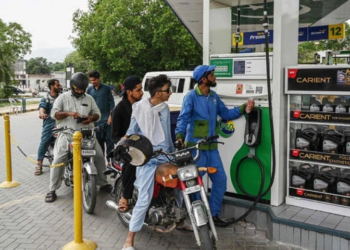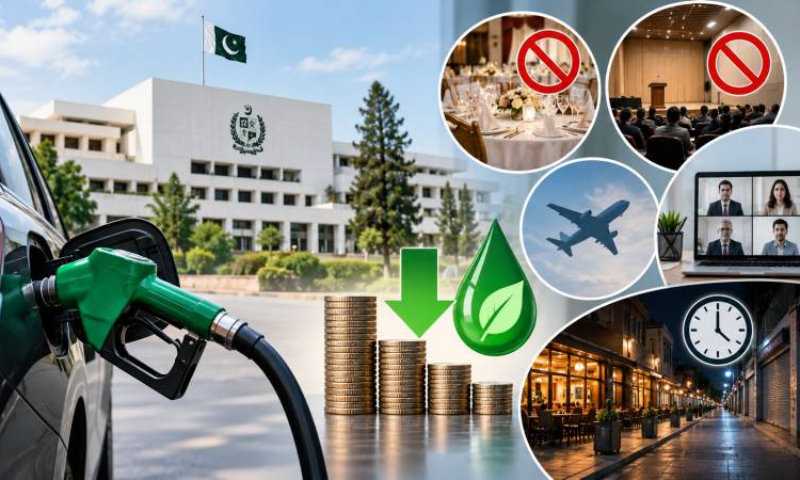
Islamabad, September 17, 2026: The federal government has reintroduced austerity measures to conserve fuel amid renewed tensions in the Middle East, ordering markets to close by 9pm and cutting fuel allocations for most official vehicles by 50 per cent for three months.
The measures take effect immediately, according to a notification issued by the Cabinet Division on Thursday.
Under the new timings, shops, markets, shopping malls, bazaars and departmental, grocery, general and kiryana stores will close by 9pm. Marriage halls, marquees and other venues hosting festive events will close by 10pm, while restaurants, cafés, eateries and food outlets will close by 11pm.
Takeaway and home-delivery services will remain exempt from the restrictions.
Pharmacies, medical stores, laboratories, clinics, hospitals, standalone bakeries, tandoors, milk and dairy shops, fuel and CNG stations, electric vehicle charging stations, gyms, sports facilities and padel courts, IT companies and call centres have also been exempted from time restrictions.
The notification also requires only a single dish to be served at marriage-related functions and events.
Measures for government departments
The government has ordered a 50pc reduction in fuel allocations for official vehicles for three months.
Vehicles used by the armed forces, civil armed forces, law enforcement agencies and essential services, as well as those of the Federal Board of Revenue, are exempt, except vehicles belonging to their administrative or non-operational formations. Vehicles used for development projects are also exempt.
The government has further ordered a 5pc monthly reduction in non-employee-related expenditure from the FY2026-27 budget.
The cut will also apply to foreign missions and officials posted there, although rent, educational fees and medical care obligations will continue to be met. Development projects are exempt from the measure.
A complete ban has also been imposed on the purchase of vehicles of all types and durable goods, with IT-related equipment and services exempted. Development projects are again excluded.
Foreign travel restricted
The government has imposed a three-month ban on foreign visits and travel by officials, including obligatory trips.
Exceptions include scholarships offered by international development partners and training or courses arranged through the Economic Affairs Division or under institutional agreements with the government.
Pakistan’s ambassador or high commissioner concerned will represent the country at obligatory and important events during the restriction period.
For unavoidable official visits, ministers, advisers, ministers of state, special assistants to the prime minister and parliamentary and government officials will travel only in economy class.
The government has also directed departments to preferably hold official meetings through teleconferencing, except for intra-city meetings, and prohibited official dinners funded by the government except for visiting foreign delegations.
Government-funded seminars, training programmes and conferences have also been prohibited. Where such events are considered unavoidable, government facilities such as auditoriums and committee rooms are to be used.
A committee overseeing fuel conservation and additional austerity measures may consider exemption requests on a case-by-case basis and submit recommendations to the prime minister for approval.
The government had introduced similar austerity measures on March 9 during an earlier fuel conservation drive linked to the US-Iran conflict. Those measures included a 50pc cut in official vehicle fuel allowances, salary reductions for lawmakers and partial work-from-home arrangements in the public sector.
The measures were withdrawn on June 19, except for restrictions on market timings.
The latest measures come amid renewed hostilities in the Middle East, which have disrupted key oil supply routes and contributed to higher fuel prices, with concerns also surrounding the Strait of Hormuz and the Bab al-Mandab shipping route.