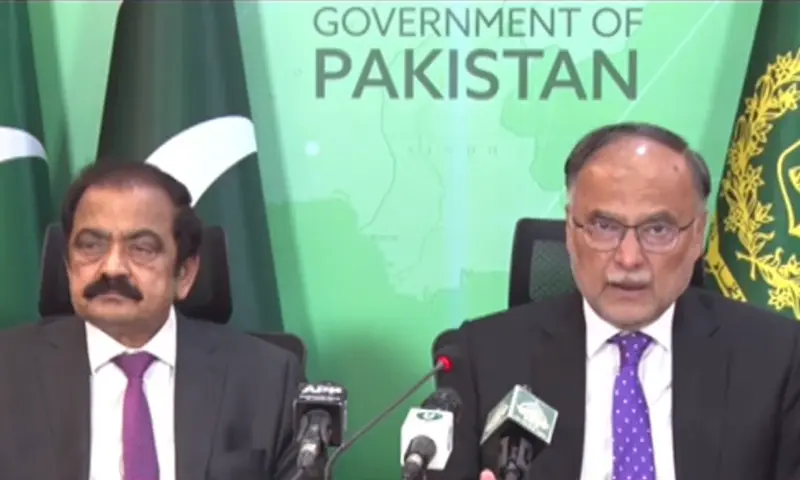
Islamabad, October 27,2026: The government and Jamaat-i-Islami (JI) have agreed to form a six-member joint committee to explore expanding the existing fuel relief scheme and develop proposals for phasing out the petroleum levy, Planning Minister Ahsan Iqbal said on Tuesday.
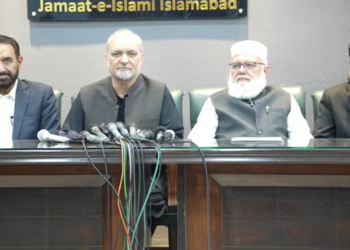
The development came after JI chief Hafiz Naeemur Rehman met Prime Minister Shehbaz Sharif to press for the abolition of the petroleum levy and further relief for the public.
However, Rehman warned that his party would march to Islamabad in mid-November if the government failed to announce substantial relief and devise a mechanism to abolish the levy before the deadline.
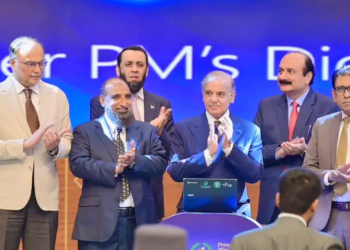
Addressing a press conference, Iqbal said the committee would comprise three government representatives — himself, Deputy Prime Minister and Foreign Minister Ishaq Dar, and the prime minister’s political adviser Rana Sanaullah — and three JI representatives.
He said the committee would finalise proposals on expanding the government’s relief scheme to cover more deserving people and developing a plan to phase out petroleum levies in the next budget.
“The prime minister and JI emir agreed that they share one purpose and intent: they want to reduce the difficulties of the public,” Iqbal said, adding that any relief measures must be durable, sustainable and affordable.
The planning minister said around 12.5 million citizens were benefiting from the existing scheme, which was launched nationwide on September 17 for owners of motorcycles, rickshaws and vehicles with engine capacities of up to 800cc.
Rana Sanaullah, who also addressed the press conference, put the number of beneficiaries at around 12.7 million and said it could rise to 20 million in the coming days. The government is providing relief of Rs100 per litre under the scheme, he added.
Sanaullah said the government was willing to work with JI to improve the programme and ensure that assistance reached those most in need.
He appreciated the party’s efforts to secure relief for ordinary citizens but stressed that any expansion should be targeted to maximise benefits for the most deserving segments of society.
Iqbal said the government had briefed the JI delegation on Pakistan’s economic difficulties and the impact of rising international oil prices. He maintained that the fuel price increases were linked to a global crisis beyond the government’s control.
He also highlighted Pakistan’s diplomatic efforts to help resolve the Middle East crisis, including facilitating negotiations between the United States and Iran, saying reduced regional tensions could bring down global oil prices and ease the burden on consumers.
The minister urged political parties to maintain peace and internal stability, while acknowledging their right to protest. He also criticised the previous Pakistan Tehreek-e-Insaf (PTI) government over its fuel pricing decisions, arguing that measures taken for political popularity had placed the country under severe fiscal pressure.
JI refuses to abandon protest plan
Rehman said the proposed Islamabad march would go ahead in mid-November unless the government announced meaningful relief and a mechanism to abolish the petroleum levy.
“We cannot simply accept peanuts,” the JI chief said when asked about a reported government offer to reduce the levies by Rs20 to Rs30.
He said both sides had agreed in principle to expand the relief scheme but remained divided over the mechanism and timeline for eliminating the levy.
“We say eliminate the levy; they say we can move towards it phase by phase,” Rehman said.
He added that JI was forming its own committee, comprising Deputy Emir Liaquat Baloch, Deputy Secretary General Syed Farasat Shah and Islamabad Emir Nasrullah Randhawa, to pursue the matter.
The JI chief said preparations for the march were complete and that the party would continue nationwide mobilisation alongside negotiations with the government.
Rehman also called for relief from rising fuel costs and questioned the increase in refinery margins alongside international oil prices. He maintained that the petroleum levy should be abolished to ease the financial burden on the public.
The JI leader claimed that his party’s protests had contributed to the government’s existing relief package, saying sustained public pressure had compelled the authorities to respond to rising fuel prices.
He recalled that the government had raised the petroleum levy on petrol from Rs105 to Rs160 per litre in April before reducing it by Rs80 following widespread criticism.
Background to the standoff
JI has been demanding the abolition of petroleum levies for more than two months amid rising fuel prices linked to conflicts in the Middle East.
The government and the party had previously agreed to form committees in early September to recommend measures to reduce the levy after JI threatened a nationwide strike.
On September 20, the party launched a protest march towards Islamabad, warning that the demonstration could turn into a campaign to oust the government if its demands were not met.
Two days later, Rehman announced a postponement of the march at the request of Prime Minister Shehbaz Sharif, who had assured the party of a meeting to discuss its demands.
The latest agreement to establish a joint committee has reopened negotiations, but the two sides remain divided over whether the petroleum levy should be abolished outright or phased out gradually.