
Islamabad, November 2,2026: The government has said that oil refineries will bear an estimated financial burden of Rs15 billion per month to help keep petrol prices Rs15 per litre lower than the prevailing international market rate amid the ongoing US-Israeli war on Iran.
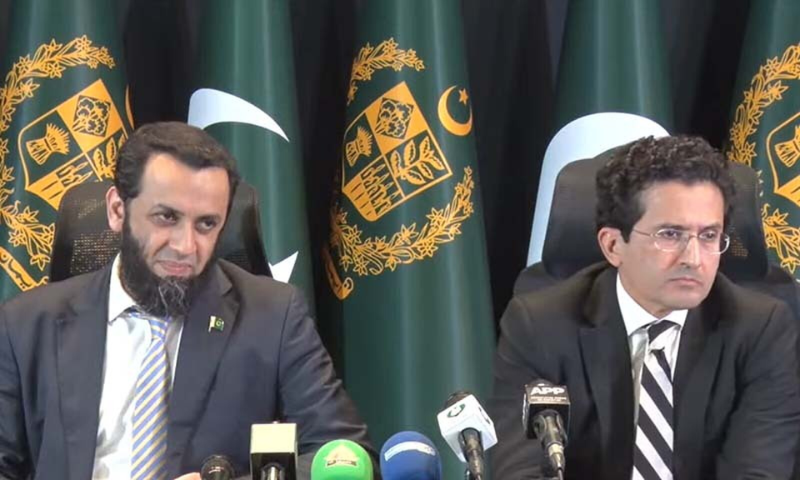
The announcement was made at a press conference in Islamabad by Petroleum Minister Ali Pervaiz Malik and Information Minister Attaullah Tarar.
Addressing the media, Malik said Prime Minister Shehbaz Sharif had held consultations with oil refineries to explore measures aimed at providing petrol to consumers at affordable rates amid expectations of a sharp increase in international fuel prices.
He said an increase of approximately Rs15 per litre was expected to take effect on Friday, but the refineries agreed to support the government in preventing the hike.
“I am grateful to all the refineries that saw the public is in difficulty and, with the government’s help, increased their throughput,” Malik said, adding that the refineries had earned profits from higher throughput over the past three months.
He said the government had requested them to extend support to consumers during the difficult economic situation and appreciated their positive response.
As a result, the expected Rs15 increase in petrol prices was avoided, providing relief to consumers.
The petroleum minister said the arrangement would place a burden of approximately Rs15 billion per month on the refineries, enabling petrol to be sold Rs15 per litre cheaper than its international market-equivalent price.
He expressed hope that the Middle East crisis would soon move towards a peaceful resolution, allowing the government to resume its efforts to improve the energy sector through deregulation and refinery upgrades.
Malik stressed that the government did not want to burden any stakeholder unfairly and would take decisions through consultation while keeping public interests in mind.
He said the refinery premium, which stood at $5 per barrel before the crisis, had been capped at $20 per barrel. He added that the government would intervene to protect consumers if further difficulties arose.
Information Minister Attaullah Tarar said the prime minister’s vision had been to minimize the economic burden on the public despite the impact of the Middle East crisis on economies worldwide.
He maintained that Pakistan’s macroeconomic indicators had remained largely stable compared with those of several other countries despite the international situation.
Referring to the recent petrol price adjustment, Tarar said the prime minister had directed refineries to absorb the expected increase to prevent an additional Rs15 per litre burden on consumers.
He also highlighted the fuel relief scheme announced by the prime minister on September 13, saying more than 15 million unique users had registered for the initiative.
Under the scheme, motorcycle users receive a weekly petrol concession of Rs500, while owners of cars with engines up to 800cc are entitled to 10 litres of petrol every 10 days at a discount of Rs100 per litre.
Tarar said approximately Rs27 billion had so far been allocated for the relief programme, describing it as a significant public support initiative.
He praised the prime minister’s commitment and concern for ordinary citizens, saying the scheme had demonstrated the government’s resolve to provide targeted relief during difficult economic circumstances.
Responding to questions, Malik said he strongly supported deregulation and competition as means of improving services and protecting consumer interests.
However, he argued that extraordinary regional circumstances required immediate measures to provide relief to the public. He said the government would work towards restoring its deregulation agenda once the regional crisis subsided.
Both ministers also rejected concerns about a possible fuel shortage, assuring that the country’s requirements were being met despite the challenging situation.
Malik said November’s fuel supplies had been fully secured, while arrangements for December and January would be reviewed, with the prime minister directing authorities to take all necessary measures to ensure uninterrupted supplies.
Meanwhile, the government has reintroduced several austerity measures in response to rising international fuel prices. These include requiring markets to close by 9pm and reducing fuel allocations for official vehicles by 50 per cent for three months.
Fuel prices are also being determined on a daily basis since July to reflect fluctuations in international markets.