
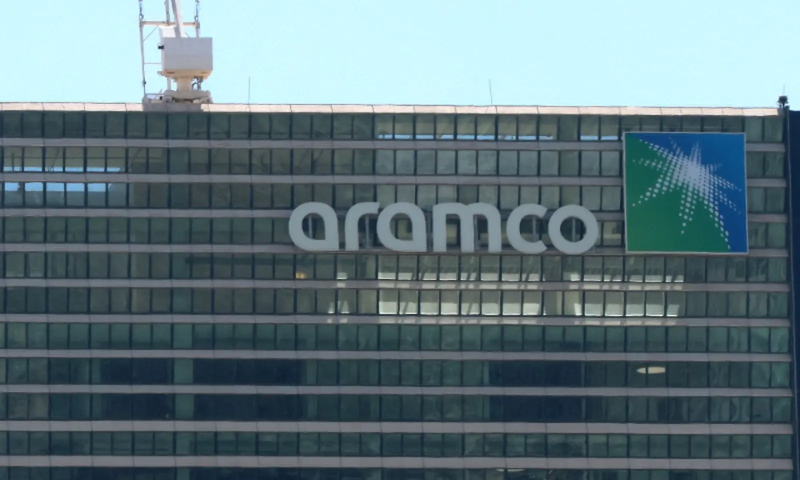
Riyadh, November 8,2026: An administrative building belonging to Saudi Aramco in Riyadh was targeted in an attempted attack on Sunday, with falling shrapnel causing minor damage, Saudi Arabia’s Energy Ministry said, as the Houthi group claimed responsibility for a series of missile and drone strikes against the kingdom.
The ministry said in a statement that the building had come under attack but confirmed that no injuries or fatalities had been reported.
However, eyewitnesses told AFP that the Aramco tower in the King Abdullah Financial District (KAFD) had sustained damage, with two witnesses confirming they had seen damage to the building.
The Houthis claimed they had carried out four military operations using ballistic and cruise missiles and drones. Their statement listed several targets, including Riyadh’s financial centre, airport, Aramco oil storage facilities and the eastern Saudi city of Abqaiq.
The attack came after the Saudi-led coalition fighting the Houthis announced that its air defences had intercepted two ballistic missiles launched towards Riyadh.
Coalition spokesperson Turki Al-Malki said in a social media post on Sunday morning that the missiles had been intercepted and destroyed, while loud explosions were heard across the Saudi capital.
Aramco facilities and infrastructure have repeatedly been targeted by the Houthis in recent months, with attacks reportedly involving oil tankers, refineries, storage facilities and company installations.
The Houthis seized Yemen’s capital, Sanaa, in 2014. A truce established in 2022, which had paused fighting in the long-running conflict, collapsed in July, triggering renewed exchanges of attacks between Saudi Arabia and the rebel group.
Since then, the Houthis have targeted Saudi airports, energy infrastructure and military installations.
A strike on Riyadh’s international airport in October reportedly killed 13 people, marking the deadliest attack on the kingdom since 2015.
The latest attack also came hours after Saudi Arabia’s Education Ministry announced the resumption of in-person classes in Riyadh following weeks of remote learning introduced after an earlier wave of strikes.
The King Abdullah Financial District is one of the most prominent symbols of Saudi Arabia’s economic and social transformation programme. The district features high-rise glass towers, commercial outlets and green spaces and houses major Saudi companies and international financial institutions, including Goldman Sachs.
It is also home to the headquarters of the Public Investment Fund, Saudi Arabia’s sovereign wealth fund, and the Saudi stock exchange.
The area includes residential buildings and a major metro station that experiences heavy commuter traffic during morning rush hours. An attack on such a strategically important financial and commercial hub could mark a further escalation in the conflict.
As Saudi Arabia faces intensified attacks, Pakistan has repeatedly condemned Houthi strikes, describing them as a violation of the kingdom’s sovereignty.
Pakistan and Saudi Arabia have entered into defence arrangements aimed at strengthening collective security and deterrence, including the Strategic Mutual Defence Agreement between the two countries and the Makkah Joint Defence Agreement, which also involves Turkiye.
Under the Makkah defence arrangement, Pakistani, Saudi and Turkish leaders met in Riyadh and agreed on the rapid deployment of military forces and capabilities to the kingdom when required.
Pakistan has also reiterated its commitment to supporting Saudi Arabia amid the attacks.
In mid-October, military spokesperson Lieutenant General Ahmed Sharif Chaudhry said Pakistan was providing “whatever support is needed” to defend the kingdom.
However, the Director General of Inter-Services Public Relations clarified that the Makkah Defence Alliance had no offensive intentions and was purely defensive in nature.
The renewed fighting has further aggravated the humanitarian crisis in Yemen. According to the United Nations, more than 1,600 people have been killed and over 300,000 displaced since hostilities resumed.
The collapse of the fragile truce has intensified regional tensions, with attacks extending beyond Yemen to Saudi territory, maritime routes and critical energy infrastructure.